

The LEGO Group introduced a major new initiative at CES with the launch of LEGO Smart Play, a platform designed to merge physical LEGO bricks with embedded digital intelligence—without screens, apps, or traditional digital interfaces.
The company described the announcement as its most significant innovation in decades, marking a new chapter in LEGO’s 70-year history of physical play. Executives positioned Smart Play as a foundational platform rather than a single product, signaling a long-term strategy to integrate technology into hands-on creativity while preserving LEGO’s core identity.
A Modern Evolution of a Classic System
LEGO leaders opened the presentation by highlighting the enduring success of the LEGO system of play, which has remained structurally compatible since the interlocking brick was introduced in 1958. With more than 20,000 different elements that fit together, LEGO has maintained a consistent design philosophy centered on creativity, imagination, and open-ended building.
At the same time, the company acknowledged a changing cultural landscape. Today’s children grow up immersed in digital environments, prompting LEGO to explore how interactive technology could be integrated into physical play without replacing it.
Executives said the challenge was to introduce digital intelligence in a way that enhances creativity rather than shifting play toward screens or software-driven experiences.
Technology Designed to Stay Invisible
LEGO Smart Play is built around three core principles: seamless integration of technology into physical play, openness across the LEGO ecosystem, and simplicity in user experience.
Rather than relying on apps or digital interfaces, the system is designed to operate through natural physical interaction. There are no screens, no visible controls, and no learning curve for children. The technology remains embedded in the bricks, responding to how they are used rather than directing how they should be played with.
Inside the Smart Brick
At the center of the platform is the LEGO Smart Brick, a standard-looking brick that contains sensors, processing capabilities, and wireless communication technology. Despite its embedded intelligence, the brick has no screen or power button and functions automatically as part of a build.
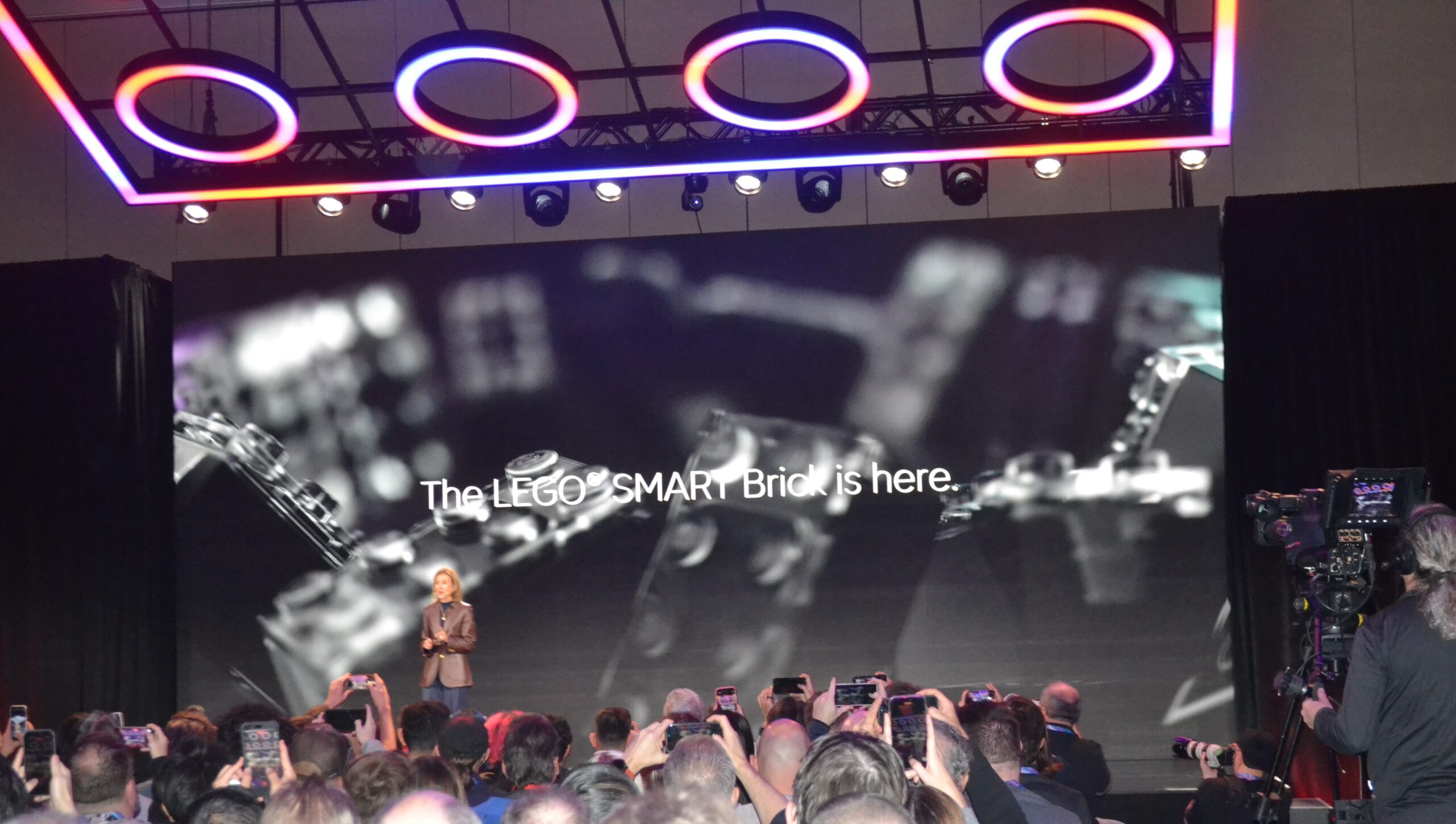
According to LEGO, the Smart Brick can detect movement, sound, light, color, distance, orientation, and direction. It can recognize specially designed Smart Tags that define behaviors, identify Smart Minifigures within a model, and communicate wirelessly with other Smart Bricks.
This allows LEGO creations to respond dynamically to physical interaction. Vehicles can detect drivers and track movement, structures can respond to proximity, and entire play environments can interact in real time through decentralized networks of connected bricks.
Modular Intelligence Across Builds
A single Smart Brick can be reused across multiple builds and play scenarios. By changing tags and minifigures, the same brick can take on different roles, functioning as an engine, character, creature, or interactive object depending on how it is configured.
During demonstrations, LEGO showed how one Smart Brick could animate cars, aircraft, animals, and games, generating light, sound, and behavioral responses based solely on physical movement and positioning.
Spatially Aware Play
One of the platform’s distinguishing features is spatial awareness. Without relying on cameras or external tracking systems, Smart Bricks are able to detect distance, orientation, and directional relationships between builds.
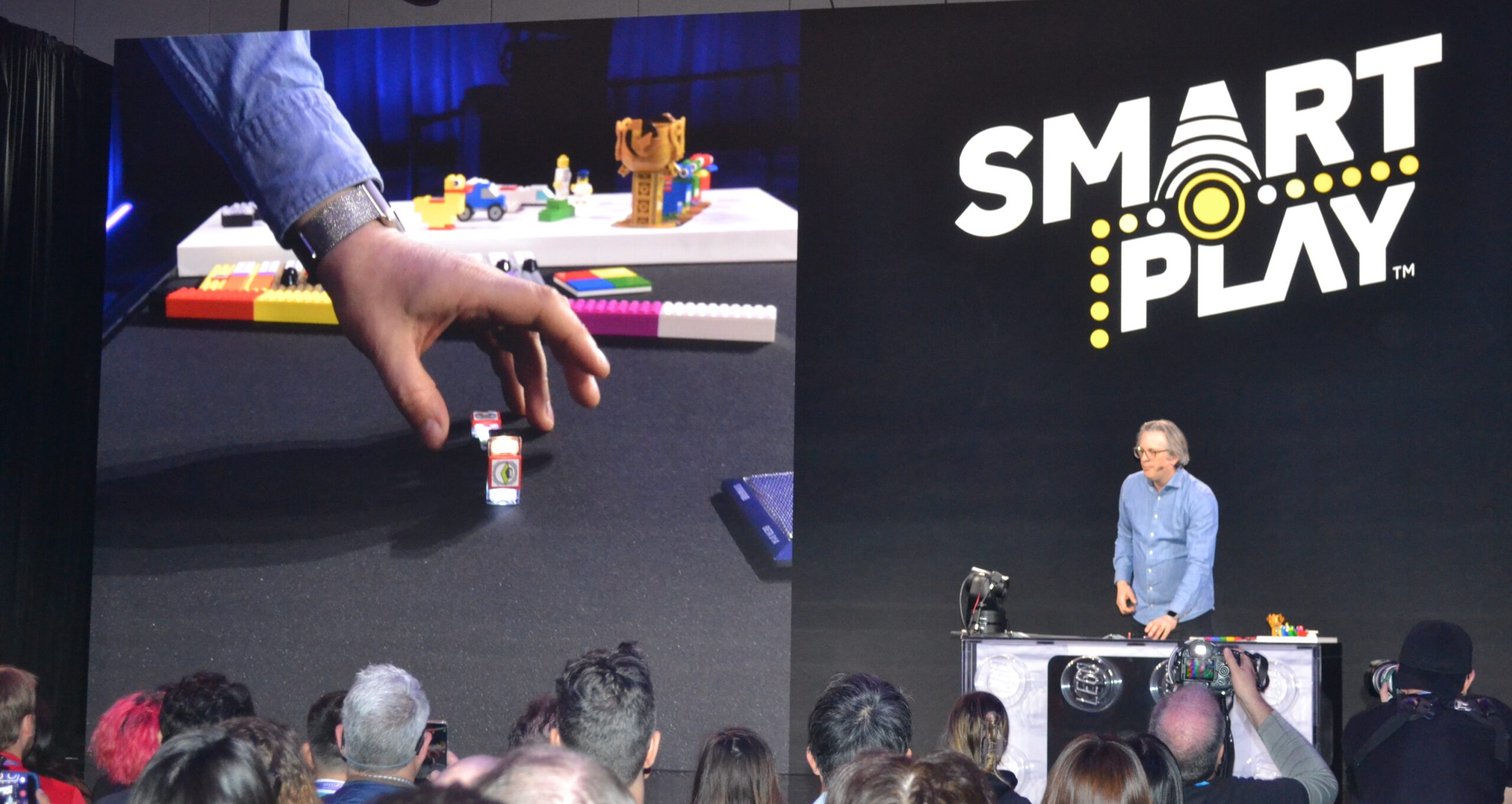
This enables interactive play scenarios such as tracking race outcomes, triggering responses based on proximity, and creating game mechanics that operate in three-dimensional physical space.
A Long-Term Platform for Storytelling
LEGO executives emphasized that Smart Play is designed as a scalable platform rather than a single product line. The system is intended to support long-term storytelling, re-playability, collaboration, and evolving narratives across different LEGO themes.
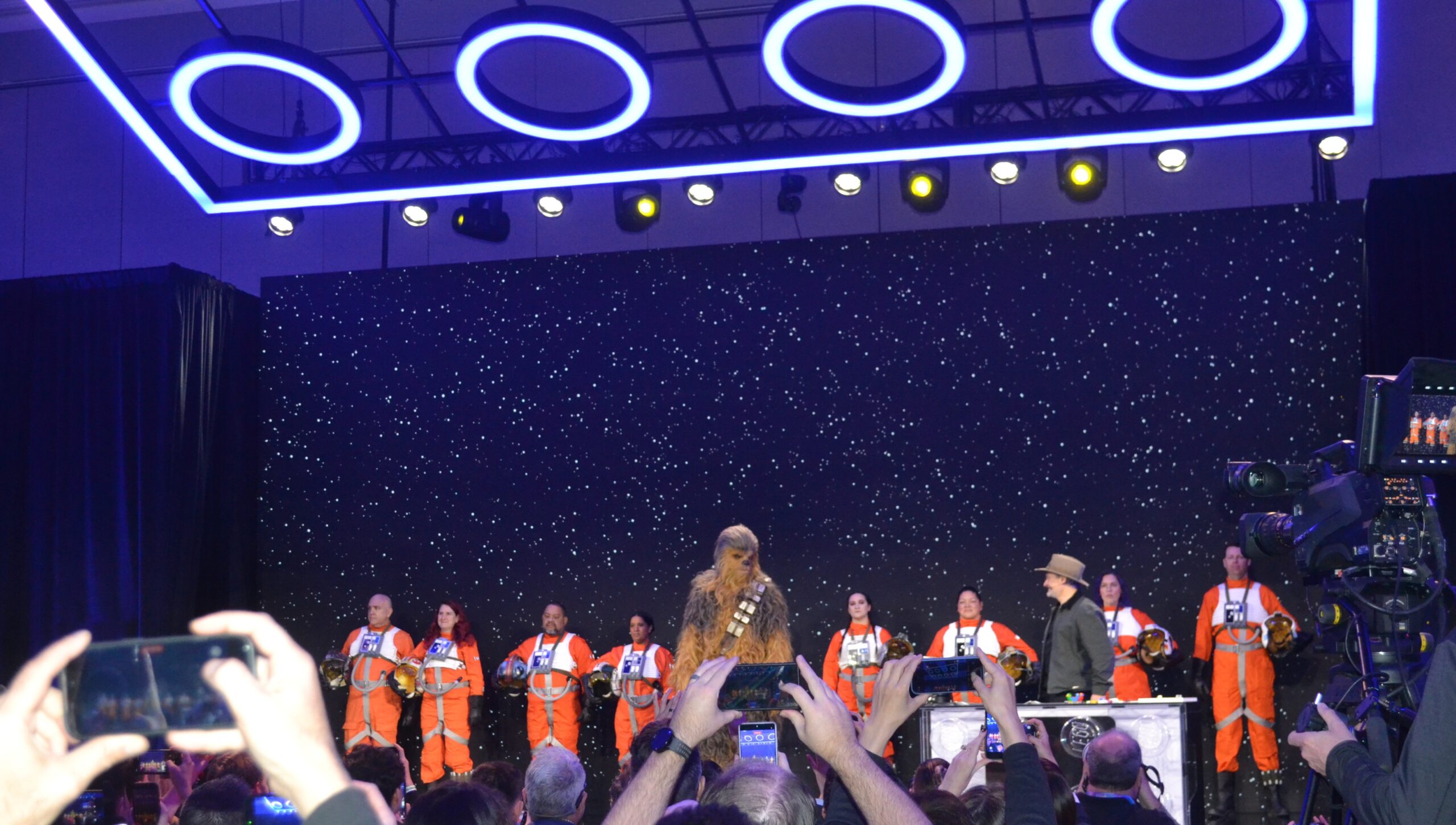
To demonstrate the platform’s potential, LEGO announced its first Smart Play partnership with LEGO Star Wars.
LEGO Star Wars Becomes Interactive
In collaboration with Disney and Lucasfilm, LEGO revealed that Smart Play will be integrated into upcoming LEGO Star Wars sets. After more than 25 years of partnership, the franchise will move beyond static builds to interactive physical play environments.
Characters, vehicles, and locations will respond to movement, proximity, and interaction, allowing children to create dynamic Star Wars experiences without screens or digital displays.
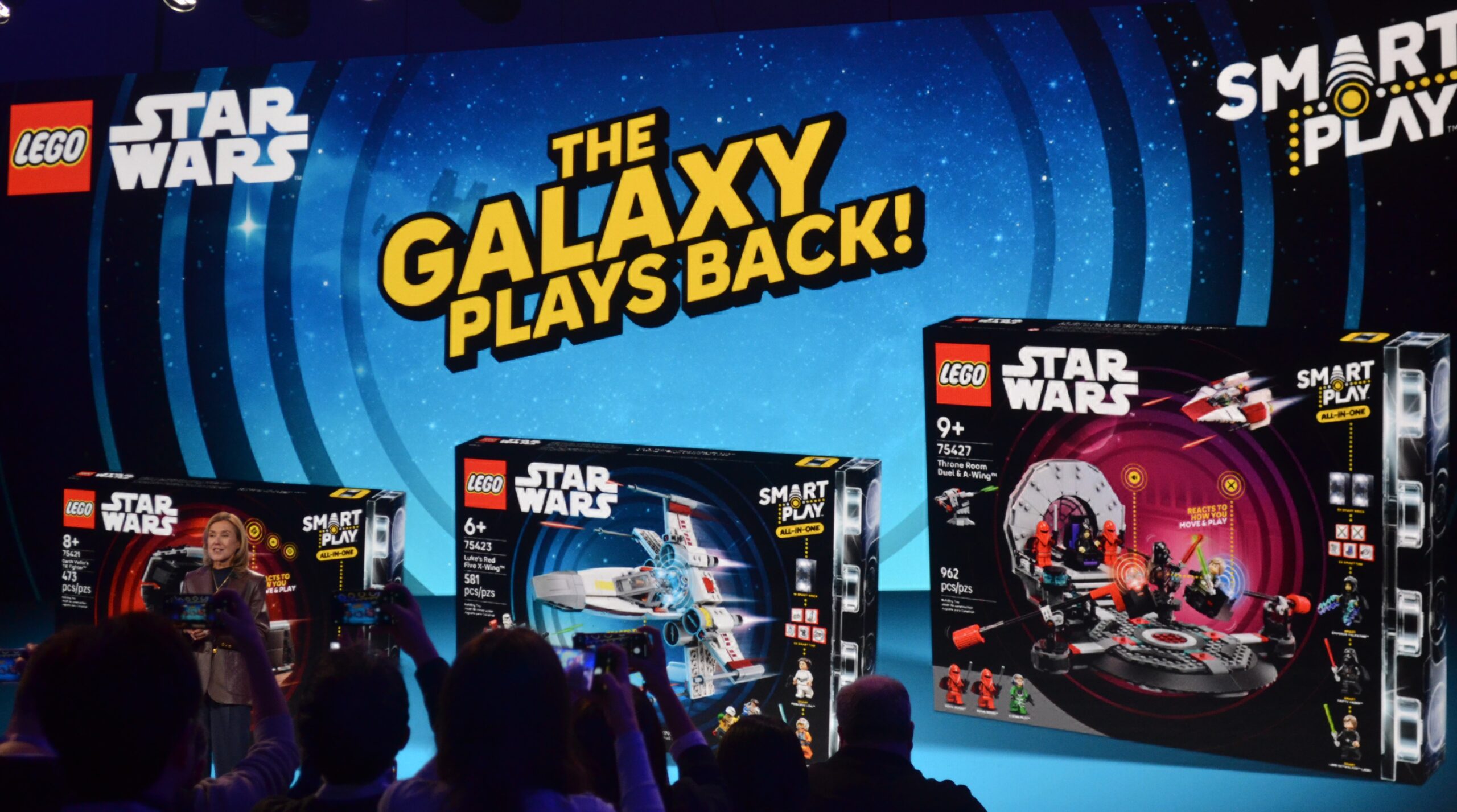
The first LEGO Star Wars Smart Play sets are scheduled to launch in March.
Redefining Physical Play
LEGO Smart Play represents a shift in how physical toys can incorporate advanced technology. Rather than directing behavior through software, the system is designed to respond to play itself, keeping creative control in the hands of children.
Company leaders described the platform as a foundation for future development, positioning Smart Play as the beginning of a broader transformation in physical play design.
At CES, LEGO framed the initiative not as a move toward digital toys, but as a reimagining of physical creativity—one where technology remains invisible, and imagination remains central.
Photos by Lidia Paulinska
