For years, the conversation centered on a simple comparison: human intelligence versus artificial intelligence. Then came a new generation of AI capable of generating text, images, music, and code. Today, the conversation is evolving once again with the emergence of Agentic AI—systems that don’t simply answer questions but can plan, reason, and carry out tasks on our behalf.
Understanding these three forms of intelligence is essential because they represent three very different capabilities.
Experiential Intelligence (EI) applies human wisdom.
Agentic AI takes action.
Rather than competing with one another, they represent three complementary layers of intelligence.
Artificial Intelligence (AI): Intelligence That Knows
Artificial Intelligence excels at recognizing patterns, analyzing enormous amounts of data, generating content, and answering questions with remarkable speed. Its greatest strength is computation. AI can summarize thousands of pages in seconds, identify trends hidden within millions of data points, and generate ideas almost instantly. However, traditional AI remains largely reactive—it responds when prompted. It knows.
Experiential Intelligence (EI): Intelligence That Understands
Experiential Intelligence is uniquely human. It develops through lived experience, personal relationships, successes, failures, intuition, and emotional growth. It is the intelligence that allows us to read between the lines, recognize subtle emotions, exercise ethical judgment, and make decisions when there is no obvious right answer.
While AI processes information, EI interprets meaning. AI may know every fact about leadership. Experiential Intelligence understands what it feels like to lead during uncertainty.
AI can explain empathy. Experiential Intelligence practices it.
Agentic AI: Intelligence That Acts
Agentic AI represents the next stage in the evolution of artificial intelligence. Instead of simply answering questions, it can pursue goals.
Give an Agentic AI an objective such as: “Plan my business trip.”
Rather than producing a list of suggestions, it can search for flights, compare hotels, organize an itinerary, reserve appointments, prepare meeting notes, update your calendar, and notify colleagues—all with minimal human intervention.
In other words, Agentic AI doesn’t simply generate information. It performs work. The difference is subtle but significant.
Traditional AI is like an exceptionally knowledgeable advisor. Agentic AI is more like an executive assistant capable of carrying out a sequence of tasks.
The Three Forms of Intelligence
Artificial Intelligence (AI)
Experiential Intelligence (EI)
Agentic AI
Learns from data
Learns from life
Learns from data and objectives
Recognizes patterns
Exercises judgment
Plans and executes tasks
Answers questions
Understands people and context
Pursues goals autonomously
Excels at speed and scale
Excels at wisdom and empathy
Excels at productivity and automation
Generates information
Creates meaning
Delivers outcomes
The Future Belongs to All Three
The future is not a contest between humans and machines. It is a collaboration between different forms of intelligence. Artificial Intelligence gives us knowledge. Experiential Intelligence gives us wisdom. Agentic AI gives us execution.
Imagine a physician diagnosing a patient. AI analyzes millions of medical records and identifies possible conditions. Experiential Intelligence enables the physician to understand the patient’s fears, family circumstances, and personal values. Agentic AI schedules appointments, coordinates specialists, orders laboratory tests, monitors follow-up care, and manages the administrative workload.
Each contributes something the others cannot.
The greatest opportunities will come not from choosing one form of intelligence over another, but from learning how to combine them wisely. As Agentic AI becomes more capable, Experiential Intelligence will become even more valuable. The more decisions we delegate to machines, the more important human judgment, ethics, empathy, and accountability become.
Technology can become increasingly intelligent. But only people can decide what is worth doing—and why.
Chapter 1 – Stop Calling It Artificial Intelligence
“When people hear the words ‘artificial intelligence,’ many react the same way they would to hearing ‘root canal.’ They simply don’t want to hear the term anymore.”
Perhaps the first challenge facing AI isn’t the technology itself but the language surrounding it. The phrase artificial intelligence has become so overused that it often creates anxiety rather than excitement. Before we explain what AI can do, people have already formed an opinion based on the name alone.
Maybe it’s time to rethink how we describe this technology.
Chapter 2 – From Artificial Intelligence to Augmented Intelligence
“Artificial intelligence isn’t replacing human thinking—it should be augmenting it.”
Some experts prefer the term Augmented Intelligence, emphasizing collaboration instead of replacement. In this view, AI is a tool that strengthens human decision-making through machine learning and deep learning.
The goal is not to create machines that think instead of us. The goal is to help people think better, make better decisions, and accomplish more than they could alone.
Chapter 3 – The Best AI Is Invisible
“Good AI reduces cognitive load.”
Technology succeeds when it quietly removes unnecessary effort from our daily lives. If interacting with AI requires extra steps, more typing, or additional mental work, it has failed its purpose.
The best products are intuitive. They work naturally, almost invisibly, allowing people to focus on their goals rather than the technology itself.
Great AI should disappear into the background.
Chapter 4 – Humans Should Stay in Control
“AI should always have an off switch.”
No matter how advanced intelligent systems become, users should always retain the ability to decide when AI assists them and when they rely entirely on their own judgment.
Control builds trust. AI should remain a tool—not the decision maker.
Chapter 5 – AI Should Make Humans Bigger, Not Smaller
“The best AI makes humans better—not smaller.”
Many AI demonstrations focus on proving that computers are smarter than people. That message unintentionally creates fear, especially among designers, artists, writers, and other creative professionals.
A healthier vision sees AI as a collaborator rather than a competitor. Technology should amplify human creativity, curiosity, and productivity instead of diminishing our confidence or replacing our role.
Chapter 6 – Maybe We Need a New Name
“Perhaps we shouldn’t call it AI anymore.”
Names shape expectations. Instead of Artificial Intelligence, perhaps terms like Experiential Intelligence or other human-centered descriptions would better communicate the value these systems provide.
Consumers rarely care whether a product is intelligent. They care whether it improves their lives.
Chapter 7 – Intelligence Isn’t the Product
“Maybe we should call it Artificial Work Ethic.”
People don’t buy products because they’re smart. They buy products because they save time, simplify tasks, reduce frustration, or help them accomplish something more efficiently.
The real value of AI isn’t intelligence—it is usefulness.
Chapter 8 – Solving Real Problems
Every new technology promises to be faster, smarter, and more powerful.
But consumers ask a much simpler question: What problem does this solve for me?
If AI cannot answer that question clearly, its intelligence becomes irrelevant.
Chapter 9 – Beyond the Hype
“Yesterday everything was smart. Today everything is AI-powered.”
Technology constantly reinvents its vocabulary. Often, the underlying product hasn’t changed nearly as much as the marketing language surrounding it.
Eventually AI will become so common that companies may stop advertising it altogether, just as nobody advertises products as “electricity-powered.” AI will simply become an expected capability.
Chapter 10 – AI Is Democratizing Creativity
“One thing AI has done exceptionally well is democratize entire professions.”
People no longer need years of formal training to begin creating. Writers can generate illustrations. Designers can write code. Programmers can compose music. Filmmakers can produce visual effects once reserved for large studios.
AI lowers barriers and allows individuals to explore creative fields that were previously inaccessible.
Chapter 11 – Why Do We Humanize AI?
“People instinctively say “please” and “thank you” to chatbots.”
We assign personalities to software. We describe machines as if they have intentions and emotions. Yet AI remains software—not consciousness.
Our tendency to humanize technology says as much about human psychology as it does about artificial intelligence itself.
Chapter 12 – Science Fiction Set Our Expectations
“There’s one elephant in the room nobody talks about.”
For generations we have grown up watching Star Wars, Star Trek, and Stargate. Their robots and computers understood context, emotion, humor, and human behavior almost effortlessly.
What we often forget is that those “intelligent machines” were fictional characters portrayed by actors and writers.
Real AI is very different.
It is powerful, impressive, and rapidly improving—but it is still far from the effortless intelligence we imagined in science fiction. Perhaps our greatest challenge isn’t building better AI. Perhaps it’s adjusting our expectations to match reality.
Artificial Intelligence has become one of the most talked-about technologies of our time, yet it is also one of the most misunderstood. Part of the confusion comes from the growing list of names used to describe it. Depending on whom you ask, AI is called Artificial Intelligence, Augmented Intelligence, Generative AI, Machine Intelligence, Cognitive Computing, Human-Centered AI, or even Adaptive Intelligence.
Each new name reflects a different attempt to explain the technology from a particular perspective. Engineers emphasize how AI works. Business leaders focus on the value it creates. Marketers search for language that sounds exciting and approachable. Ethicists highlight the importance of responsible and human-centered design.
Yet beneath these different labels lies the same fundamental question:
What role should intelligent technology play in our lives?
Should AI replace human effort, or should it amplify human potential?
Should it make decisions for us, or help us make better decisions ourselves?
Perhaps the answer lies not in finding another new name for AI, but in recognizing that there are two very different kinds of intelligence working together.
One is artificial—built from data, algorithms, and computational power.
The other is deeply human—shaped by experience, judgment, intuition, empathy, and wisdom.
I call this second form Experiential Intelligence (EI).
Rather than competing with Artificial Intelligence, Experiential Intelligence reminds us that technology is at its best when it enhances what makes us uniquely human.
Experiential Intelligence vs. Artificial Intelligence
Experiential Intelligence (EI) is the ability to apply knowledge, wisdom, and skills gained through personal experience. It is shaped by emotions, relationships, intuition, and the unique circumstances of real life. Rather than relying solely on facts, experiential intelligence draws upon human judgment, empathy, and contextual understanding to solve problems and make decisions.
Artificial Intelligence (AI), by contrast, processes vast amounts of data, identifies patterns, and generates predictions based on algorithms and machine learning. While AI can recognize emotional cues and simulate human conversation, it does not possess genuine emotions, personal experiences, or self-awareness.
Rather than competing with one another, experiential intelligence and artificial intelligence serve different purposes. AI excels at speed, scale, and analytical precision, while human experiential intelligence provides the judgment, ethical reasoning, creativity, and emotional understanding that machines cannot replicate. Together, they have the potential to complement each other, combining computational power with human wisdom.
Key Differences Between Experiential Intelligence and Artificial Intelligence
Learning Through Experience Experiential intelligence develops through lived experiences, reflection, and continuous personal growth. Artificial intelligence, on the other hand, learns from large datasets using algorithms and statistical models rather than firsthand experience.
Emotional Understanding Human experiential intelligence naturally incorporates empathy, compassion, emotional awareness, and ethical judgment. Although AI can recognize patterns associated with emotions and respond accordingly, it does not genuinely understand or experience human feelings.
Contextual Judgment Experiential intelligence allows people to interpret subtle social cues, cultural differences, and unique circumstances that often influence decision-making. AI primarily depends on patterns in data and predefined models, which may overlook important contextual nuances.
Adaptability Humans continuously adapt by drawing on past experiences and applying lessons learned to new situations. AI systems can improve over time, but they generally require additional training, updated data, or algorithmic adjustments before adapting to unfamiliar conditions.
Complementary Strengths
The future is not about choosing between human intelligence and artificial intelligence—it is about combining the strengths of both. AI can automate repetitive tasks, analyze massive amounts of information, and accelerate decision-making. Experiential intelligence contributes wisdom, creativity, ethical reasoning, emotional connection, and the uniquely human ability to navigate uncertainty.
The greatest breakthroughs will occur when artificial intelligence enhances human experiential intelligence rather than attempting to replace it.
Artificial intelligence is no longer just another layer of software. It is rapidly becoming the foundation of modern computing itself.
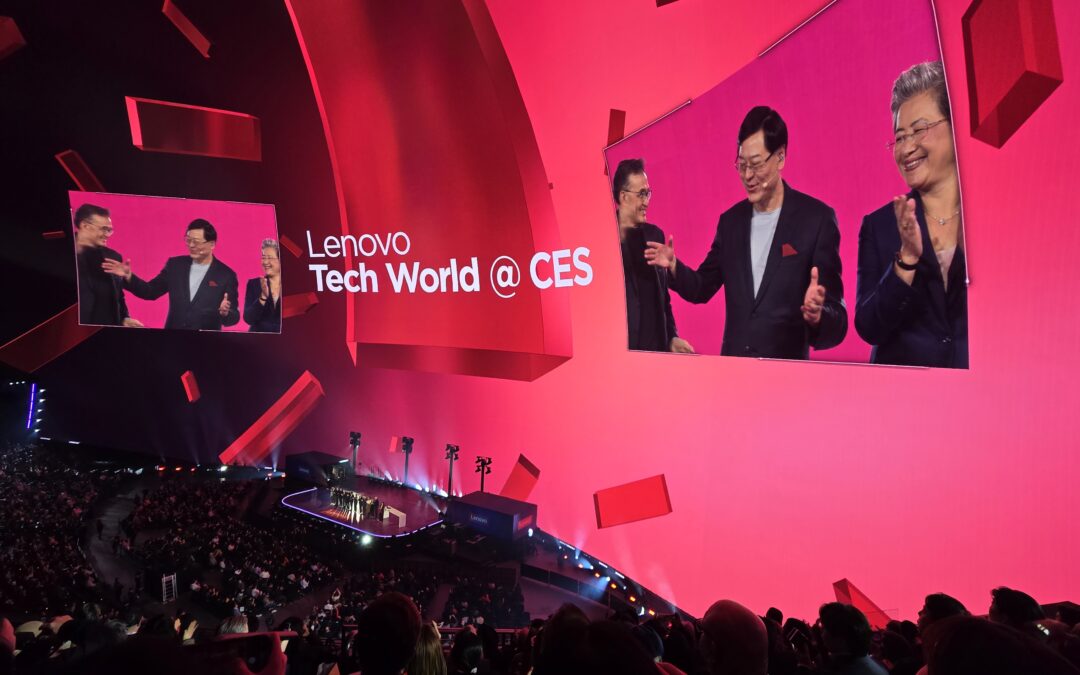
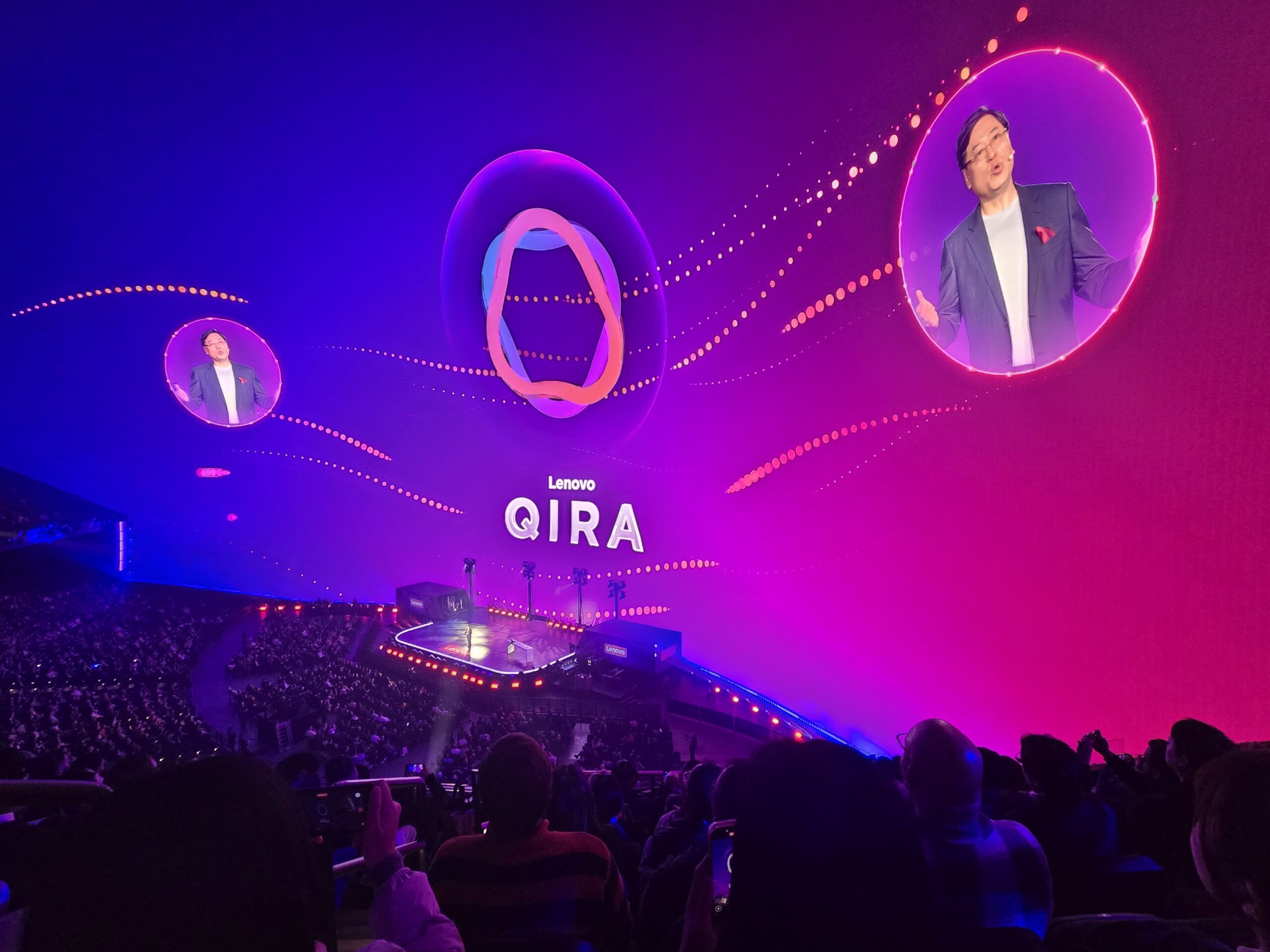
That message was unmistakable on Wednesday night as Lenovo hosted its annual Tech World event at the Sphere, Las Vegas’s landmark venue opened in September 2023. The scale of the setting matched the ambition of the message: the Sphere stands 366 feet high and 516 feet wide, spans 875,000 square feet, seats 18,600 people, and features a sound system of 167,000 individually amplified loudspeakers. Built over five years at a cost of $2.3 billion, it has quickly become one of the most technologically advanced entertainment venues in the world.
Against this backdrop, Lenovo Chairman and CEO Yuanqing Yang welcomed an extraordinary lineup of global technology leaders and partners to the stage, including Jensen Huang, founder and CEO of NVIDIA; Lip-Bu Tan, CEO of Intel; Cristiano Amon, president and CEO of Qualcomm; Dr. Lisa Su, chair and CEO of AMD; Yusuf Mehdi, executive vice president and consumer CMO of Microsoft; Angelina Gomez, Motorola’s head of software marketing; Jennifer Koester, president and CEO of Sphere; and Gianni Infantino, president of FIFA.
The event featured multiple product announcements and partnership reveals, capped by Lenovo’s unveiling of its new personal AI platform, Qira—a unified AI system designed to deliver seamless, real-time intelligence across devices and platforms. But beyond individual products, the message from global tech leaders was clear and consistent: AI is no longer an application layer—it is becoming the operating system of the future.
From Classical Computing to AI-Native Systems
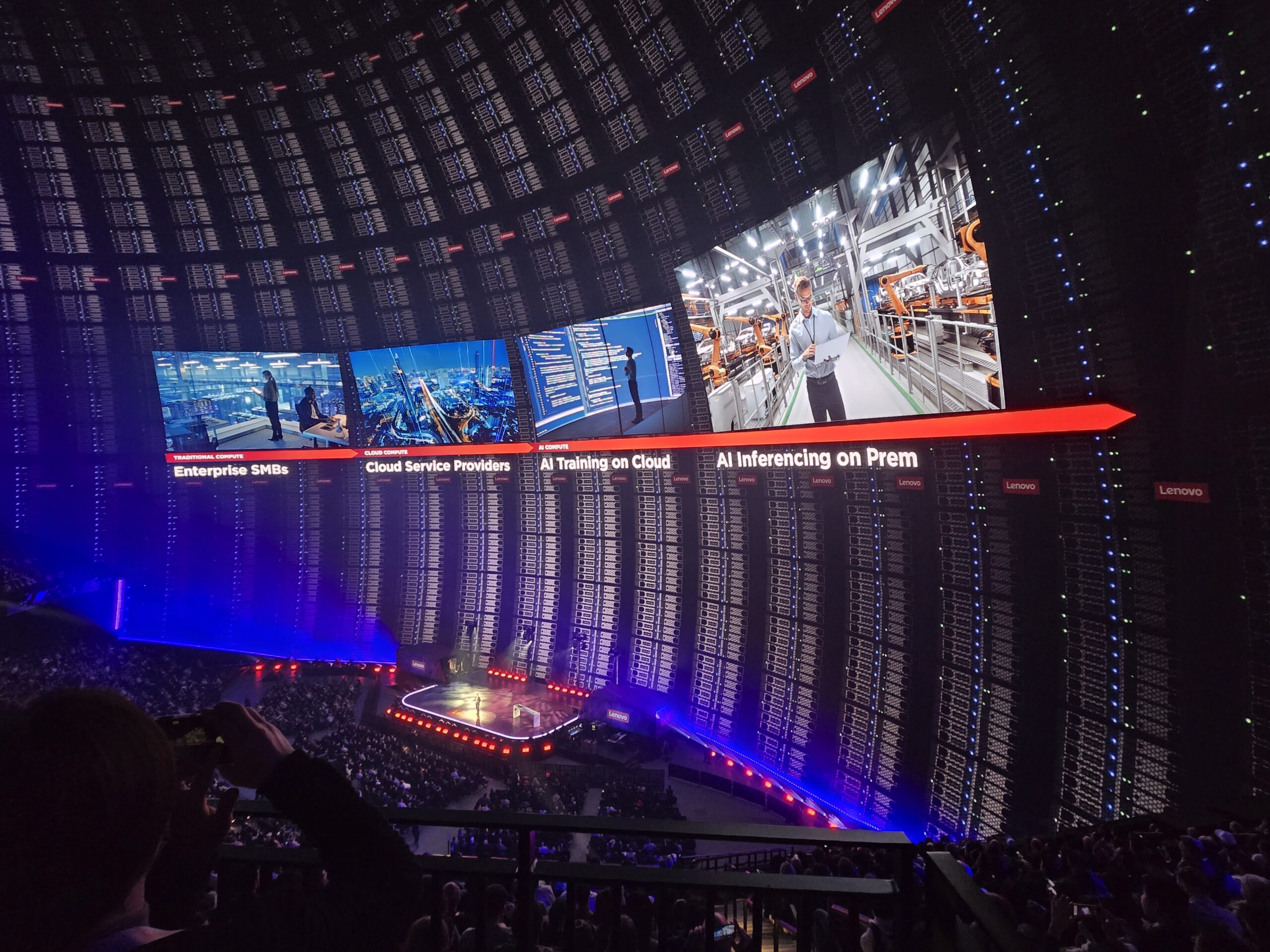
For decades, enterprise computing was built around applications written for CPUs and deployed in conventional data centers. That model is now rapidly being replaced by AI-native systems, where software is designed around large language models and executed on GPU-based, accelerated infrastructure.
Industry leaders described this transition as nothing less than a reinvention of the global IT landscape. Trillions of dollars in legacy systems, they said, will need to be modernized to support AI-driven workloads.
“This is not just a platform change,” one executive noted. “It’s a reinvention of the entire computing stack.”
AI Factories and Accelerated Infrastructure
At the core of this transformation is the emergence of what companies now call AI factories—purpose-built data centers designed specifically for AI training, inference, and deployment.
Unlike traditional data centers, these facilities are optimized for massive parallel processing, high-throughput workloads, and large-scale model operations. NVIDIA outlined multiple generations of accelerated computing platforms driving this shift, including Hopper, Blackwell, and the newly announced Vera Rubin architecture.
Each generation delivers exponential performance gains while lowering the cost of AI computation, making enterprise-scale AI deployment increasingly economically viable.
Agentic AI and the Explosion of Compute Demand
Another dominant theme was the rise of agentic AI—systems designed not merely to generate responses, but to reason, plan, reflect, and act autonomously.
These systems generate so-called “thinking tokens,” representing internal reasoning, decision-making, and multi-step planning processes. As AI models grow in complexity, computing demands are expanding rapidly. Executives noted that model sizes are already moving from hundreds of billions of parameters into the multi-trillion range, driving exponential growth in infrastructure requirements.
Hybrid AI: Intelligence Across Devices and Cloud
Lenovo outlined a hybrid AI architecture that distributes intelligence across multiple layers: personal devices, edge systems, private cloud environments, and large-scale AI factories.
In this model, smaller AI systems operate locally on devices, while larger models run in cloud infrastructure. Tasks are dynamically routed based on latency, performance, cost, and security requirements. The goal is to make AI more accessible while reducing complexity for both users and organizations.
Partnerships Powering Global Deployment
Strategic partnerships were presented as critical to scaling AI infrastructure worldwide.
Lenovo and NVIDIA announced an expanded collaboration to deploy AI factories globally, combining NVIDIA’s accelerated computing platforms with Lenovo’s manufacturing scale, cooling systems, and global services infrastructure. The objective: reduce deployment complexity and dramatically shorten the time from installation to operational AI use.
Intel and Lenovo also reaffirmed their long-standing partnership, focusing on AI-powered PCs, enterprise systems, and data center platforms designed to support AI workloads across devices and cloud environments.
From Intelligence to Action
Speakers emphasized that AI is moving beyond analytics and insight generation toward real-time action and automation.
Next-generation AI systems are increasingly being designed to execute workflows, manage operations, coordinate tasks, and operate autonomously across enterprise systems. This shift is expected to reshape industries including manufacturing, logistics, healthcare, entertainment, and even global sporting events.
A New Computing Era
Leaders at CES 2026 framed the current transition as one of the largest technological shifts in modern history—comparable to the rise of the internet or mobile computing.
In this new paradigm:
AI systems replace traditional application frameworks
The result is the emergence of an AI-native digital ecosystem.
Looking Ahead
As AI infrastructure, models, and systems continue to evolve, the boundaries between software, hardware, and intelligence are rapidly dissolving.
What is emerging is not simply a new generation of technology, but a new foundation for digital society—one in which intelligence itself becomes infrastructure.
At CES 2026, that future no longer appeared theoretical.
It is already being built.
The evening concluded with a live performance by Gwen Stefani, showcasing the Sphere’s immersive audio-visual capabilities and underscoring the fusion of technology, entertainment, and AI-driven experiences.
At the press conference Bosch executives: Tanja Rückert, board member and Paul Thomas, president of Bosch in North America unveiled a sweeping vision of how artificial intelligence and software are reshaping everyday life—from verifying product authenticity to redefining cooking, mobility, and industrial productivity. Drawing on its deep expertise across both the physical and digital worlds, Bosch demonstrated how intelligent technology can reduce complexity, eliminate stress, and empower people across skill levels.
Fighting Counterfeiting With AI
Bosch opened by introducing a revolutionary AI-powered authenticity verification technology. Using live video analysis, the system can quickly and reliably determine whether an item—such as sneakers, car parts, or artwork—is genuine. By bridging the physical and digital divide, this innovation has the potential to significantly disrupt the global counterfeiting industry and strengthen consumer trust.
AI That Serves People at Home
At the core of Bosch’s philosophy is a simple principle: technology should serve people, not the other way around. Nowhere is this more evident than in the kitchen. Bosch showcased how generative AI combined with advanced sensors can elevate cooking for everyone—from home cooks to professional chefs.
Celebrity chef Marcel Vigneron demonstrated Bosch Cook AI, a next-generation cooking assistant that builds on the brand’s AutoChef induction technology. By analyzing ingredients through images, understanding user preferences, and monitoring food in real time with Bluetooth temperature probes, the system precisely controls heat and cooking time to deliver consistent, high-quality results. The goal is not to replace human creativity, but to remove uncertainty and stress from cooking.
Appliances That Improve Over Time
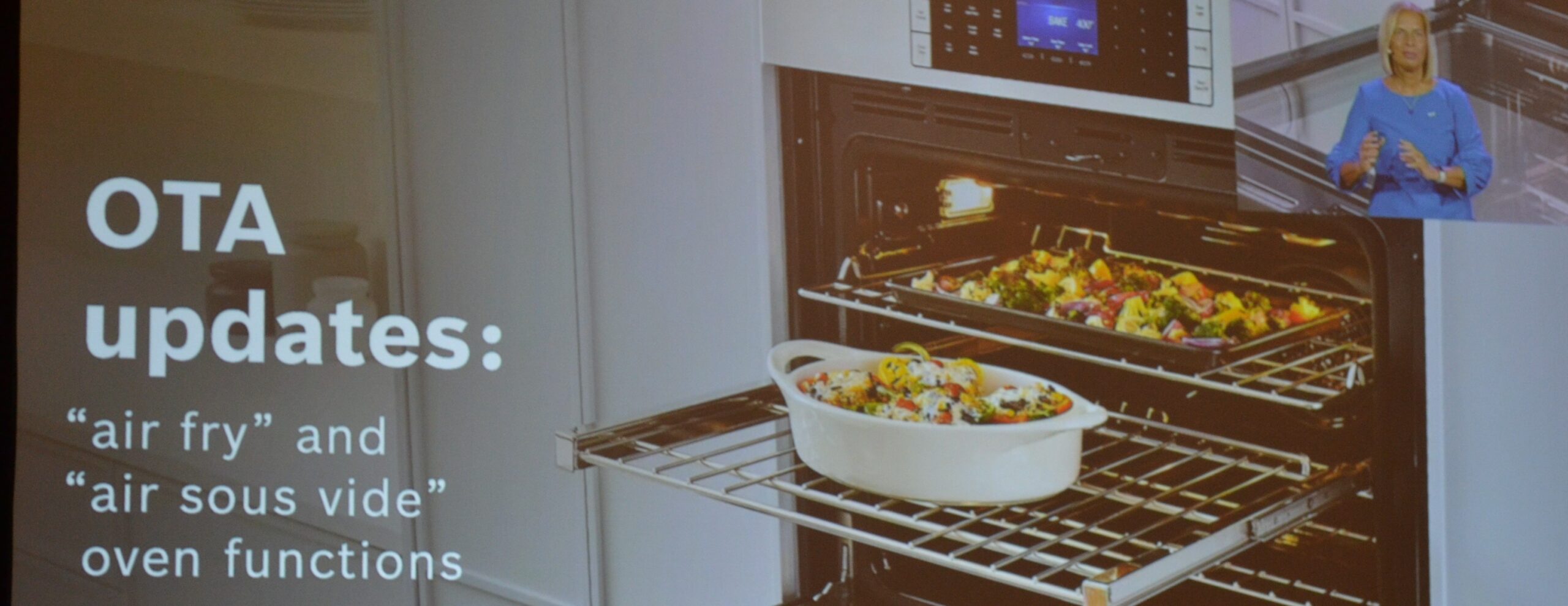
Bosch emphasized that modern appliances no longer need to be replaced to gain new features. Through connectivity and over-the-air software updates, existing Bosch products can evolve long after purchase. Recent updates have added new cooking functions, such as air fry and advanced heating modes, to connected ovens at no additional cost—demonstrating Bosch’s commitment to long-term value.
Software-Defined Mobility
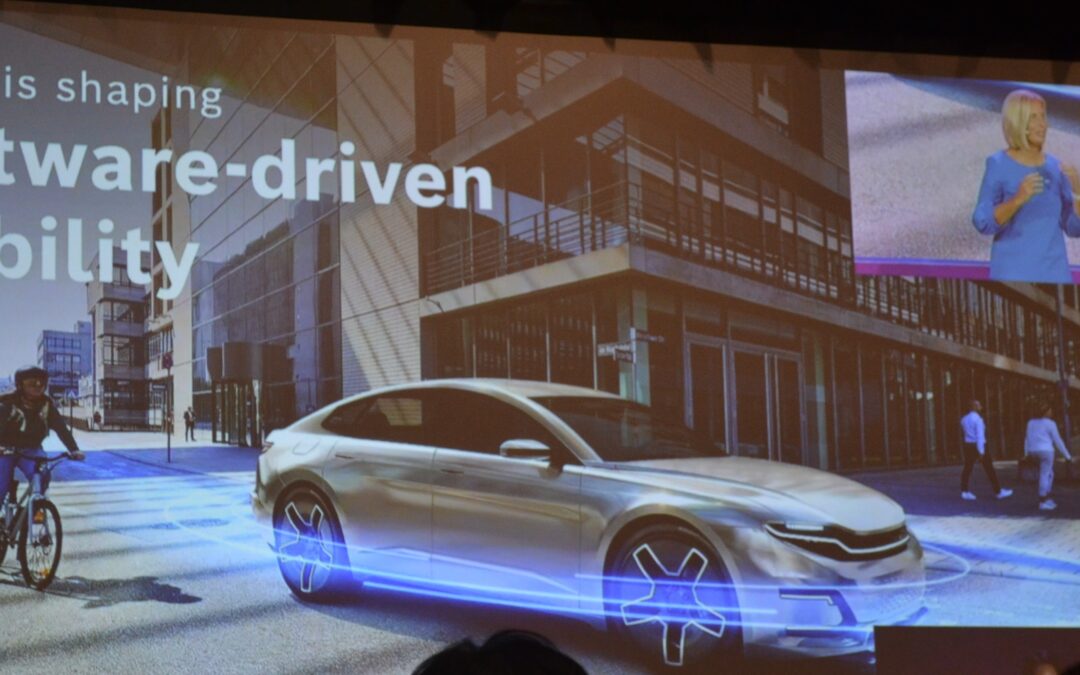
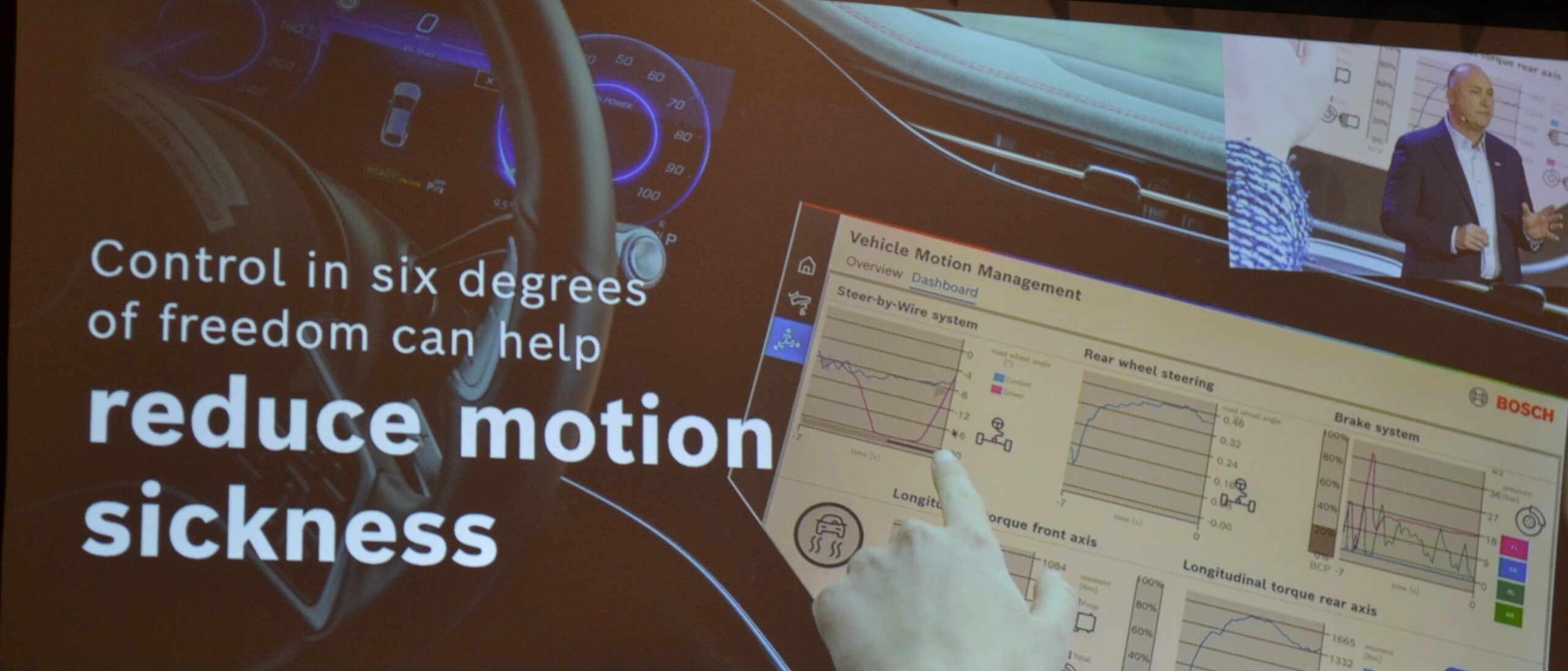
Beyond the home, Bosch highlighted how its software and hardware integration is transforming mobility. Its vehicle motion management technology allows cars to gain new driving modes and personalization features even after leaving the dealership. By intelligently coordinating braking, steering, powertrain, and suspension systems, Bosch’s software can improve comfort, safety, and driving dynamics.
One major advancement is six-degrees-of-freedom vehicle control, which helps significantly reduce motion sickness—an issue affecting a large portion of adults and a major barrier to autonomous driving adoption.
Building the Future of Software-Defined Vehicles
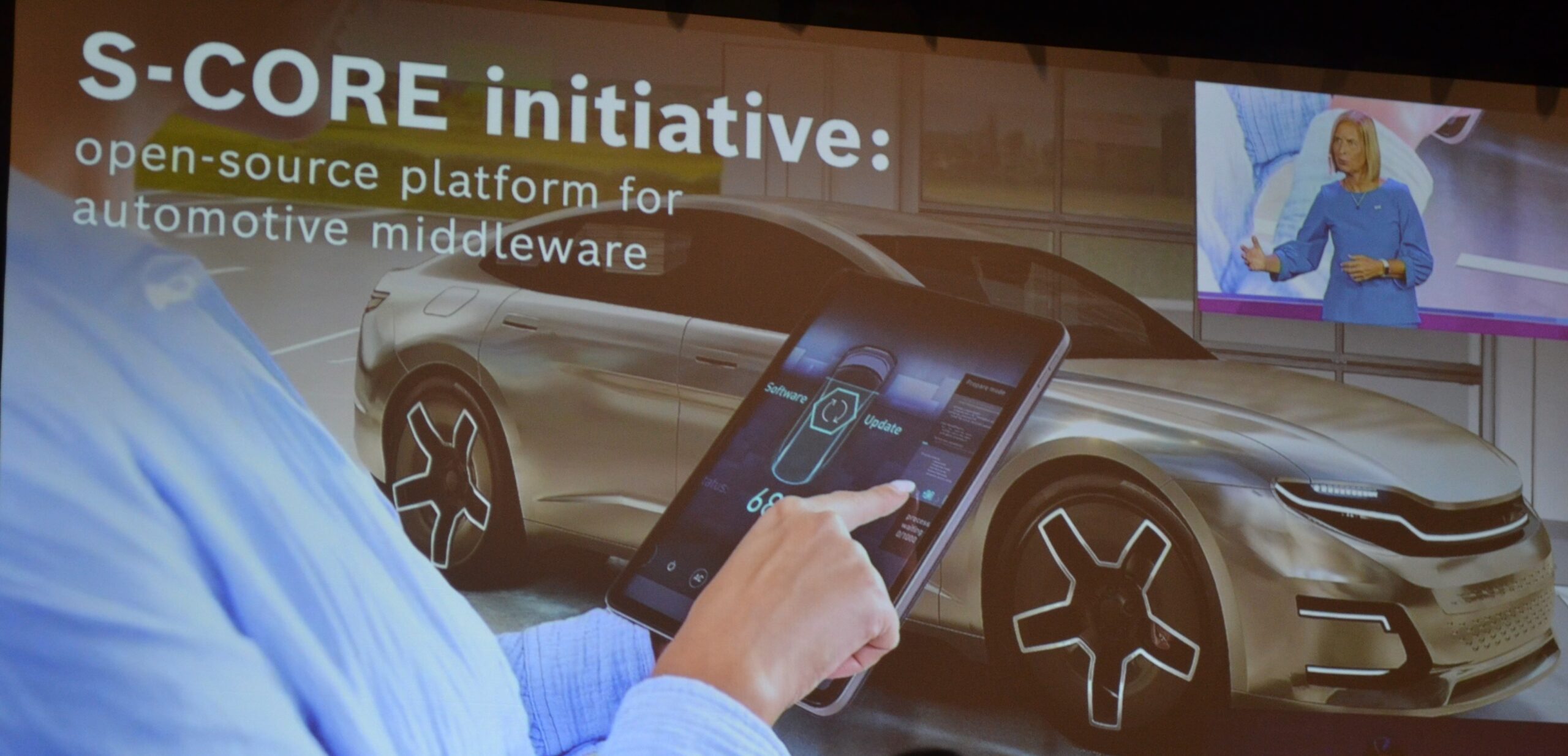
Bosch is playing a key role in the shift toward software-defined vehicles, a market projected to exceed one trillion dollars by the end of the decade. The company is developing open, high-performance middleware platforms that act as the “nervous system” of modern vehicles, simplifying development, lowering costs, improving security, and accelerating innovation for automakers worldwide.
Bosch also announced progress in key technologies such as steer-by-wire and brake-by-wire systems, essential components for future automated and autonomous vehicles. These systems are already moving into large-scale production with major global automakers.
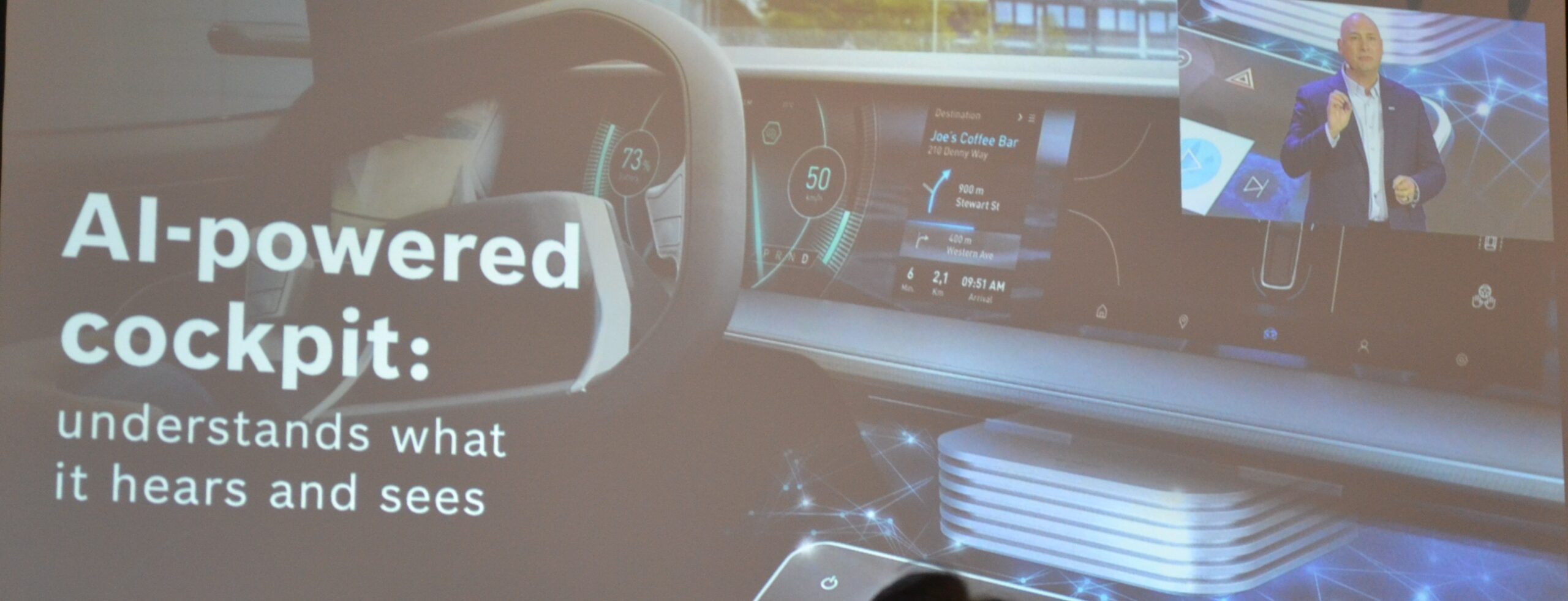
AI That Sees, Hears, and Understands
Artificial intelligence is central to Bosch’s automotive roadmap. The company showcased AI-powered cognitive vehicles capable of both seeing and hearing through advanced language models. These systems enable natural conversations with vehicles, intelligent perception of surroundings, automated parking, and even real-time meeting assistance while driving or riding as a passenger.
Bosch expects AI-based solutions for assisted and automated driving to become a multi-billion-euro business by 2035.
AI for Industry and Productivity
Bosch also demonstrated how its AI expertise extends into industrial applications. By partnering with technology leaders such as Microsoft, Bosch aims to apply generative AI to manufacturing environments, boosting productivity, efficiency, and flexibility in increasingly complex industrial operations.
A Unified Vision
Across all domains—consumer goods, mobility, and industry—Bosch’s message was consistent: its strength lies in combining hardware, software, and AI into complete systems and ecosystems. Rather than offering isolated components, Bosch is building intelligent platforms that deliver real-world benefits, improve quality of life, and prepare society for a more connected, automated future.