
Artificial intelligence is no longer just another layer of software. It is rapidly becoming the foundation of modern computing itself.
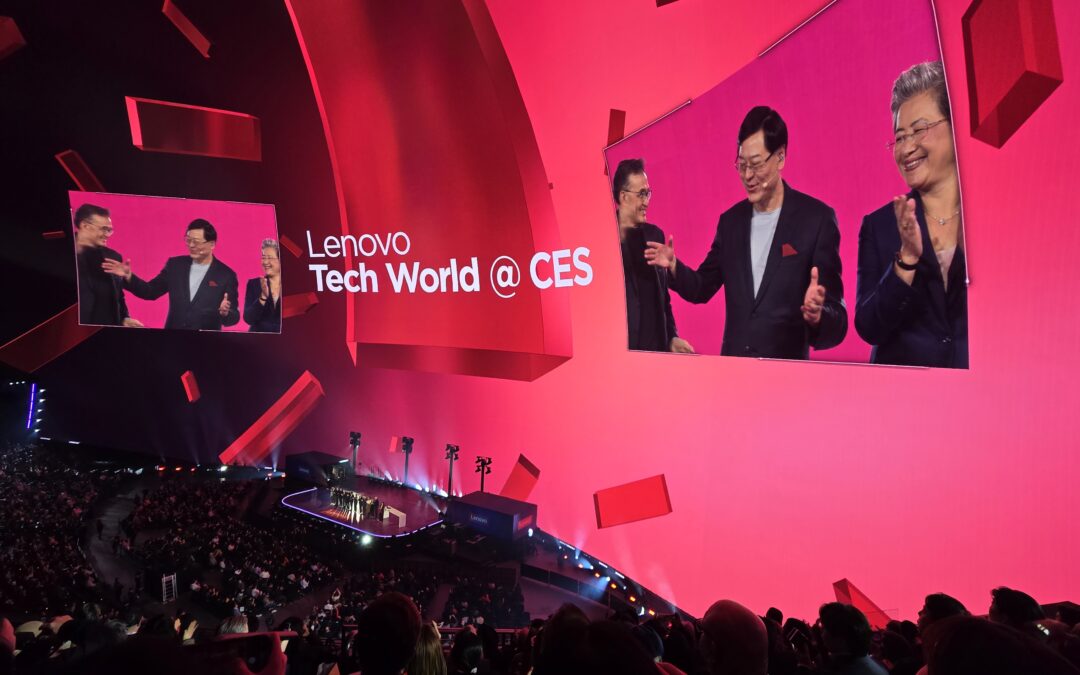
That message was unmistakable on Wednesday night as Lenovo hosted its annual Tech World event at the Sphere, Las Vegas’s landmark venue opened in September 2023. The scale of the setting matched the ambition of the message: the Sphere stands 366 feet high and 516 feet wide, spans 875,000 square feet, seats 18,600 people, and features a sound system of 167,000 individually amplified loudspeakers. Built over five years at a cost of $2.3 billion, it has quickly become one of the most technologically advanced entertainment venues in the world.
Against this backdrop, Lenovo Chairman and CEO Yuanqing Yang welcomed an extraordinary lineup of global technology leaders and partners to the stage, including Jensen Huang, founder and CEO of NVIDIA; Lip-Bu Tan, CEO of Intel; Cristiano Amon, president and CEO of Qualcomm; Dr. Lisa Su, chair and CEO of AMD; Yusuf Mehdi, executive vice president and consumer CMO of Microsoft; Angelina Gomez, Motorola’s head of software marketing; Jennifer Koester, president and CEO of Sphere; and Gianni Infantino, president of FIFA.
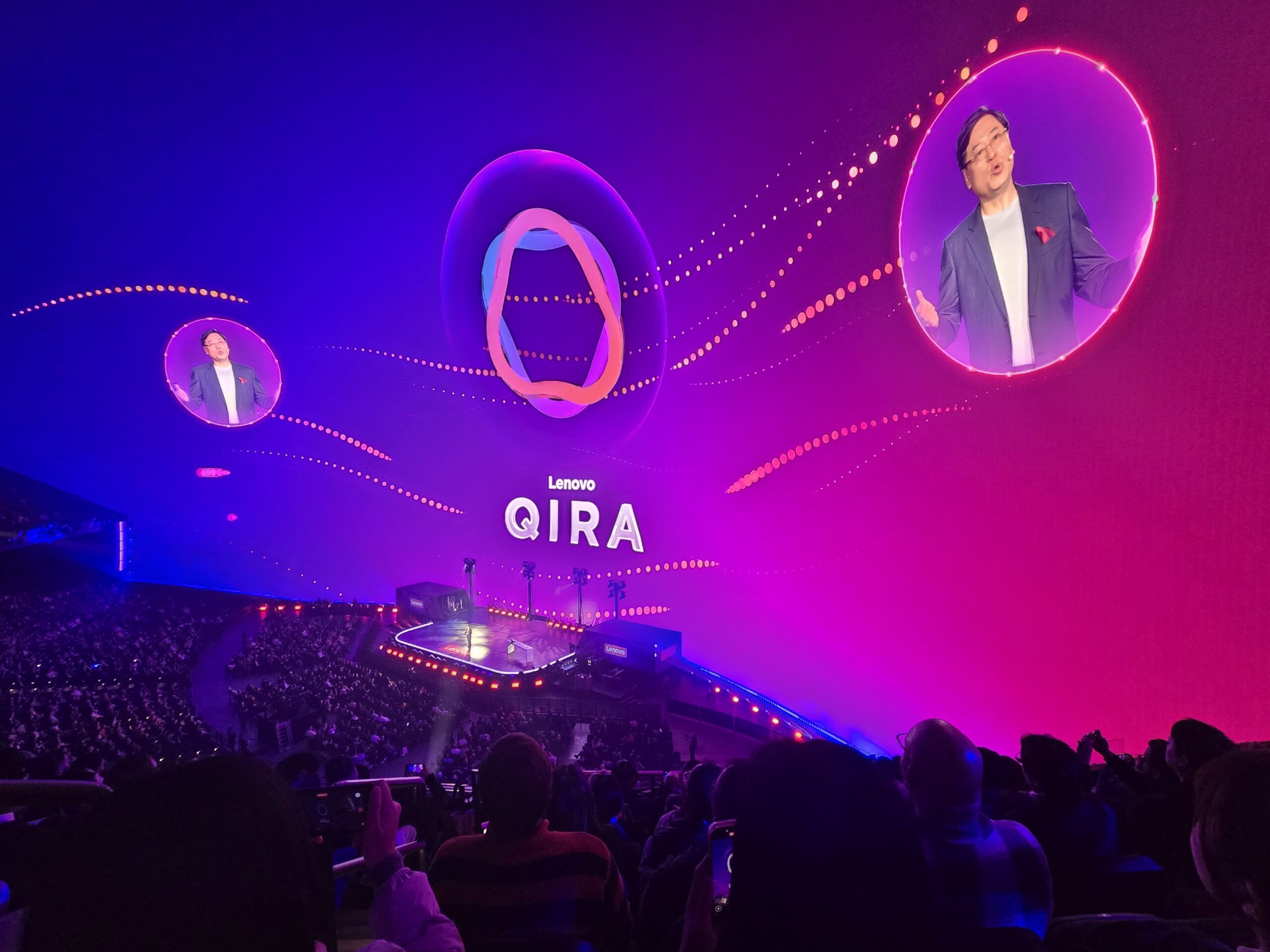
The event featured multiple product announcements and partnership reveals, capped by Lenovo’s unveiling of its new personal AI platform, Qira—a unified AI system designed to deliver seamless, real-time intelligence across devices and platforms. But beyond individual products, the message from global tech leaders was clear and consistent: AI is no longer an application layer—it is becoming the operating system of the future.
From Classical Computing to AI-Native Systems
For decades, enterprise computing was built around applications written for CPUs and deployed in conventional data centers. That model is now rapidly being replaced by AI-native systems, where software is designed around large language models and executed on GPU-based, accelerated infrastructure.
Industry leaders described this transition as nothing less than a reinvention of the global IT landscape. Trillions of dollars in legacy systems, they said, will need to be modernized to support AI-driven workloads.
“This is not just a platform change,” one executive noted. “It’s a reinvention of the entire computing stack.”
AI Factories and Accelerated Infrastructure
At the core of this transformation is the emergence of what companies now call AI factories—purpose-built data centers designed specifically for AI training, inference, and deployment.
Unlike traditional data centers, these facilities are optimized for massive parallel processing, high-throughput workloads, and large-scale model operations. NVIDIA outlined multiple generations of accelerated computing platforms driving this shift, including Hopper, Blackwell, and the newly announced Vera Rubin architecture.
Each generation delivers exponential performance gains while lowering the cost of AI computation, making enterprise-scale AI deployment increasingly economically viable.
Agentic AI and the Explosion of Compute Demand
Another dominant theme was the rise of agentic AI—systems designed not merely to generate responses, but to reason, plan, reflect, and act autonomously.
These systems generate so-called “thinking tokens,” representing internal reasoning, decision-making, and multi-step planning processes. As AI models grow in complexity, computing demands are expanding rapidly. Executives noted that model sizes are already moving from hundreds of billions of parameters into the multi-trillion range, driving exponential growth in infrastructure requirements.
Hybrid AI: Intelligence Across Devices and Cloud
Lenovo outlined a hybrid AI architecture that distributes intelligence across multiple layers: personal devices, edge systems, private cloud environments, and large-scale AI factories.
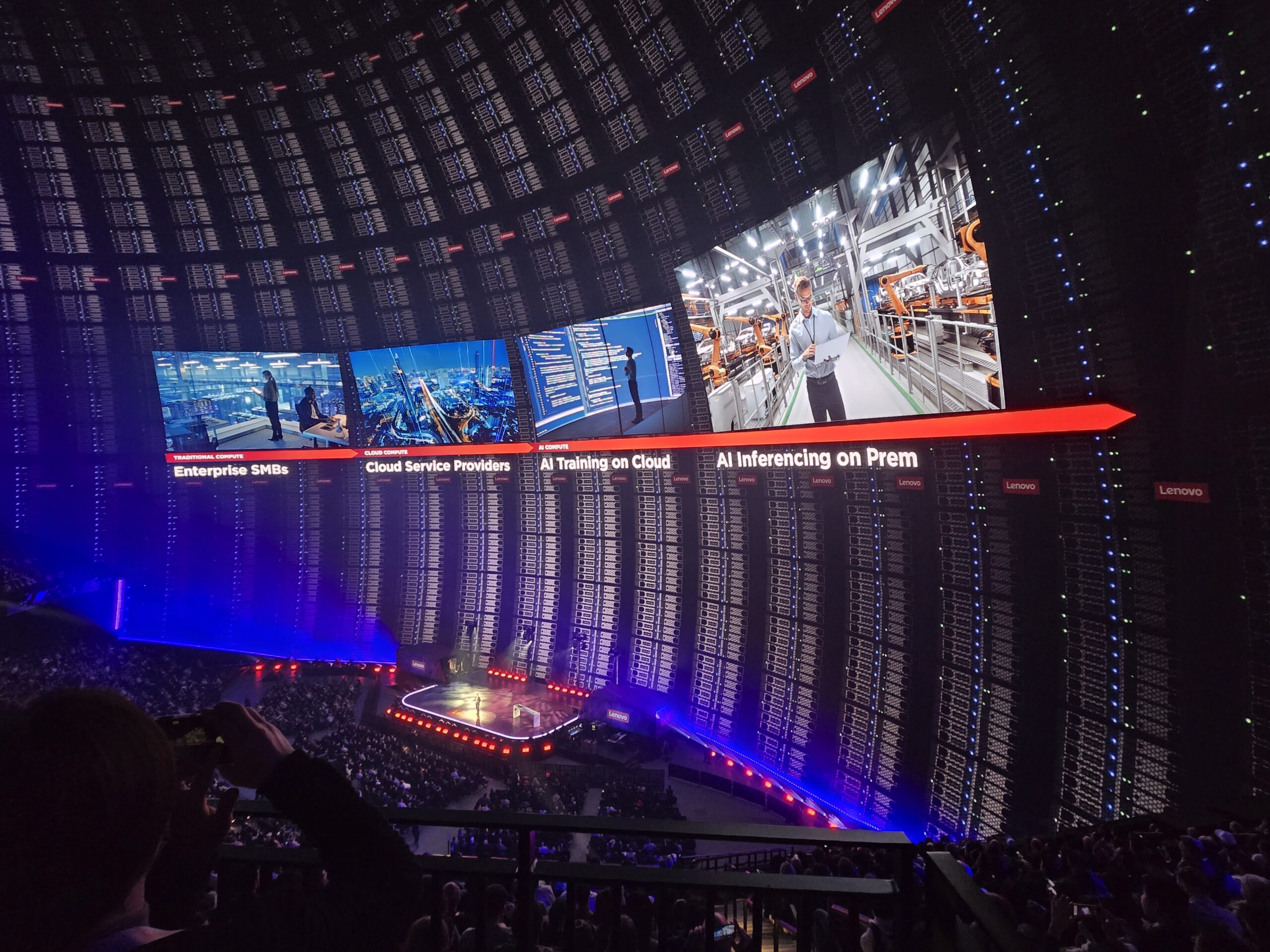
In this model, smaller AI systems operate locally on devices, while larger models run in cloud infrastructure. Tasks are dynamically routed based on latency, performance, cost, and security requirements. The goal is to make AI more accessible while reducing complexity for both users and organizations.
Partnerships Powering Global Deployment
Strategic partnerships were presented as critical to scaling AI infrastructure worldwide.
Lenovo and NVIDIA announced an expanded collaboration to deploy AI factories globally, combining NVIDIA’s accelerated computing platforms with Lenovo’s manufacturing scale, cooling systems, and global services infrastructure. The objective: reduce deployment complexity and dramatically shorten the time from installation to operational AI use.
Intel and Lenovo also reaffirmed their long-standing partnership, focusing on AI-powered PCs, enterprise systems, and data center platforms designed to support AI workloads across devices and cloud environments.
From Intelligence to Action
Speakers emphasized that AI is moving beyond analytics and insight generation toward real-time action and automation.
Next-generation AI systems are increasingly being designed to execute workflows, manage operations, coordinate tasks, and operate autonomously across enterprise systems. This shift is expected to reshape industries including manufacturing, logistics, healthcare, entertainment, and even global sporting events.
A New Computing Era
Leaders at CES 2026 framed the current transition as one of the largest technological shifts in modern history—comparable to the rise of the internet or mobile computing.
In this new paradigm:
- AI systems replace traditional application frameworks
- Accelerated computing replaces CPU-centric architectures
- AI factories replace conventional data centers
- Intelligent agents replace traditional interfaces
The result is the emergence of an AI-native digital ecosystem.
Looking Ahead
As AI infrastructure, models, and systems continue to evolve, the boundaries between software, hardware, and intelligence are rapidly dissolving.
What is emerging is not simply a new generation of technology, but a new foundation for digital society—one in which intelligence itself becomes infrastructure.
At CES 2026, that future no longer appeared theoretical.
It is already being built.
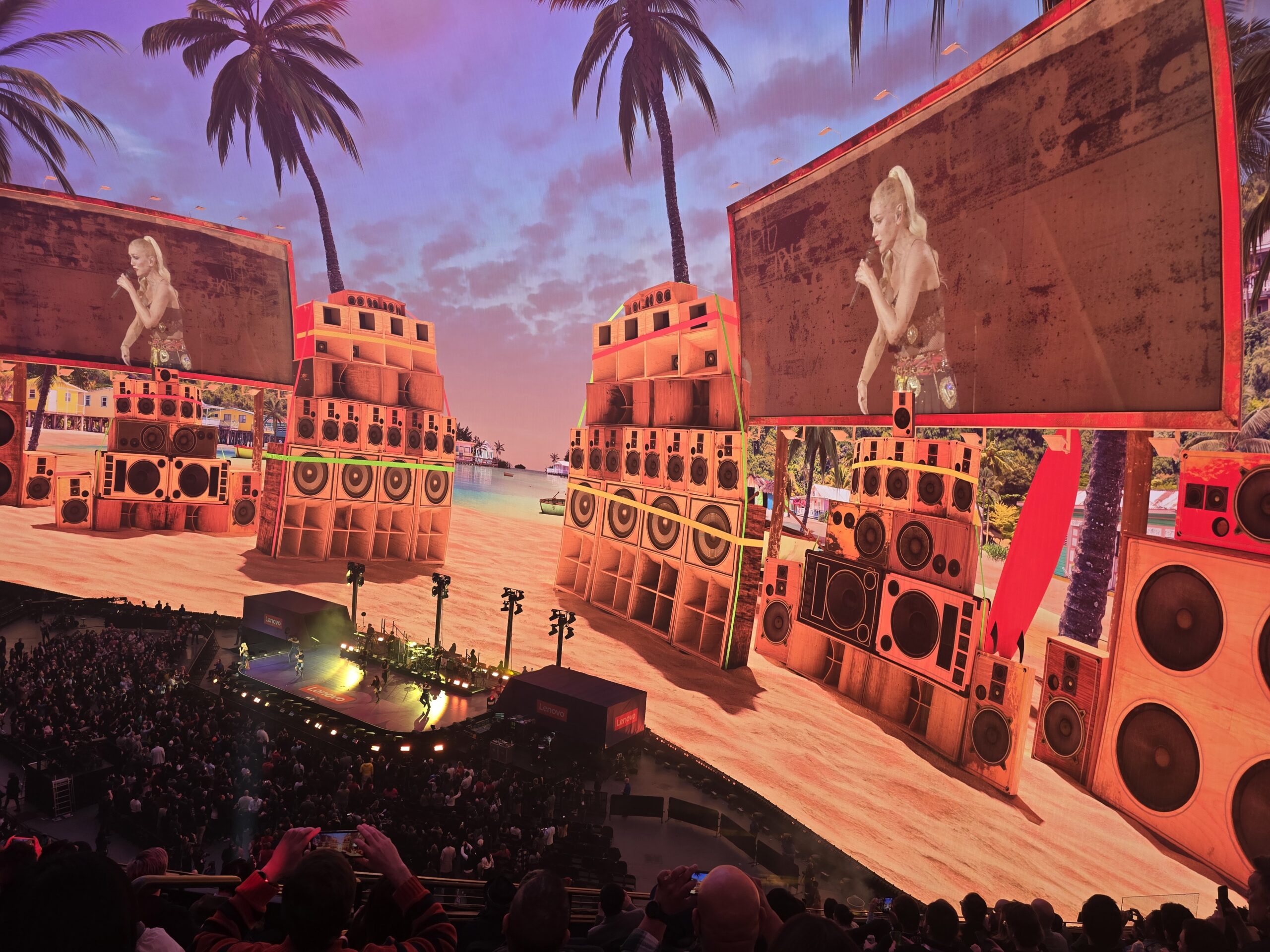
The evening concluded with a live performance by Gwen Stefani, showcasing the Sphere’s immersive audio-visual capabilities and underscoring the fusion of technology, entertainment, and AI-driven experiences.
