
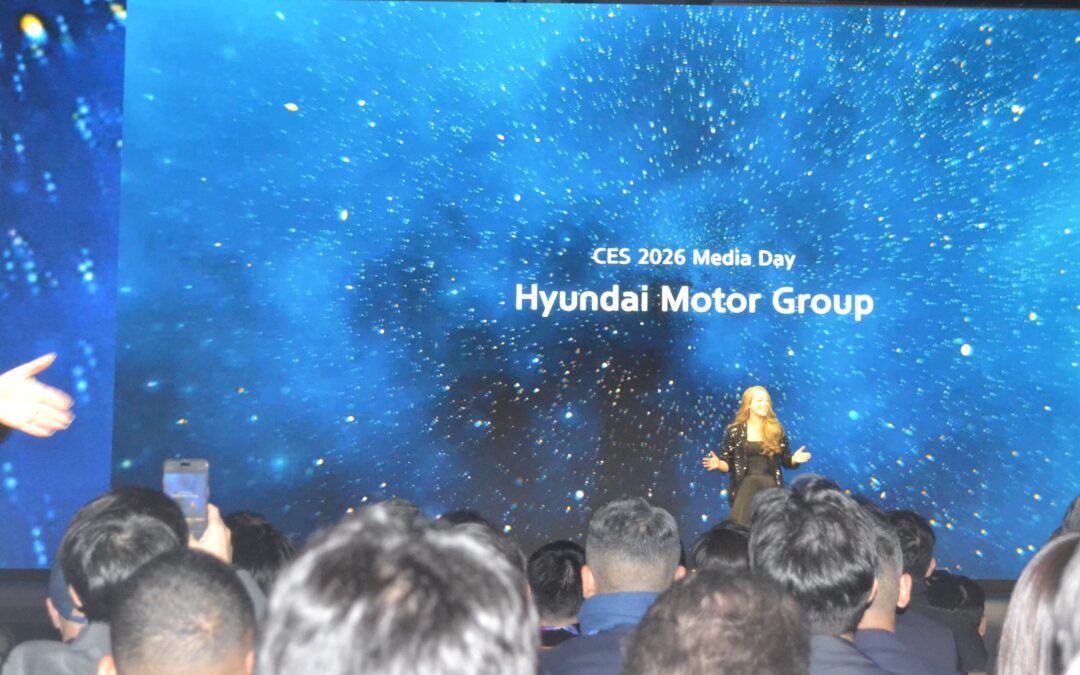
Hyundai Motor Group, Boston Dynamics, and Google DeepMind used this year’s Consumer Electronics Show to present a long-term vision for artificial intelligence and robotics focused on collaboration between humans and machines, rather than automation for its own sake.
The companies framed their message around what they described as human-centered AI robotics—systems designed to support human work, improve safety, and expand productivity, rather than replace human labor. Executives emphasized that robotics is moving beyond spectacle and demonstration toward real-world deployment and practical impact.
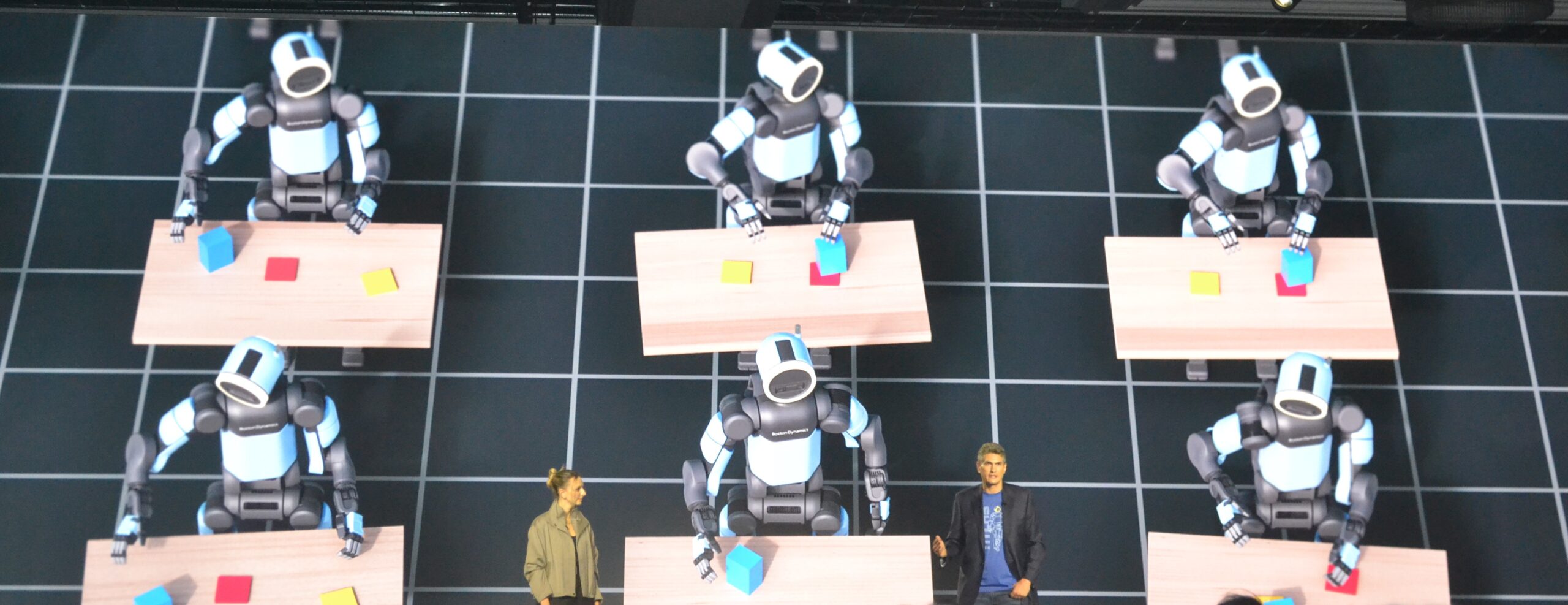
From humanoid robots in factories to AI systems that learn through experience, speakers stressed that the next phase of robotics development is about purpose-driven technology.
From Demonstration to Deployment
Boston Dynamics, long known for its high-profile demonstrations of robots that run, jump, and perform complex movements, positioned its work as increasingly focused on industrial and commercial applications.
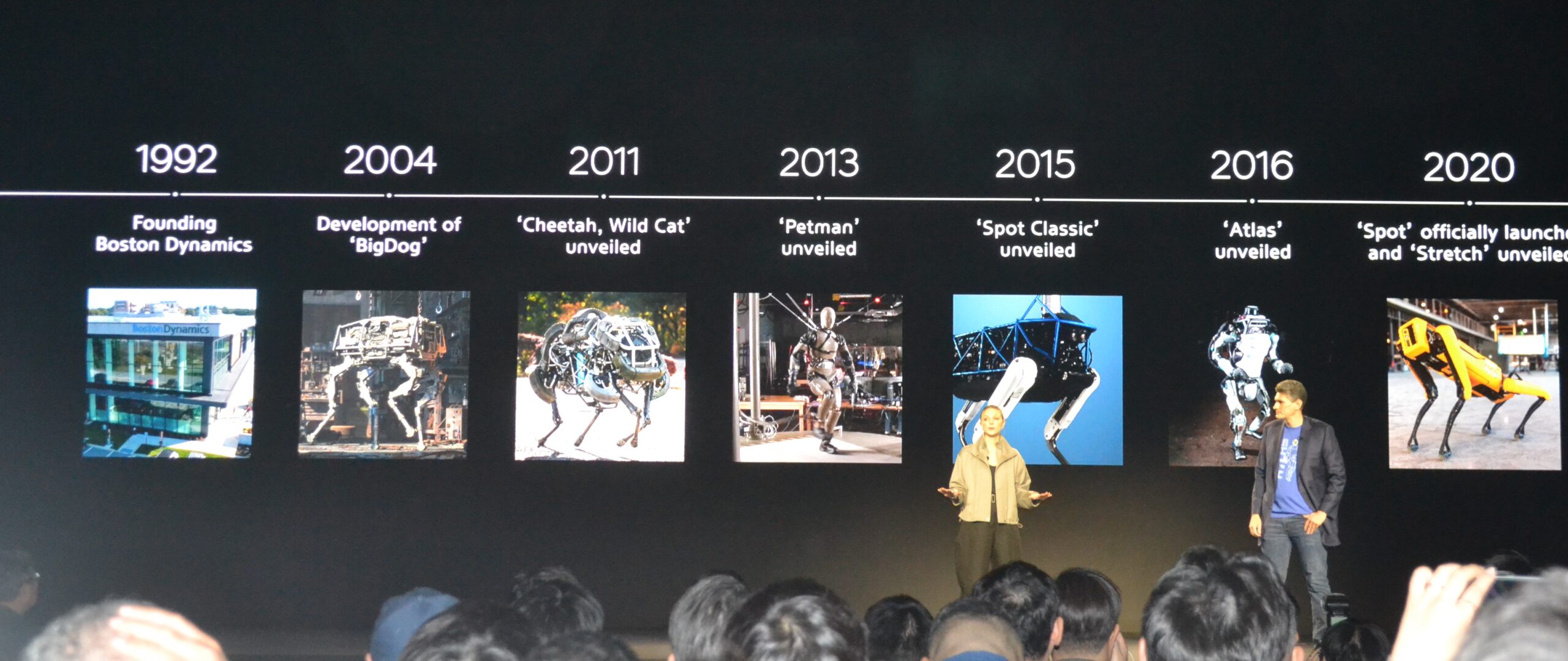
Aya Durbin, Humanoid Application Product Lead and Zachary Jackowski, Vice President, General Manager of Atlas highlighted the shift toward robots designed for hazardous environments, repetitive labor, and physically demanding tasks. The stated goal is to reduce workplace injuries, increase safety, and improve operational efficiency across industries.
Rather than replacing human workers, executives said the company’s strategy is centered on extending human capability and removing people from dangerous or exhausting roles.
Atlas: A General-Purpose Humanoid Platform
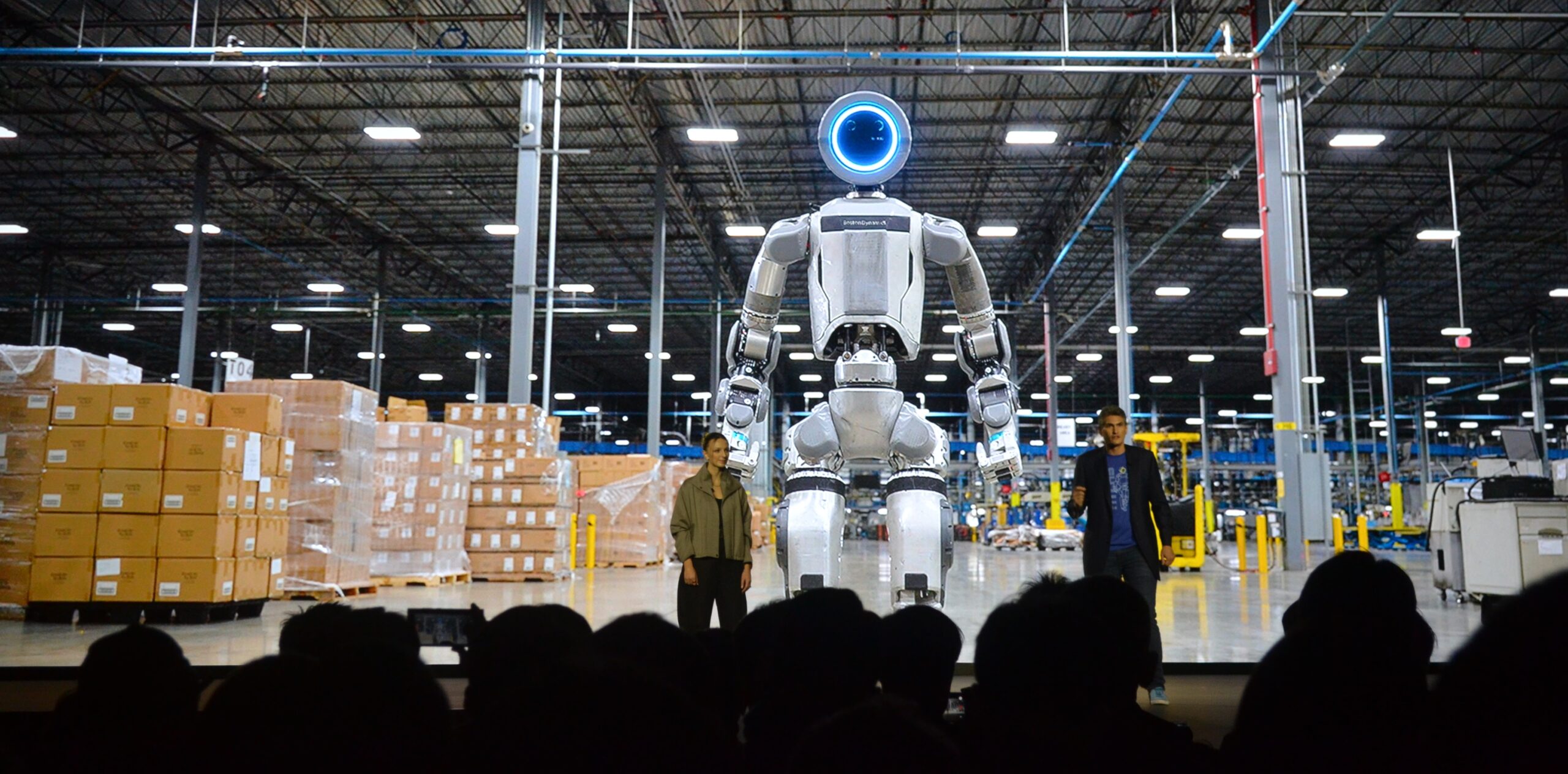
The centerpiece of the presentation was the public unveiling of Atlas, Boston Dynamics’ next-generation humanoid robot.
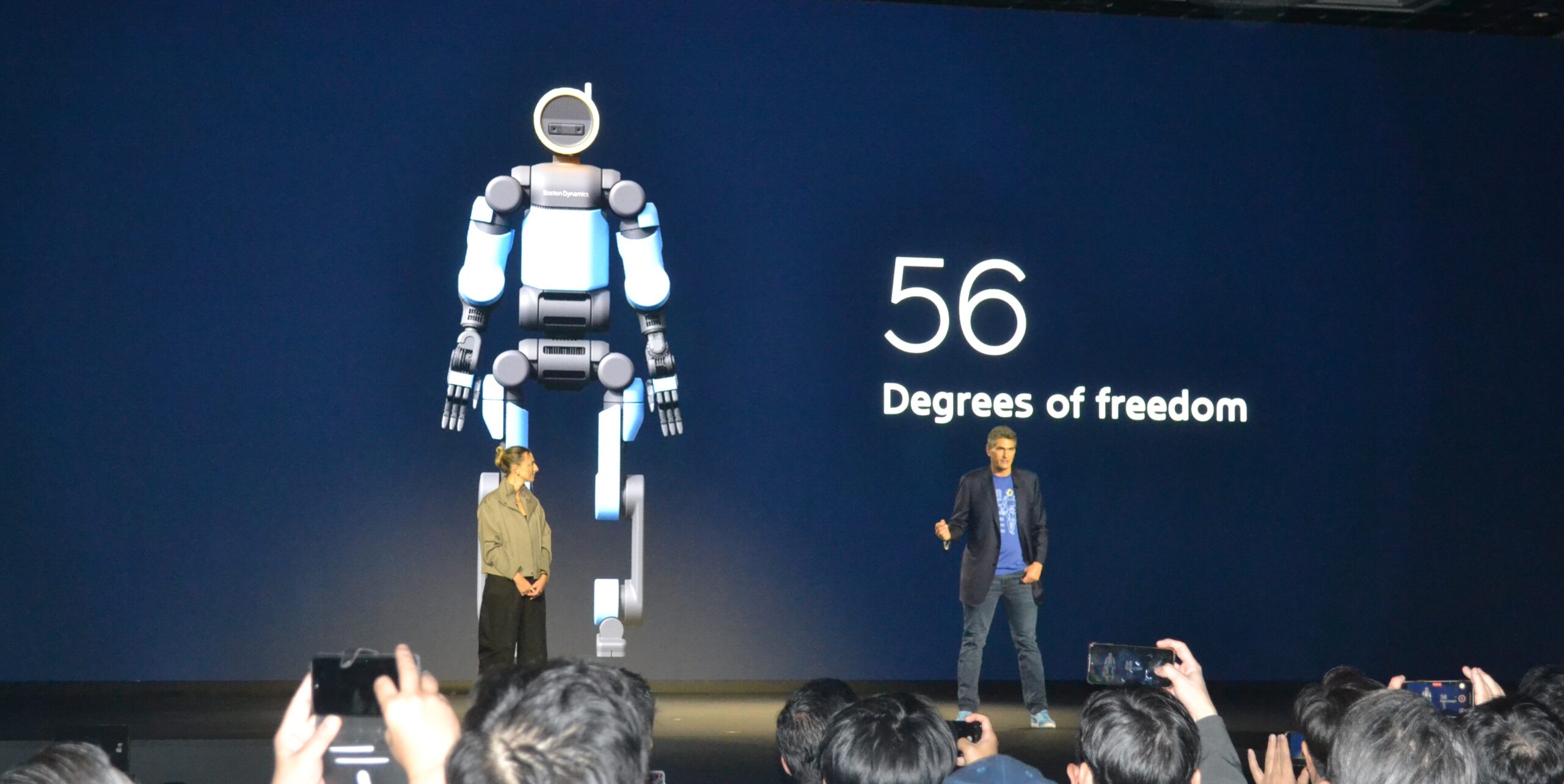
Unlike traditional industrial robots built for single-task automation, Atlas is being developed as a general-purpose humanoid platform. According to company representatives, the robot is designed to navigate complex environments, manipulate objects with human-like dexterity, and adapt to different tasks as operational needs change.
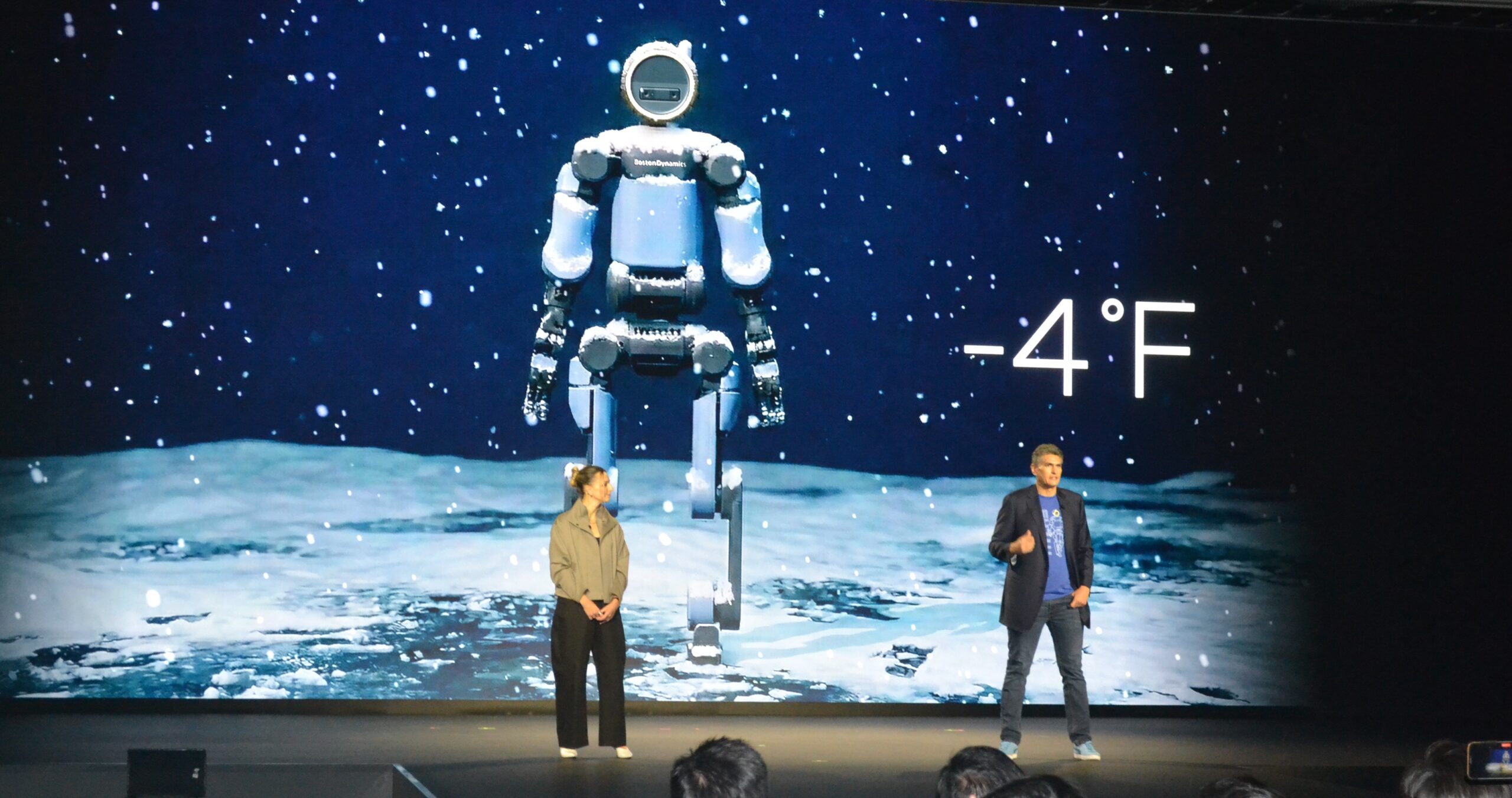
Atlas is engineered for industrial settings and includes capabilities such as heavy lifting, extended reach, autonomous operation, operation in extreme temperatures, and self-managed battery systems. It is also designed to share learned tasks across multiple units through cloud-based intelligence systems, creating what the company described as a networked learning model.
Commercial Robotics in Operation
Boston Dynamics pointed to its existing commercial robots as evidence that this approach is already being deployed at scale.
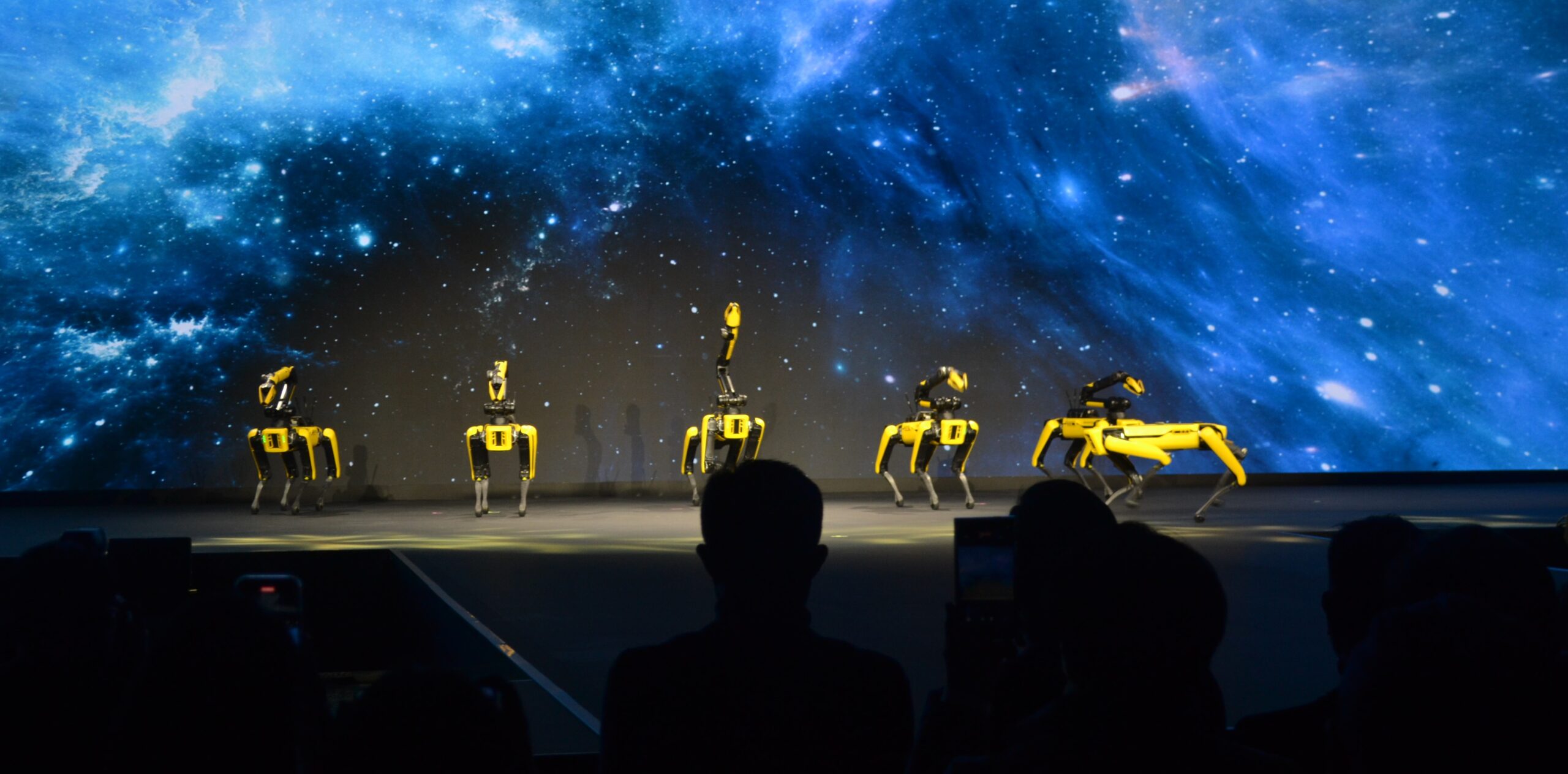
The quadruped robot Spot is currently used in thousands of facilities across more than 40 countries, where it performs industrial inspection, data collection, and safety monitoring tasks. The warehouse robot Stretch has been deployed in logistics environments to automate truck unloading and material handling, with more than 20 million boxes reportedly processed through customer operations.
Company officials emphasized that these systems are already in commercial use and producing measurable operational outcomes.
Hyundai’s Global Robotics Strategy
Hyundai Motor Group outlined plans to build large-scale infrastructure to support global robotics deployment. The company is developing manufacturing facilities capable of producing tens of thousands of humanoid robots annually, alongside data-driven production systems and AI-enabled factory environments.
Executives described a long-term strategy that extends beyond manufacturing into logistics, construction, energy, infrastructure, and smart city development, with eventual plans for integration into consumer and home environments.
Hyundai’s approach includes service-based robotics models, integrated deployment networks, and AI-powered industrial ecosystems designed to scale robotics adoption across multiple sectors.
Partnership with Google DeepMind
A major announcement at the event was the partnership between Boston Dynamics and Google DeepMind Robotics, bringing together advanced physical robotics and large-scale AI foundation models.
The collaboration aims to develop general-purpose humanoid intelligence systems that combine physical capability with advanced reasoning, language understanding, and adaptive learning.
Rather than relying on pre-programmed task execution, the companies said future robots will be able to learn through observation and experience, generalize skills across environments, and continuously improve performance over time.
Redefining Human–Robot Collaboration
Speakers emphasized that the vision presented at CES is based on collaboration rather than replacement.
Under this model, humans remain responsible for supervision, decision-making, judgment, and ethics, while robots take on physically demanding, repetitive, and hazardous tasks. The goal, according to company leaders, is to improve workplace safety, increase productivity, and allow people to focus on higher-value activities such as problem-solving, leadership, and creative work.
A Broader Shift in Robotics
The companies framed the developments as part of a broader transformation in how robotics is designed and deployed. Rather than isolated automation systems, they described the emergence of integrated human–robot ecosystems built around shared intelligence, learning systems, and scalable infrastructure.
Executives summarized the vision as a model of technological development centered on partnership between humans and machines, rather than competition between them.
Looking Ahead
As AI systems, robotics platforms, and industrial infrastructure continue to converge, industry leaders said the line between digital intelligence and physical systems will continue to blur.
What is emerging, they argued, is a new model of robotics—one where machines are designed not simply to operate autonomously, but to function as collaborators within human systems.
At CES 2026, that future was presented not as a distant concept, but as a roadmap already moving into real-world deployment.
Photos by Lidia Paulinska
