by Lidia Paulinska | Nov 8, 2015
In 1983, a long time before Hollywood audiences fell in love with Computer Generating Imagery, also commonly known as “CGI”, the first experiment in a commercial motion picture film that combined live action and archival footage took place. This happened in Woody Allen’s groundbreaking film, “Zelig”, which he wrote, directed and starred in. Allen was the first filmmaker to use CGI in his production, which would be the beginnings of CGI, which would transform films into places we’ve never been before. CGI would forever assist the filmmaker in making his historical storytelling credible to all audiences.
“Zelig”, which is no doubt one of his most brilliant storytelling gems from Allen’s catalog of films is about a freak documentary about Leonard Zelig, who has paranormal abilities, like a chameleon who changes himself just by looking at someone; for example, in a presence full of Chinese people, he would change right before your eyes and become Chinese. The culmination scene is when Leonard one day disappears all of the sudden under unclear circumstances, and the psychologist, played by Mia Farrow, who is in love with him, and has been desperately searching for him until she saw him in the movie theatre movie screen, that was screening news from the world. At that moment, Leonard is standing amongst the crowd of people saluting the Adolf Hitler in Nazis Germany. Here is a beginning of a new computer technique that allowed Leonard to be pasted in the archive footage of that time.
The next major motion picture production using CGI was “Forrest Gump, directed by Robert Zemeckis, a story about a not very intelligent man that by accident became involved in historical events. The film won six Academy Awards, and many scenes would be never forgotten, as well as memorable quotes: “Life is like a box of chocolates…you never know what you’re gonna get.”. Forrest Gump was full of historical figures like JFK, Nixon or Elvis Presley. After the critical and commercial artistic success of “Forrest Gump”, CGI became the King of Hollywood.
“Zelig” was a black and white movie because the computer technology did not advanced to the point to solve matching colors. Ten years after “Zelig” was made, Forrest Gump made that possible.
However, computer technology is not that simple that can be seen from outside. It takes time and effort to build it. The producers of the last American hit, “Avengers”, were sharing their challenges, especially with the battle scene on the street of the city. The main characters were created in the computer and then carefully applied to match against the panoramic view of New York where the film was shot. Matching the colors became the ultimate challenge to the point that was easier to build the city on the computer. The production took one year.
Nothing easier is with animation movies that seem to be under full control of graphic computer designers. Building the reality using the CGI has the limitations as movement, gestures and mimic of the human face. But there are no doubts that technology is more and more advanced.
However, manipulation with computer images would not replace what is cinema about – the story.
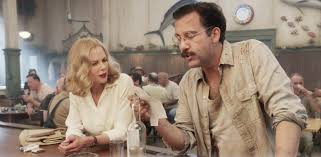
The new HBO production “Hemingway and Gellhorn”, which was first aired on HBO on May 2012, utilized the archive footage from the domestic war in Spain, the Japanese invasion in China, and finally the Hemingways’ home in Cuba. Directed by Philip Kaufman, film is a saga about Hemingway and his third wife, Martha Gellhorn, starring Cliff Owen and Nicole Kidman.
According to the movie it was Hemingway, who made Gellhorn a full pledge war correspondent (describe what you see your own eyes, Gellhorn) and had a big influence on her writing. In exchange she was credited for inspiring him to write a novel “For Whom the Bell Tolls”. Serving as a reporter in Spain in 1936 was just beginning of her carrier which she became dedicated to the rest of her life. She went to Spain, China, Finland, Hong Kong, Burma, Singapore and Britain. She became more obsessed with it that Hemingway who, while she was away, stayed in their house nearby Havana, Cuba and was sending angry letters to her “Are you a war correspondent or my wife?”.
Now nearly everything that Hollywood produces is mainly CGI, most of them sacrificing the stories. However, CGI, can truly enhance films. They are essential tools that need brilliant filmmakers who have a real historical story to tell, like Woody Allen, Robert Zemeckis, or Philip Kaufman.
by Lidia Paulinska | Nov 8, 2015
In the last five years, the word “smart” was used to describe a device that combines few functions; the primary function connected to the internet. For example, a smartphone or smart TV. However, smart means much more than that. This word is associated with the ability to analyze and make decisions. That’s why in the not too distant future these devices will be equipped with some intelligence and calling them smart will be precise and accurate.
The foundation is there. Two significant events took place during the last three years. In 2011, the computer machine called “Watson”, invented by IBM, won the American television show “Jeopardy”. For the first time, the machine defeated the human in a contest of mind exercises. IBM tends to challenge the existing technology about once a decade. In 2006, a few engineers noticed that Ken Jennings was accumulating long victories on “Jeopardy”. They thought it would be interesting to make a computer system that could challenge the best human expert in the show. The challenges for the computer were: working with human languages, applying probabilities to the responses, selecting the best answer, all within the 3 seconds allowed for a buzz-in and before the human contestants.
After 5 years of development, Watson was ready to pick up the fight and win!
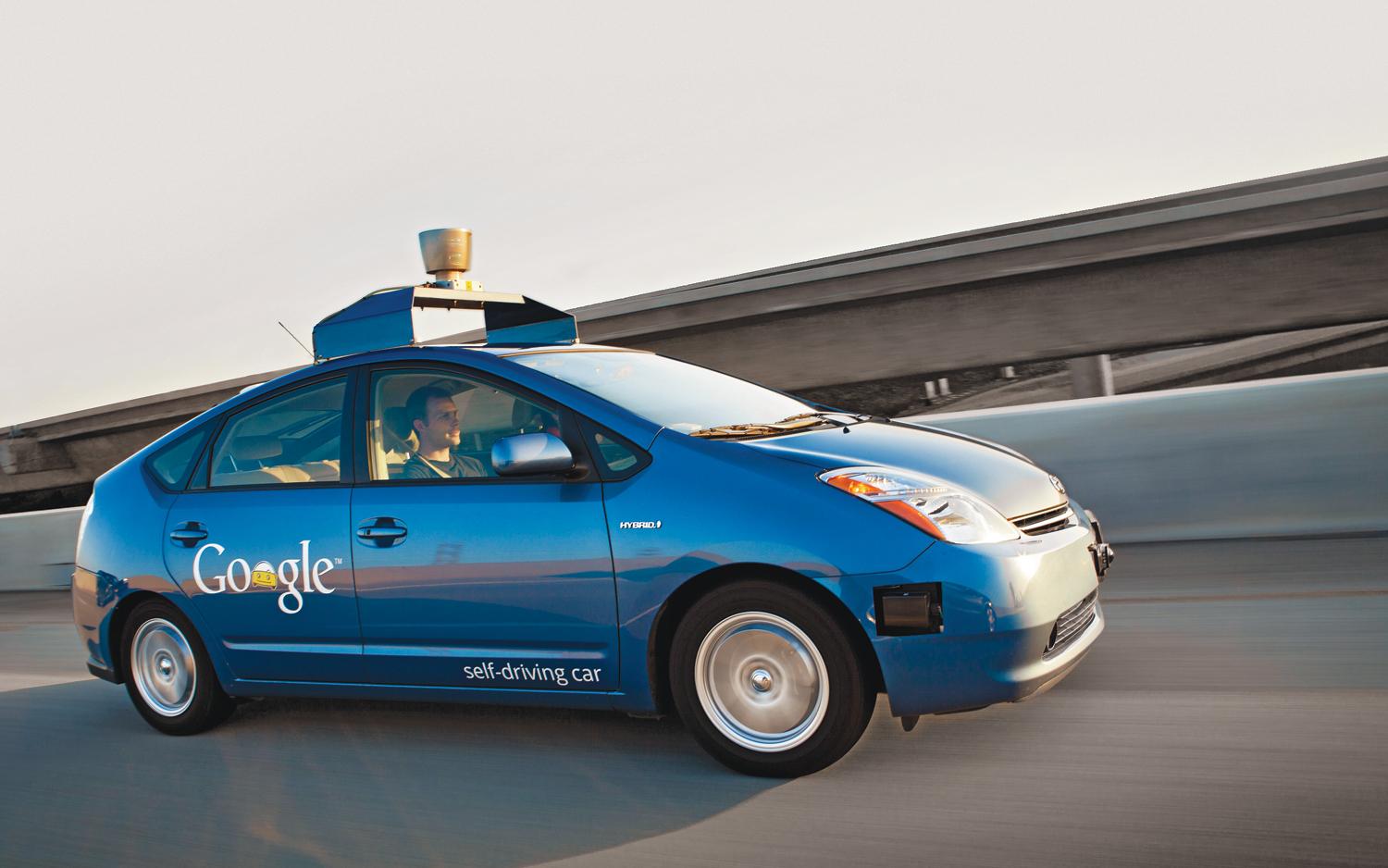
The second event took place in 2012, when a driverless Google car completed over 300.000 driving miles (500.000 kilometers) accident free. As a result, three U.S. states: California, Nevada and Florida have passed laws permitting driverless cars on their roads. In March 2012, Google posted a YouTube video showing a Morgan Hill, California, resident, Steve Mahan being taken aboard on the self-driving Toyota Prius. In the video, Mahan who is 95% blind was taken from his home to the dry cleaners and then back home.
Creating artificial intelligence is possible by using many sensors that are built into a device. Those sensors collect the data and based on the information the computer system makes the decisions. The more sensors that are built into the device, the more factors are analyzed; therefore more precise and accurate decisions are made.
In addition, the sensors that are built into the cars collect and provide the information not only about consumption of gas or malfunction but also defines the drive style based on analyzing many factors. So if the owner of the car will allow the insurance company to have access to this information, he or she can claim a better insurance package.
In the near future, this data will become the new currency.
by Lidia Paulinska | Nov 7, 2015
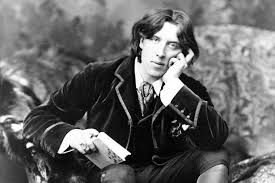
As part of a valuable cultural service, Fathom Events presented Oscar Wilde’s classic comedy of manners,The Importance of Being Earnest at selected theaters in the U.S. for a one-night-only screening November 3, 2015. The performance was a filmed live production on October 8th, 2015 at London’s Vaudeville Theatre in commemoration of the play’s 120th anniversary.
As an iconic “comedy of manners” and one of the funniest plays in the English language, “Earnest” exaggerates the absurd superficiality of upper-class Victorian society, emphasizing the “importance of being earnest,” with “earnestness” having the connotation of intense conviction, dependability, and unflappable honesty. Being earnest was an integral part of the moral code of honor nominally practiced by upper-class Victorians. However, in practice, Wilde reminds us, “In matters of grave importance, style, not sincerity is the vital thing.”
The primary comic conceit in Wilde’s play deals with his clever use of the word earnest used both as an adjective in the afore mentioned sense, and Ernest as a noun…capitalized, minus the “a”, and being a proper man’s name. The confusion and interchangeability of the names between the two main characters, Algernon and Jack, the latter professing to be “…Ernest in town and Jack in the country,” forms the core of the play’s driving force of satire and duplicity, and an irony based on the characters’ violation of the very essence of being earnest through their abiding dishonesty. Jack is certainly not earnest when he pretends to be Earnest in the city but “Jack” in the country and the wit continues unabated throughout this Victorian romp.
Deftly directed by Adrian Noble (Amadeus, The King’s Speech) with a pitch-perfect cast featuring the incomparable David Suchet (Agatha Christie’s Poirot), as the irrepressible, irascible Lady Bracknell, The Importance of Being Earnests is rollicking high farce and wit at it’s very finest. Algernon is in love with Cecily, Jack is smitten by Gwendolyn, and both are forced to adopt the names “Ernest” because the objects of their affections cannot tolerate a man with any name other than “Ernest.”
Ironically of course, they forego the moral code of honesty associated with earnestness in order to satisfy their romantic interests. However, all is resolved in the end and the two couples are joined to live happily ever after.
In the final scene of the play, Lady Bracknell comments to Jack, “My nephew, you seem to display signs of triviality,” to which Jack replies as he and Gwendolyn happily exit stage left arm-in-arm, “On the contrary, Aunt Augusta, I’ve now realized for the first time in my life the vital Importance of Being Earnest.”
Curtain.
Review by Lidia Paulinska and Hugh McMahon
by Lidia Paulinska | Oct 23, 2015
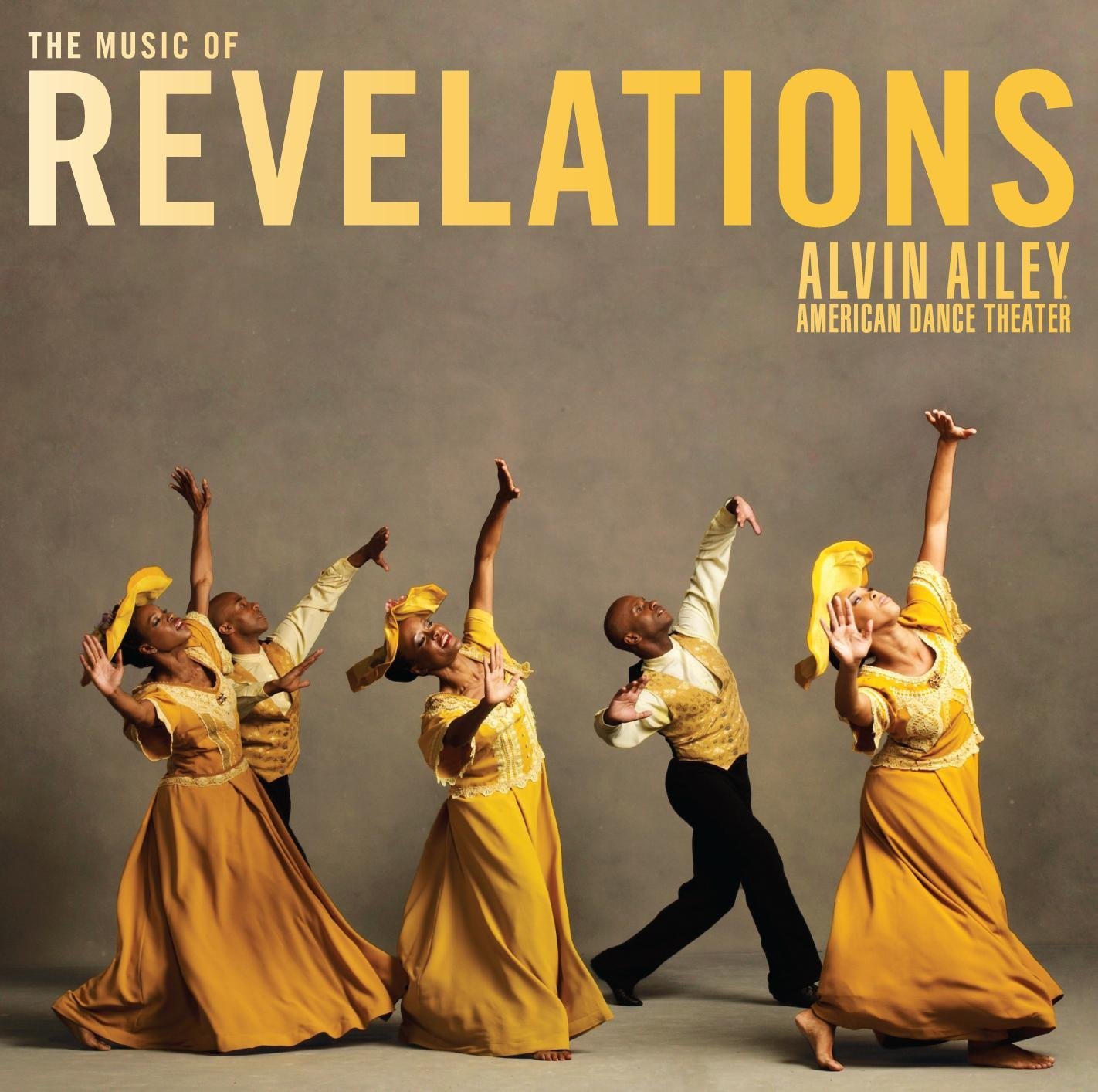
“Revelations,” Alvin Ailey American Dance Theatre’s great masterpiece of modern American dance, was presented last evening along with three other spirited works for a one-night-only screening at selected cinema’s throughout the country, compliments of Fathom Events and Lincoln Center at the Movies: Great American Dance Series.
Alvin Ailey (1931-1989) founded AAADT in 1958 in New York City and it rightfully enjoys the distinction of being the first predominantly African-American modern dance company in the world. Ailey once remarked that he believed America’s richest treasures are to be found in our African-American cultural heritage … “sometimes sorrowful, sometimes jubilant, but always hopeful,” and indeed nowhere else in the vast panoply of the American dance tradition is that assessment more profoundly expressed than in his magnificent “Revelations,” Ailey’s 1960 paean to the rich spiritual tradition of the African-American experience in the gospel South.
“Revelations” is at once ritualistically soulful and rhythmically complex, incorporating as it’s musical motive force an array of deeply moving and spirited African-American gospel music and holy sermon blues reflecting the Black experience in America.
Ailey once described “Revelations” as a visceral recollection of a childhood in rural Texas during the Great Depression. It is a dance of deep human compassion, moving by turns from mournful oppression and sin (“Baked and I Been Beaten”) to redemption (“Fix Me Jesus”) and finally to ecstatic jubilation (“I Wanna Be Ready”), fostering a sense of reverent and rapturous community and inviting the audience to join in the redemptive celebration at evening’s end. And it is perhaps this vital sense of community, the immediacy of the connection Ailey creates between performer and audience,that has contributed to the enduring success of this masterpiece for fifty-five years … and running.
Complimenting this thematic content, one will find in the very make-up of the ensemble a communal structure. For example, what will not be found in Ailey’s troupe of highly trained performers is a prima ballerina or her male counterpart, a premier danseur, “star” principal dancers like those found in classical ballet companies such as the New York City Ballet or the Bolshoi, whose traditions and techniques date back to the 17th Century royal courts of Europe.
Another distinguishing feature of AAADT and modern dance in general which dramatically sets it apart from the classical tradition is not only a more “democratic” sense of ensemble, but also it’s musical sources (by contrast, the ballet typically utilizes works by such composers as Bach,Tchaikovsky, and others). Most obviously however is Ailey’s basic movement techniques and patterns, emphasizing linear line, horizontal “grounded” movement, and intertwining body images as opposed to the two dominant values found in classical ballet: jumps and leaps or so-called ballon, creating the illusion of the dancers momentarily floating in the air, and the tradition of performing with “turned out” hips and legs with the full weight of the body concentrated on the tips of fully extended feet, creating an unmistakable vertical line.
The Alvin Ailey American Dance Theatre’s iconic “Revelations” has been best described by The New York Times as being one of the great works of the human spirit.” It stands resolutely for what is good about America and humanity in general, and for this reason alone it’s immortality is assured.
Review by Lidia Paulinska and Hugh McMahon

by Lidia Paulinska | Sep 30, 2015
This is just a beginning of our journey with wireless. It is taking over very quickly. It has transform the world and our economy. Wireless is what we relate to and interact with the world. Wireless is undeniable platform of the future for innovation.
In 1926 Nikola Tesla uttered these visionary words. “When wireless is perfectly applied the whole earth will be converted into a huge brain. We shall be able to communicate with one another instantly, irrespective of distance. And the instruments through which we shall be able to do this will be amazingly simple compared with our present telephone.”
Today, 90 years after Tesla’s prediction, wireless has revolutionized our world. Every morning more than one of third of us reach for our smartphone. 81 % of us keep our phone by our side all day long. Wireless is taking over. 75 % of our social network time is spent on mobile devices. Mobile influenced sales in stores has reached nearly $600 Million. Additionally, 6 out of 10 smartphone users looked up a health condition on the phone in the past year, so it is not just for retail.
Does anyone remember how our office desk was crowded in the past? It looked like a cluster of equipment including a computer, a keyboard, a mouse, fax machine and phone; along with necessary things as such: a contacts book, a calendar, a calculator and others? On the wall above a desk was a board with emergency contact information and a schedule for the week, finishing the office décor was a hanging memorable picture? Nowadays, the memories are faded. Today our desk cluster is replaced by smartphone with hundreds of applications.
Did you know that all the photos ever taken on film are outnumbered by digital pictures taken just this year?
And today we are standing on the crest of another revolution. Wireless not just connect the people, wireless will be connecting everything. A remarkable 4G platform already gave us a glimpse for the future by introducing us to Internet of Things. Today nearly quarter of mobile traffic comes from something other than a phone. At The CTIA conference in Las Vegas this year an introduction to 5G was taken place what means more wireless data traffic. Soon 99 % of the objects in our physical world will be wirelessly connected.
This will have machines talking to each other to bring together the comfort of our home, automobile, work, play, entertainment, hobbies, shopping, health and provide information on what to do next. The wireless revolution is just starting as it shifts from people as the communication starters to products and appliances that need to talk 24/7 and update all the devices that will be needed next based on your activity. Mobile, health, connected home, and energy drive the next marketplace for the wild world of wireless.