by Lidia Paulinska | Jun 24, 2015
When asking the question of what the weather will be tomorrow, we can easily find the answer paging through the morning newspaper, turning the dials on the radio or TV stations, or just by surfing on the Internet. The weather forecast is an essential piece of information which allows us to make an immediate decision, such as what kind of clothing to wear, depending on the temperature climate, in order to not get too warm or too cold. It can also let us know if our flight to San Francisco was cancelled due to extreme weather conditions. Such dependable information gives us the comfort of awareness, but our lives will not be endangered if we do not have any knowledge about it.
The situation seems completely different when inquiring about one’s health for the next day, week or month. There are three possible scenarios: we will wake up in great shape, we will wake up being sick, perhaps with a cold or flu, or we will find out our future will never be the same because we will get diagnosed with a terminal illness.
So, how can we predict one’s well-being as accurately as we can predict the weather?
The answer for this question is crucial for our human existence, so why don’t we know the answer? Presently, we do not have the answers yet, but it looks like this is going to change very soon. Temporary medicine is going in the direction of predictive and preventive.
Biotechnology is driving these changes. The widespread availability of sensors and transmitters, massive use of mobile devices, increase in sophistication of the Internet and data analytics, make them happen rapidly.
These tremendous hopes come from a discovery of human genome, that give us an unprecedented opportunity for contemplate our own biological and psychological make-ups. Thanks to rapid progress in the technology arena, the cost of genome sequencing came to the consumer world. The full genome analysis is still for many of us out of financial reach but for an affordable price it is possible to get a sample of personal characteristics and evaluation of risk to certain illnesses and their ancestries. That opens the door for personalized medicine where drugs are prescribed specifically for the patient’s biochemistry instead of blind errors.
American biologist, expert in biotechnology field, Leroy Hood, described the future of medicine as 4P: Predictive, Preventive, Personalized and Participatory. Predictive and Preventive use the genome characteristics and environmental conditions to forecast what is necessary to maintain wellness and prevent future illnesses. Personalized and Participatory because it is target certain individual who is involved in collecting and interpreting the data about his/hers health condition.
Often or non-stop monitoring the body functions and transferring this data to medical personnel can be very helpful in preventive and personalized medicine. Not that long ago, the medical patients were going through routine, basic medical tests and their data information were stored in the medical clinics until their next visit. Today digital health goes mainstream. Smartphones, our personalized computers, stores our medical data and give us the opportunities like never before. Due to many applications on its screen we can monitor our sleep pattern, measure blood pressure, evaluate the stress level or monitor taking prescribed drugs and storage all those information for easy access for a patient and medical personnel.
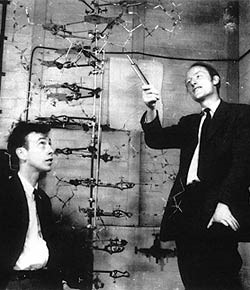
Today medicine changed our approach to diagnosis and cure the illnesses as well as our thinking about longevity. It hard to imagine that DNA sequencing was discover only 60 years ago.
by Lidia Paulinska | Feb 17, 2015
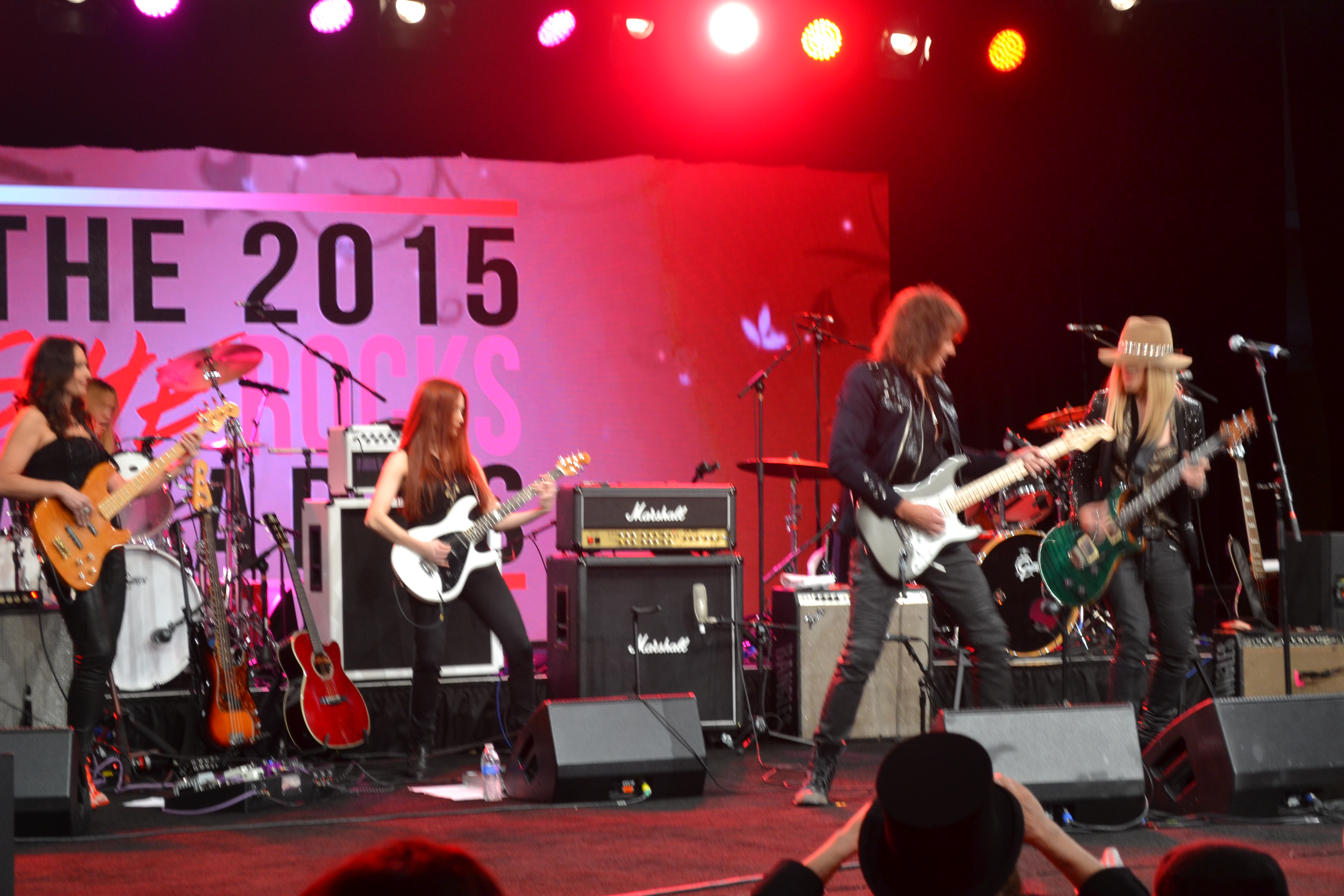
At the NAMM Winter Conference, the She Rocks Awards moved from their daytime subdued event to a full nighttime gala event with red carpet. The 2015 She Rocks Awards were hosted by the founder of WiMN Laura B. Whitmore and performer Orianthi.

The show opened with an opening performance by the fast rising group SHEL. The four sisters who make up the group are touring the US and Europe between recording new albums and music for television, film and commercials. Continuing the theme of celebrating Women in Music the award ceremony featured an all female house band. The house band was led by guitarist Gretchen Menn and included Zepparella members Angeline Saris on bass, Clementine on drums and guest keyboardist Jenna Paone.

The show had one non-female winner – Rob Christie was recognized for the Champion Award.

The highlight was the “ICON” award winner as major contirbutors to the field of Women in Music. This year’s award was given to The Bangles – Vicki Peterson, Debbie Peterson and Susanna Hoffs who also performed that evening with the host and house band.

Spanning all varieties of music, the “Mad Skills” award was given to Mindi Abair. Berklee College of Music graduate Mindi is receiving multiple recognitions in addition to the She Rocks Award with several Grammy nominations and increasing demand for her unique saxophone style and sound. Mindi addressed the crowd with the fact that in her music career a lot of her success is due to the support from her family and teachers who encouraged her to follow her own style and sound, and that she did not have to conform to “sound like someone else” she “can create and define her own sound”.

The “Legend” award was given to Capitol studios manager Paula Salvatore who in her 24 years at Capitol has been an integral part of recordings for some of the industry’s most iconic artists.

The “Inspire” award was given to Debbie Cavalier. Debbie is currently the Vice President for Online Learning and Continuing Education/CEO for Berklee’s award-winning online continuing education program, Berklee Online, and is also the leader of the award-winning kids/family band Debbie and Friends. She has also been the recipient of the 50 on Fire Award, the 2013 Education award, and also composed and recorded a song featured on the 2011 GRAMMY Award-winning CD for Best Children’s Album through her work with Debbie and Friends.

The “Excellence” award was given to Craigie Zildjian the first female CEO of the 400+ year old Avedis Zildjian Company. She has also sponsored the Zildjian Family Opportunity as well as the Zildjian Percussion Facility at Berklee College. Additionally, Craigie developed the American Drummers Achievement Awards, an event that honors drumming legends. She also is an active member in the musical community with past service on the Board of Directors for the International Music Products Association (NAMM), the Board of Advisers of the International Association of Jazz Educators and the Board of Overseers at New England Conservatory. Currently, she Chairs the Zildjian Board of Directors and is a Trustee Emeritus of the Berklee College of Music.

The “Video of the Year” award was given to performer Colbie Caillat. Colbie is a two time Grammy Award winning singer-songwriter who has sold over six million albums and ten million singles worldwide. Caillat released her fourth studio album Gypsy Heart, which features her hit single “Try” which was co-written by legendary producer and singer-songwriter, Babyface. The companion video for the song has become an online phenomenon, quickly amassing 30 million views. As was the video recognized with this award.

The “Next Generation” award was given to Katie Kailus. Katie Kailus is the editor of Music Inc. and UpBeat Daily magazines. She started at Music Inc. as an intern and was soon appointed associate editor. In January of 2014 she was named editor. She is one of the first women to ever be named editor of a musical instrument trade publication.

Also being recognized were Gayle Beacock and Amani Duncan. Gayle is co-owner of Beacock Music Company in Vancouver, Washington. Their Education Center is widely regarded as one of the top in the country. Amani is the Vice President of Brand Marketing for C.F. Martin & Co. A 17 year music industry veteran, Duncan’s experience runs the gamut from artist relations to visual marketing, digital and social media, campaign creation and strategic partnership negotiations.

by Lidia Paulinska | Sep 30, 2014
September 18, 2014, Uplinq 2014, San Francisco, CA – At the session “Shared Responsibility in the Mobile Security Ecosystem”, five industry experts including Paul Kocher, Chief Scientist of Cryptography Research Division of Rambus; Coby Sella, CEO of Discretix; Rajiv Dholakia, VP Product Management of Nok Nok Lab; Dror Nadler, SVP, Sales and Strategic Alliances of Cellrox and Steve Singer, VP, WW Field Applications Engineering of the Mobile and Networking Security Division, INSIDE Secure, were discussing the current trends in security for mobile products. The panel was moderated by Asaf Ashkenazi, director of product management for Qualcomm Technologies.
The state of security today is pretty bad and the trends are scary – said Paul Kocher. He stated that fundamentally we do not know how to make complex software secured. We are going to see dynamic growth of different devices; growth in the value of the information and the network as well, which means more and more complexity. More devices equal more things to attack, more value equal more rewards for attackers if they are successful and more complexity means more bugs and opportunities to attack.
Kocher made these statements from a position of being in the industry for over 15 years and starting in software security. He started in software cryptology and found the software was messing it up, then the training was messing it up, and he decided that this route for cryptology was not going to save the day. He then moved over to hardware based security that can be optimized for the key use cases. That is the solution he has been providing for the semiconductor industry and mobile devices for several years.
He continued – threats that we see right now will not match the threats that we are going to see next year. Right now we are only 2-3 bugs away from a compromised software solution space. We are going to see more reasons and abilities to break into the system. Kocher does not believe that software program will find the solution for it. Based on his extended experience, he recommended giving up on the software solution, as it is a moving target; and build hardware that can be robust for these key use cases: main application, communication, and identity. He is optimistic that the prices for transistors continue to falling. As we add more cores and more area, we can devote a larger portion of that to security which will enable us to deal with some of the problems that not required the perfection in software programming.
Dholakia, who represented the software company perspective, mentioned that even though the trends are pessimistic, it is good to look at the consequences from two dimensions. One is the security dimension and the other is the business dimension where security eventually cost a friction. There are ways to shape software. We have a once in a lifetime opportunity to reshape the devices that we carry with us or slap around our wrist, to allow them to have the security characteristics that are more robust than anything that we dream of carrying with us. That makes him optimistic.
Singer noted that the mobile VPN is one of the areas of expertise for INSIDE since the mid nineties. They have taken security component and add layers above it; some of them are specifically around authentication. Our mobile devices are the gateways into a larger access, so the use of VPN authentication of who the end point is, is instrumental. One solution space area that his company does is to run all these functions within their protected silo/trusted execution environment. Singer pointed out that the audience could see the demo specifically highlighting that capability, which was showcased at the expo hall of Hilton hotel where the Uplinq conference took place.
He stated that gives them two silos approach: one thing is authentication components; the other is data encryption. Their solution for authentication is, it is something that typically happens once, but if the data is constantly and dynamically being processed we need another “envelope” to provide another level of security and validate that the algorithms are running properly. In that case the area of focus is around certified libraries. The next area of security is a device by itself that can be stolen, and the contents of the flash can become valuable for someone else. Finally the other points of challenge in security are the applications by themselves. Gartner did the report that shown that 75% of current apps do not effectively and properly address the security.
Nadler talked about the need to virtualize a device to gives it the ability to have multiple operating systems on the device. Just as the virtualization in servers was the way to be cost effective, while in mobile devices is all about usage.
Sella mentioned that when we talk about breaches, lots of them are user oriented, such as problems like poor passwords. Qualcomm built a very good solid platform with a lot of security capabilities. The challenge is to create a streamlined users experiences and also to harness the right type of financial incentives for security. Discretix was one of the first companies pointing out the importance of security of the mobile end point devices.

by Lidia Paulinska | Jul 5, 2014
June 2014 – For one afternoon Palo Alto was the host for the Poland Demo Event at the Wilson, Sonsini, Goodrich & Rosati offices. Poland is turning Silicon Valley and San Francisco on its ear by bringing more and more startups and established companies to the area, and is continuing the effort to do so. The government in Poland has already launched two programs and announced the next one – Polish Silicon Bridge starting this this summer.
While the event in Palo Alto was focused on IT technology, it is not the only sector that Poland is bringing to the world. The Minister Henclewska just last week was a patron for a strong Polish presence at the Bio International Convention in San Diego, a global event for the Biotechnology industry. Poland has a strong presence in this space as well , and activity is ramping for the global market.On Thursday, June 26 Mrs. Grazyna Henclewska, Under Secretary for Poland’s Ministry of Economy opened the Poland Demo Event. She pointed out that the Polish IT/ITC sector is rapidly growing and Polish companies are getting more visibility in both Silicon Valley and Europe. The week before the event, the Polish team won the First Computer Coding Championship held in Finland. A similar program for Polish tech companies will be run in future in other places in the United States as well as on the Asian markets. Ms Henclewska also announced the new Polish Silicon Bridge program. It has been launched by the Polish Agency for Enterprise Development in cooperation with Polish Silicon Valley Accelerator Center and US-Mac in San Francisco. The Minister was accompanied with Justyna Gorzoch, from the Department of Innovation and Industry from Poland, and Pawel Pietrasienski, Minister Counselor of the Embassy of the Republic of Poland. There were also representative officials from neighboring countries ,Richard Pivnicka, Czech Republic’s Honorary Consul General, and Peter Kmec, Ambassador of Slovakia.
The companies at the event each gave a short presentation followed by table discussions and demos set up for the evening’s reception. The reception had an enthusiastic crowd that was free to interact with the founders and gain more details and go “in-depth” by raising further questions about their products and services that were shown in the presentation.
1. Bizlynq
Bizlynq is a cloud-based integration platform for business that helps automate business processes from anywhere on any device. It can be used both as a PaaS (Platform as a Service) or SaaS (Software as a Service) solution, so you can use it anyway you prefer: completely cloud-based or installed behind your firewall.
2. MobiMalls
MobiMalls creates mobile solutions for Shopping Centers. Shopping center managers are provided with mobile communications channels to get to know their customers’ preferences and respond to their needs in a customized way. The users can get one application that contains all the shopping malls in your city and get indoor maps, best deals, and coupons.
3. BeeeBaaa (Be3Ba3)
BeeeBaaa is a booking management system for artists, clubs, venues and promoters. It helps artists and club owners manage their events. Functions include selecting artist/ club, negotiations and generating agreement, and finding substitutions in case of force majeure.
4. Autoplug.in
Autoplug is a small hardware device that informs about the problems in the vehicle. It constantly monitors the car’s computer while driving.
5. Amodit
Amodit is an innovative workflow system, which implements a patent-pending method for adaptive modeling of workflows. Using artificial intelligence techniques with dynamic dataflow analysis and prediction of user behavior dramatically reduces costs of deployment.
6. Enspirion
Enspirion the first company in Poland to provide aggregation and management services for electricity demand reduction (Demand Response). Enspirion is part of the Energa Group. The demand response service adjusts aggregated demand and smooths out the electricity supply and demand.
7. Enteye
Enteye is a Platform as a Service that provides all tools and hardware infrastructure for deploying Internet of Things devices based on microcomputers with embedded linux. Th platform has a free version for developers, and device software code is open source.
8. KanBo/ObjectConnect
KanBo combines the elements of Kanban with social communications and the Microsoft SharePoint. KanBo provides workflow visualization inside of organizations.
9. Pixel Technology
Pixel Technology specializes in applying informatics in medicine. The company provides solutions designed for radiology and public health administration.
10. Quantum Lab
Quantum Lab wants to teach computers how people feel by tracking, measuring, and analyzing emotions and moods using different methods and technologies based on science and psychology.
11. Robotics Inventions
Robotics Inventions develops preproduction prototypes (including Bill of Material) in 6months. They focus on fully- and semi-autonomous robots and vision systems. They supply software modules for autonomy called RI SPIRIT, a robot swarm management system called RI FLEET, user interfaces and various components. They have a dedicated production facility, as well as robotics professional services.
Page 20 of 20« First«...10...1617181920