Bright Blue Innovatio’s coverage from the CES 2017 tradeshow on for Lifestyle products &Mobile Accessories was Broadcast on Comcast & Ustream in February 2017 by its media partner Roadway Media.
The Bright Blue Innovation Host Lidia Paulinska shows highlights from the CES 2017 focusing on the connected lifestyle. Products shown are from the areas of BabyTech, Mobile Electronics, Wearables, and Mobile Accessories. Companies featured include: Moshi, Zagg, SanDisk, BGZ, STM, PI Labs, Casio, Polaroid, and MyCharge.
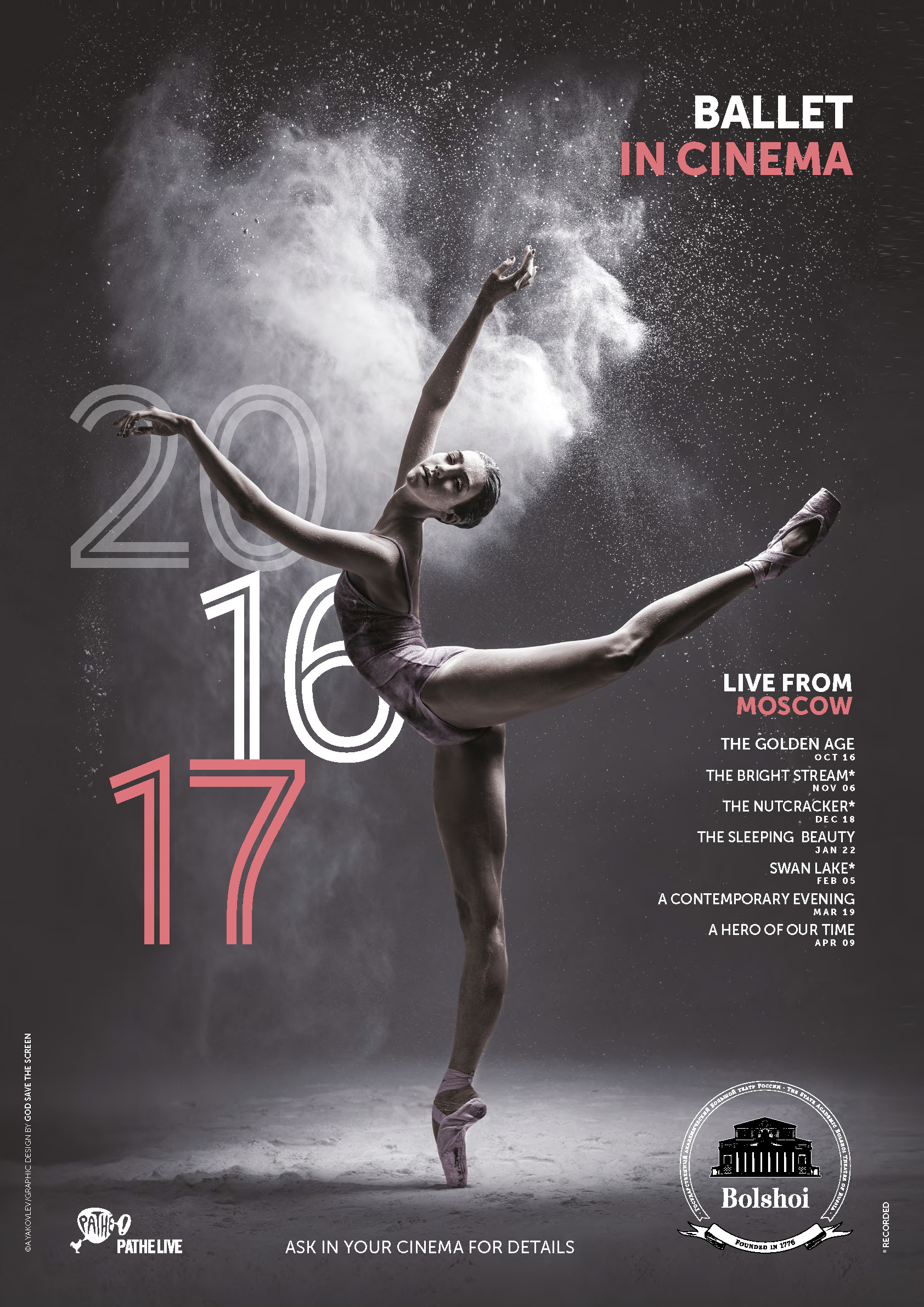
Fathom events, January – The world-famous Bolshoi Ballet presented the equally noteworthy Sleeping Beauty ballet to cinema audiences around the world for a one-day-only viewing on Sunday, 22 January 2017. Originally choreographed by the inimitable French Ballet Master Marius Petipa in 1890. Petipa (1818-1910) is recognized as the most influential choreographer in ballet history. This current Bolshoi offering is based on the 2011 version by Yuri Grigorovich.
The dancers, of course, were exquisite. Yulia Stepanova played the Lilac Fairy with a gentle authority. Semyon Chudin danced Prince Désiré with impeccable classical lines but seemed to lack the requisite emotional depth necessary to the role. Olga Smirnova danced the role of Princess Aurora. The technical aspect of her performance was flawless, being both elegant and precise, as one would expect. Like Semyon Chudin, however, Ms Smirnova seemed to lack a deep connection to the role which prevented her from effectively communicating its nuanced emotions beyond the footlights.
The Bolshoi’s soloists and the corps de ballet danced with their trademark enthusiasm and precision. Especially charming were the eight little “evergreen trees,” amusingly portrayed by students from the Moscow State Academy of Choreography.
Maestro Pavel Clinichev conducted and the Bolshoi Theatre Orchestra played Tchaikovsky’s wonderful score with great sensitivity and grandeur.
The Bolshoi Ballet is always a delight, and in spite of several challenges, this production was no exception.
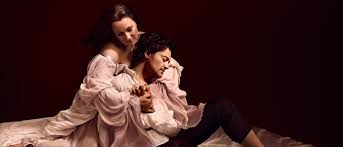
Fathom events, January – Charles Gounod”s (1818-1893) passionate and lush adaptation of Shakespeare’s tragic star-crossed lovers, Roméo et Juliette, was presented Live in High Definition cinema on Saturday, 21 January 2017 to hundreds of delighted audiences in movie theatres throughout the world. It was a one-night only performance broadcast live from the Metropolitan Opera House in New York City. It’s world premiere was at the Théatre Lyrique de Paris in 1867 where it was enthusiastically received. It has remained a favorite operatic staple ever since.
Gounod’s opera is an outstanding example of French Romanticism, a tradition that values subtle sensuality and finely crafted, gracefully nuanced musical expression without the “push” of a Puccini. This production has already achieved international acclaim for its outstanding production values during its recent runs at La Scala and the Salzburg Festival.
The press has been overwhelmingly laudatory, praising every aspect of this extraordinary operatic work. The New York Observer cites the “Thrilling star team” of soprano Diana Damrau as Juliette and tenor Vittorio Grigolo as Roméo. And, not to be upstaged, The New York Times claims the production is charged with “white-hot sensuality and impassioned lyricism!” The Huffington Post adds to its laurels, praising Director Bartlett Sher’s work as “a brilliant and inspired new production” and “a revelation.”
Set Designer Michael Yeargan and Costume Designer Catherine Zuber have brilliantly succeeded in creating a stunning 18th century milieu with performances led by the “richly textured and Vibrant conducting” (New York Times) of Maestro Gianandrea Noseda.
Once again, Fathom Events in cooperation with the Metropolitan Opera, has offered appreciative audiences world-wide an incomparable opera experience for which we are all grateful.
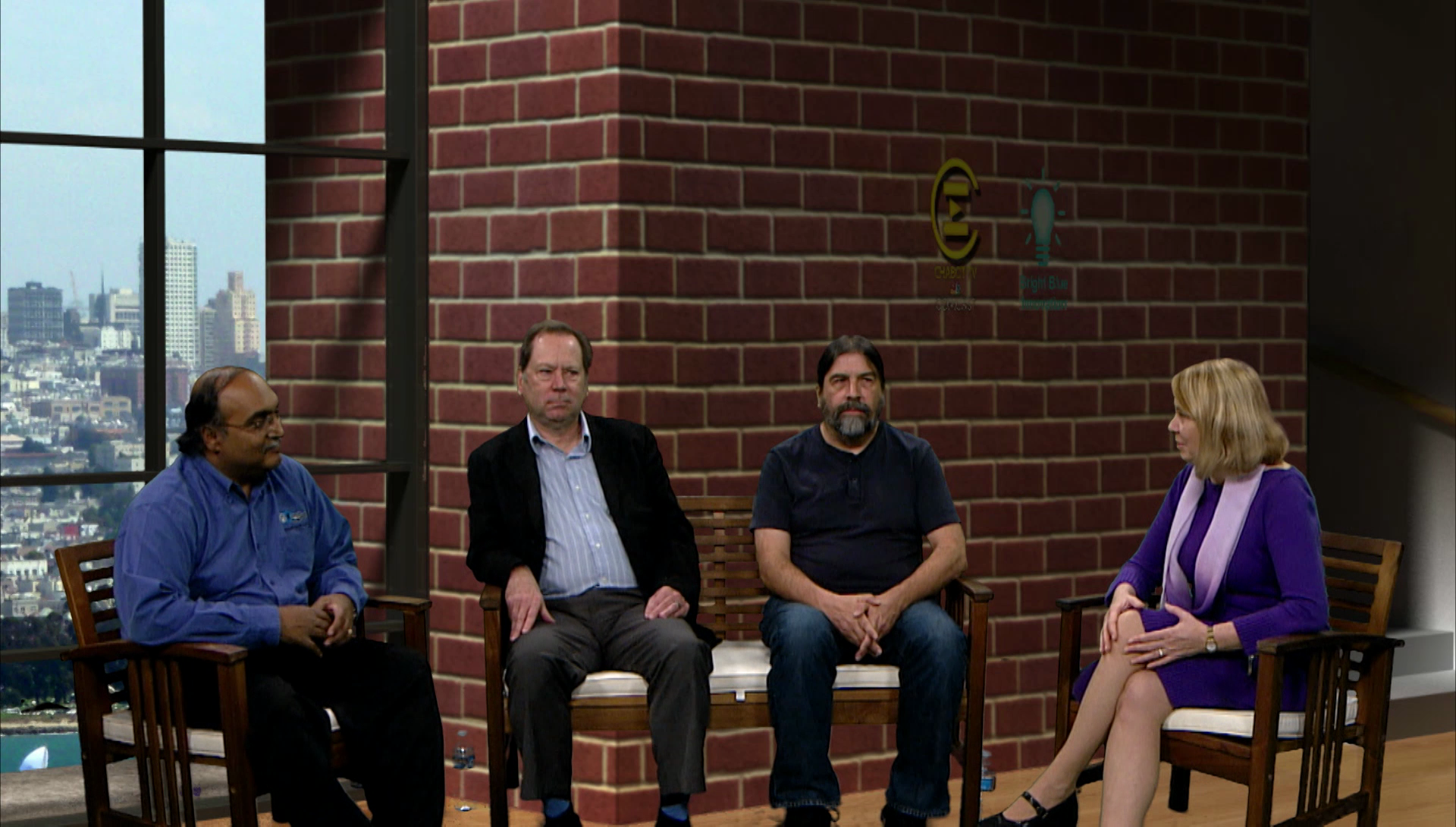
January 2017 – How was the world of technology in 2016? – talk with the experts from San Francisco Bay area: Kevin Krewell, Principal Analyst of Tirias Research, Rodney Thayer, Cybersecurity Consultant and Pallab Chatterjee, Editor in Chief Media & Entertainment Technologies.
Autonomous vehicles made a lot of progress this year, more than anticipated – stated Kevin Krewell. The amount of effort and engineering going into driverless cars was remarkable. Typically, cars are a slow moving industry, taking 5+ years to qualify an equipment part going into a vehicle. But now things have changed and car manufactures are being blamed for not moving fast enough. Companies, such as, Qualcomm, Nvidia, Intel, NXP and others have been investing heavily to bring autonomous vehicles to the market in the next few years. Elon Musk and Tesla have done the most to promote this change. Musk broke the barrier by having pre-installed software built into the Tesla vehicles, like he knew it was going to get better over time. Car manufacturers are not just making cars any more, but rather building a software platform – Rodney Thayer.
“All our knowledge begins with the senses”- declared 18th century philosopher Immanuel Kant.
The challenge with autonomous cars is that they are cameras based – added Pallab Chatterjee. Radar, lidar, sonar or real cameras are like senses of a vehicle. They are figuring things out but they create a huge amount of data. The flood of data is here and more is coming. By 2020, the average internet user will create 1.5GB of traffic per day, smart hospital – 3.000 GB per day, autonomous vehicle – 4.000 GB each per day, airplane – 40.000 GB per day and smart factory – 1.000.000 per day.
The biggest surprise that came up in 2016?
That VR came back again was a surprise to Pallab Chatterjee. It is like 3D, every 10-15 years people forget that it is not technology, it is what content is available and how the companies plan to monetize it. That was one of the problems with 3D. It was rushed to the market because the technology was available but people said – there was nothing to watch because the content was made in a rush and it was of poor quality and stories. We see that scenario right now. The only good content for VR is in games on very expensive platforms but it is not mass market. The VR devices for mass market are not professionally created and a content is poor and people get dizzy and nauseous.
For Kevin Krewell, the biggest surprise in 2016 was how many big money acquisitions were taking place. It is not that big companies are buying small companies but big companies are buying big companies. Intel buying Altera last year was a starting point. NXP bought Freescale and now Qualcomm is buying NXP that just bought Freescale, and Samsung buying Harman Group.
The overriding challenge in 2016 was security and privacy. A number of high level intrusions and data breaches took place, and as the year ends, more will come to light. The risks are at all levels, individuals, companies, organizations, even standard internet providers and countries – the cybersecurity threats are guiding the way business was done in 2016 and the new ways it will be done in 2017 according to Rodney.
Here is the full episode that was aired at Bay area Comcast tv in December:
December, Fathom events – L’Amour de Loin (Love from Afar), an opera in five acts, received its world premiere performance at the Salzburg Festival on August 15, 2000.
The current Met Production is distinguished for two historic reasons. First, composed by the Finnish Kaija Saariahoit , it is only the second opera composed by a woman performed by the Met since 1903. In addition, the brilliant conducting is masterfully handled by another Finn, Susanna Malkki, who enjoys the distinction of being the very first woman to grace the Met’s orchestral podium in it’s entire 137 year history. One might conservatively say, “It’s about time.”
The vocals for the evening were ably handled by Susanna Phillips as Clémence Tamara Mumford as the Pilgrim, and a powerful Eric Owens as Jaufré, all meeting and surpassing the challenges of the complex score.
Production credits go to Robert Lepage whose controversial Ring Cycle is remembered by Met opera goers. In this production, the entire Met stage is taken up with no less than 28,000 LED lights in parallel rows representing the sea. Except for the chorus occasionally popping up from between the rows, the principal vocalists are restricted to an odd, mechanical contraption in a cage at the end of a protruding arm.
The giant mechanism moves (carefully) between the rows of the distracting blinding lights. The set then becomes the forced focal point of the production, upstaging the vocalists in every scene.
On balance, the set stands as one of the more unfortunate expressions of scenic design in recent Met memory. Planning to attend? Don’t forget your sunglasses, the score is worth your time.