by Lidia Paulinska | Jan 18, 2016
Georges Bizet (1838-1875) the renowned French composer best known for his ground-breaking opera Carmen which premiered in Paris in1875 and is indisputably one of the most popular operas of all time.
Exactly three months after it’s opening night however, and on his sixth wedding anniversary, Bizet died of a heart attack at the age of 36 as a result of a chill he contracted after a swimming competition. Unfortunately, Carmen had not been well received initially since it was the first time a major opera realistically depicted everyday characters in leading roles rather than the traditional subject matter featuring the lives of royalty or mythological figures. Carmen herself, for example, is a cigarette-smoking, Gypsy factory worker of questionable virtue and this definitely did not set well with the opera-going public of the time.
Twelve years prior to Carmen in 1863, Bizet had composed another opera, Les Pecheurs de Perles (“The Pearl Fishers”), traditionally considered to be a minor effort and roundly criticized for it’s poor libretto and lack of any rousing arias while acknowledging adequate choric offerings. And although these shortcomings seem to hold true to this day, nonetheless, New York’s Metropolitan Opera succeeded in staging a captivating and often scenically stunning production viewed by thousands of opera lovers in neighborhood theaters throughout the U.S. thanks to Fathom Events and The Met: Live in HD series, currently celebrating it’s 10th Anniversary.
The scene is a pearl-diving village in the Far East, presumably Sri Lanka, and the plot deals with Leila, a Hindu virgin priestess and two men Zurga and Nadir who are vying for her affections. In this traditional love triangle, Nadir, played by tenor Matthew Polenzani, triumphs and he and Leila, depicted my mezzo soprano Diana Damrau, escape a fated death as baritone Mariusz Kwiecien as the vengeful Zurga, burns down the village in a rage of jealous spite.
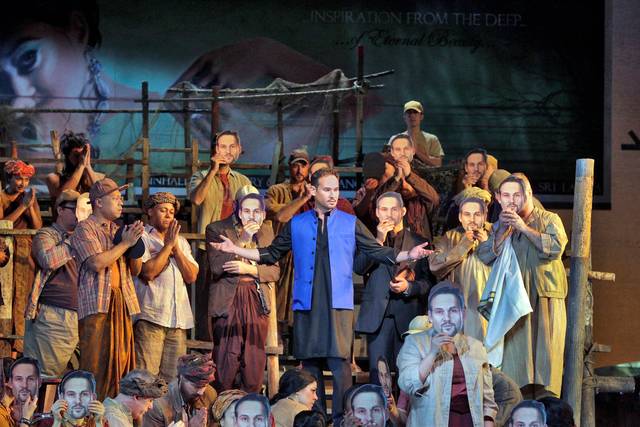
All of the players perform credibly, perfectly vocalizing Bizet’s Romantically derivative yet rather engaging score, but the scene-stealer is the scenic values themselves. The set is appropriately functional and admirably serves the demands of the production, but the real spectacle is the stunning computer generated projections thanks to the magical wizardry of 59 Productions who are credited with production design. The opening scene for example is an underwater projection which takes up the entire proscenium of the Met stage and superimposed on the screen are two pearl fishers, actually ballet dancers supported by invisible cables a la Cirque de Soleil, who appear to be rhythmically swimming in a deep blue “ocean,’ complete with bubbles and rays of sunlight streaming through it’s depths. Sergei Diaghilev, the iconic Russian empresario who in 1909 founded the Ballets Ruses, was once asked by a set designer what he wanted by way of scenery, to which Diaghilev replied, “Astonish me!” and that’s exactly what the production design team succeeded in doing in this captivating production. We were astonished!
On balance, a valuable and entertaining theatrical experience and an opportunity to witness a pearl of an opera delicately extracted from an oyster shell of near oblivion in a lovely offering by The Met. Thank you and Bravo!
by Lidia Paulinska and Hugh McMahon
by Lidia Paulinska | Jan 17, 2016
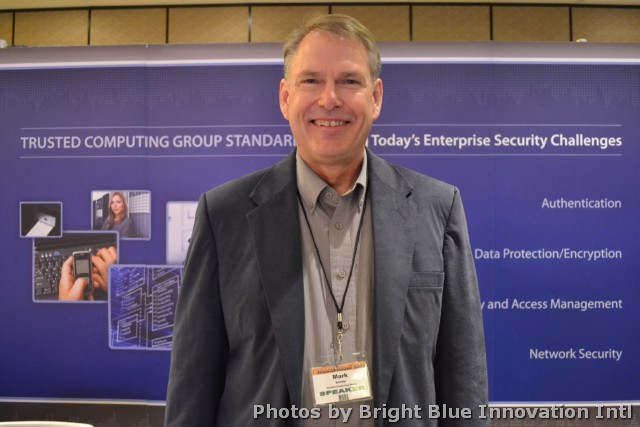
January, 2016, Storage Visions – Mark Schiller is Executive Director of Trusted Computing Group, which provides security standards to the computing industry. The group is a collection of over 100 partners that include commercial companies, government participation, academia and experts in the field of security and privacy. Schiller covered the challenges facing security and protection of stored content, and shared his view on SEDs (Self Encrypting Drives).
Why Self-Encrypting Drives?
There are world-wide financial and legal consequences for data loss and data breeches and the occurrence of such events have been increasing. SEDs create a layer of protection from that happening as well as providing compliance with the safe harbor laws in the most of the US and EU for loss of devices that are secured with encrypted data. Schiller spoke after Michael Willett underlined the main reason of using SEDs. The SEDs have a lower overhead for encryption and decryption than software encryption. Another feature is SEDs allow for a fast crypto-erase that sanitizes drive data before drive replacement, repair, de-commissioning, re-purposing and end of life.
He summarized the talk with SSDs are the new standard for fast storage media. In combination with the NVMe storage interface, they are driving higher performance and lower latency solutions, meaning data safety can be realized without the negative impact of software encryption on system performance.
More information about Trusted Computing Group at www.drivetrust.com
by Lidia Paulinska | Jan 17, 2016
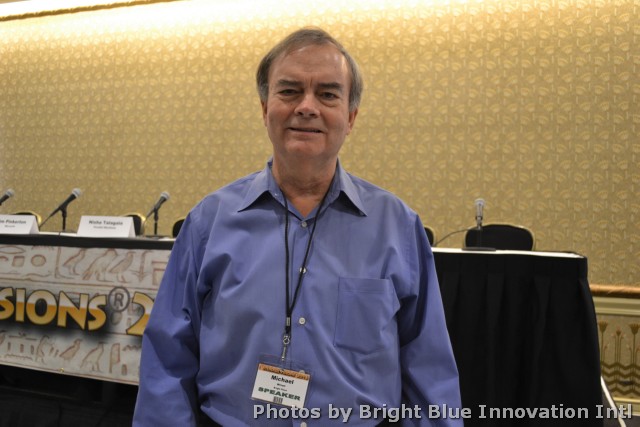
January, Storage Visions – Michael Willett from Bright Plaza moderated the Storage Vision’s panel discussion about security and protection. He stated that the idea of encryption being built into the hardware is becoming universal. There are many benefits leaning on the concept of Hardware-based Self-Encryption being a better option over Software-based Encryption. First is the transparency and easy management. SEDs (Self Encrypting Drives) come from the factory with an encryption key already generated so there is no encrypting key to manage. Second, the Life-cycle cost. In the software case, it is an on-going cost versus pro-rated into the initial drive for SED. Third is disposal or re-purposing cost for the drive. It is easy to erase the on-board encryption key for SEDs providing safe disposal. There is also no problem with re-encryption as there is no need to ever re-encrypt the data. The last benefits are in (A) performance: there is no degradation in SED performance; (B) standardization: the entire HDD industry is building to the TCG/SED specifications, and finally (C) there is no interference with upstream processes or use.
The session covered the challenges facing security and protection of stored content, including content on mobile devices as well as at home and in the cloud. It explored the reasons why OPAL based client encrypted storage is a key factor in data security, Standardized security products are making data security easier than ever while enabling desired content sharing.
by Lidia Paulinska | Jan 17, 2016
Content matters more and more as there are more tools for people to capture it, make it useful and share with others – stated Tom Coughlin at Storage Visions Conference 2016 that took place January 4-5 at Luxor Hotel in Las Vegas. Two days conference was offering the insights into the storage industry.
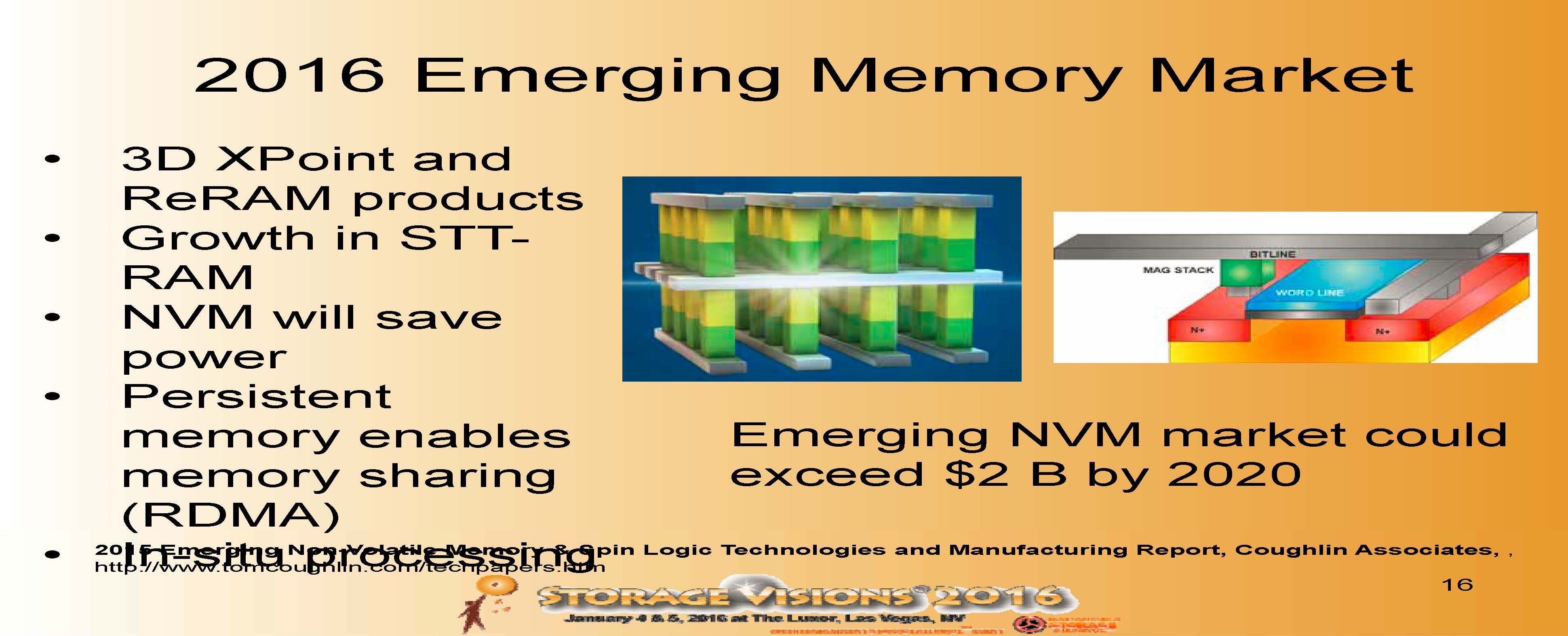
As the highlights of the passing year Coughlin mentioned lots of mergers and acquisitions that took place: as such Dell buying EMC, WD buying SanDisk, NetApp buying SolidFire. 2015 was a year of emergence of NVMe specification and work on NVMe optimization programming. Samsung introduced 3rd generation 3D NAND SSDs as well as all the other FLASH companies. Intel/Micron announced 3D Xpoint.
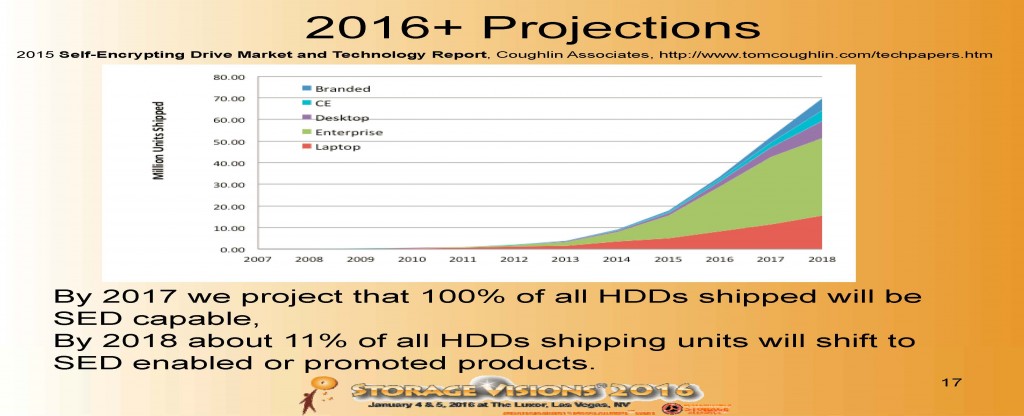
What to expect in 2016 and beyond? Definitely Panoramic Video and VR along with IoT will drive content growth in the next years. Here are the numbers that were presented to support this statement.
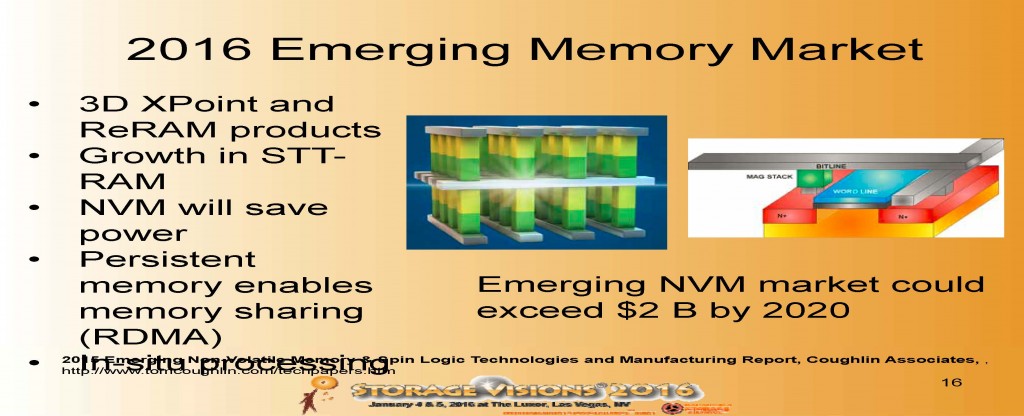
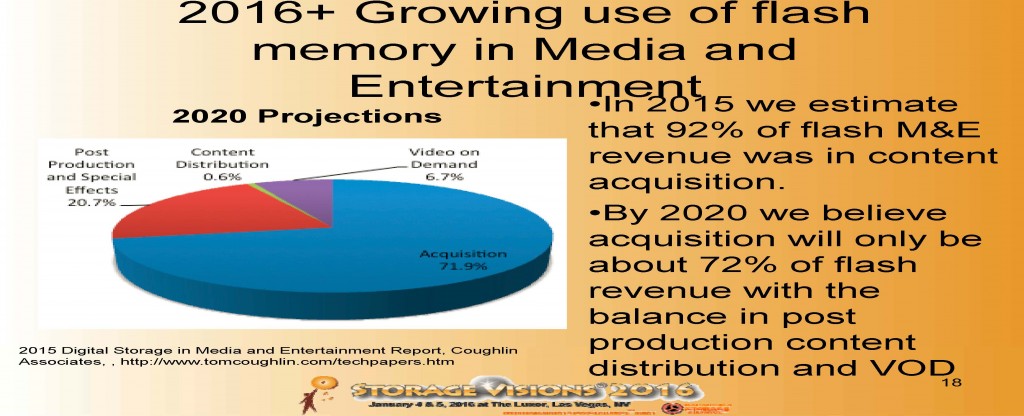
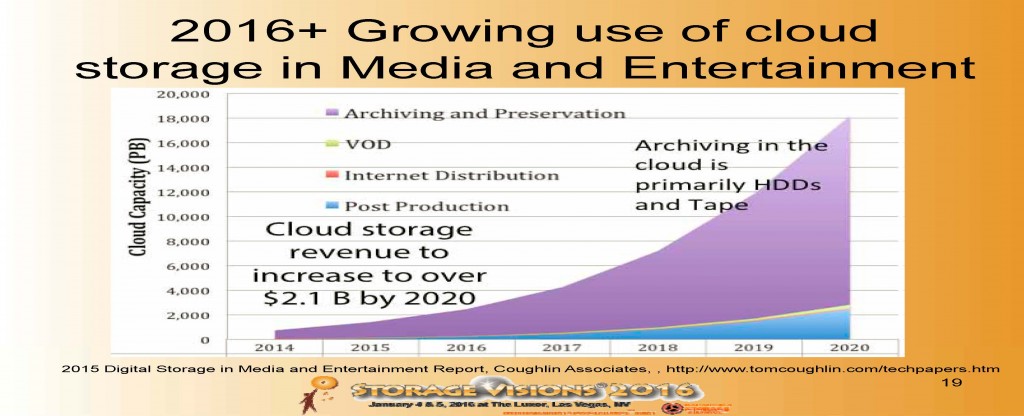
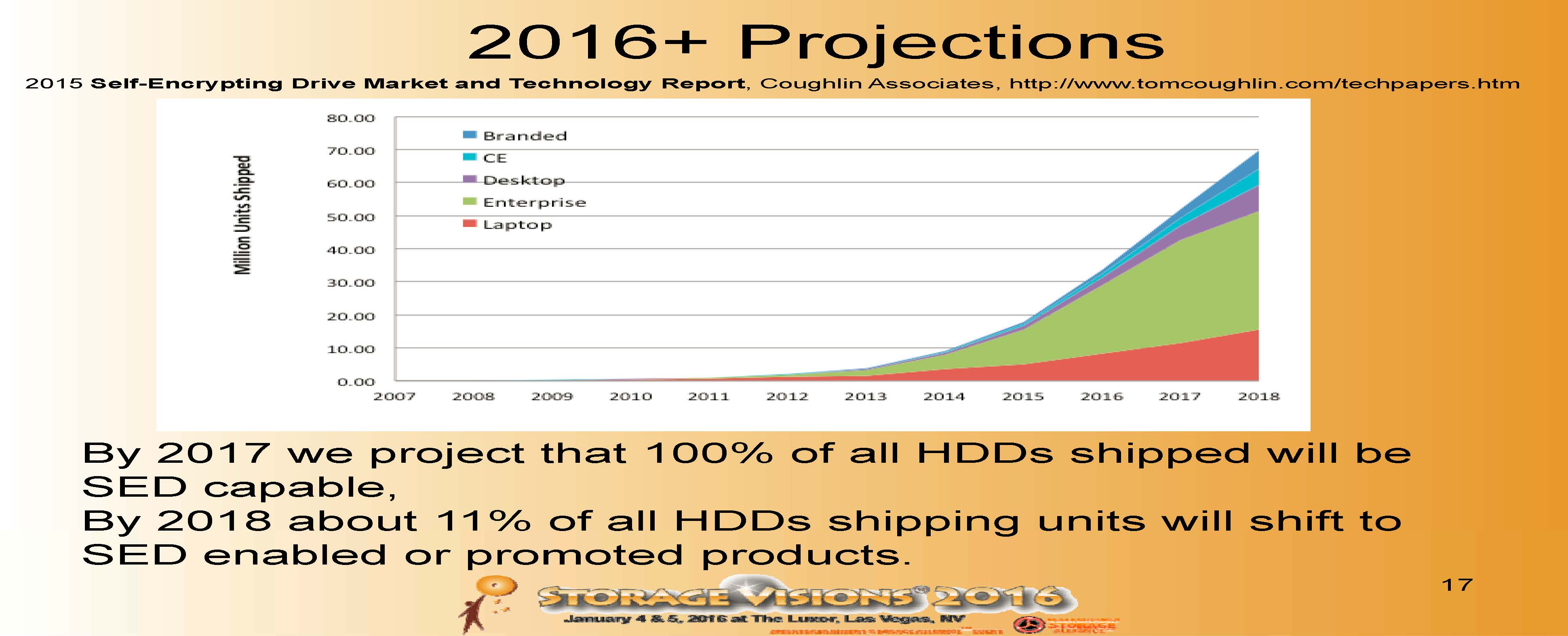
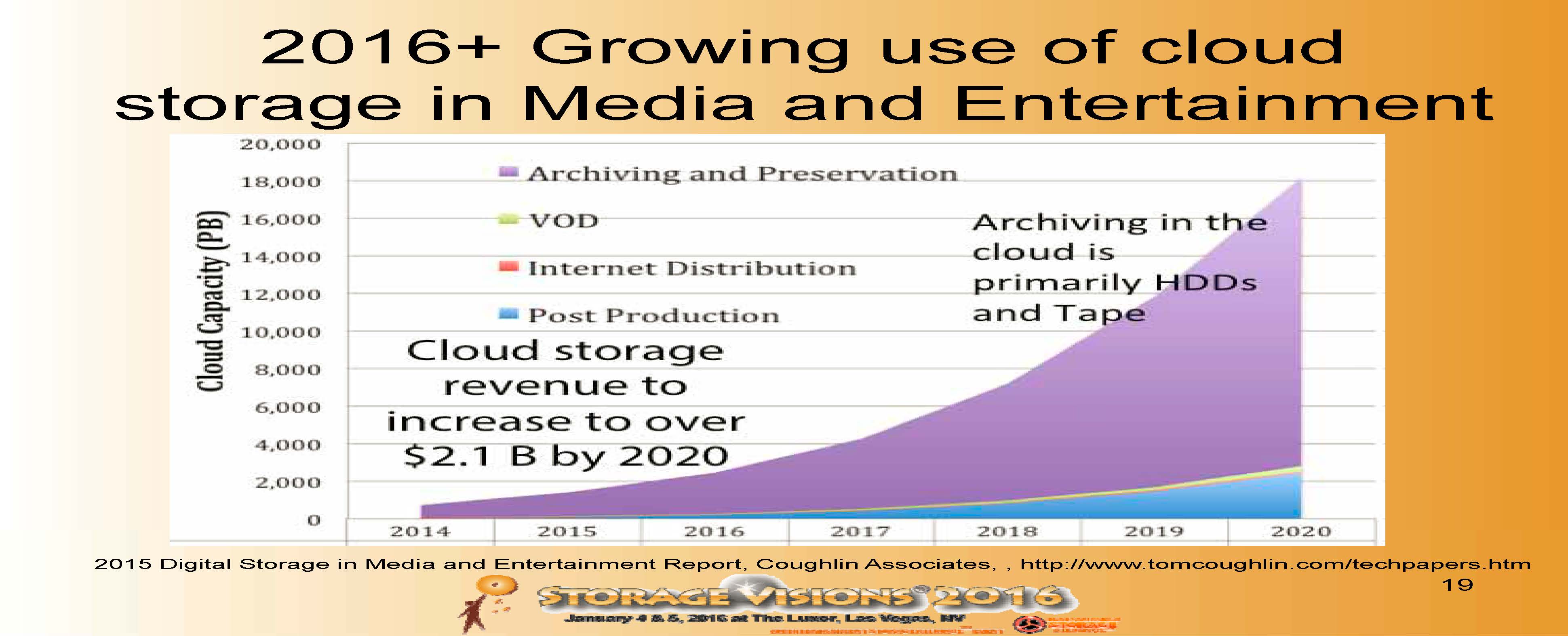
As the summary for years ahead we will see: continued consolidation in the storage industry, storage capacity growth with IoT, Big Data and more, mobile consumers get more storage as flash price goes down, demand goes up, greater movement of content to the cloud, more software defined storage services, HDD shift to capacity continues (12TB in 2016?), shift to 3D flash with majority of production by 2018.
by Lidia Paulinska | Jan 2, 2016
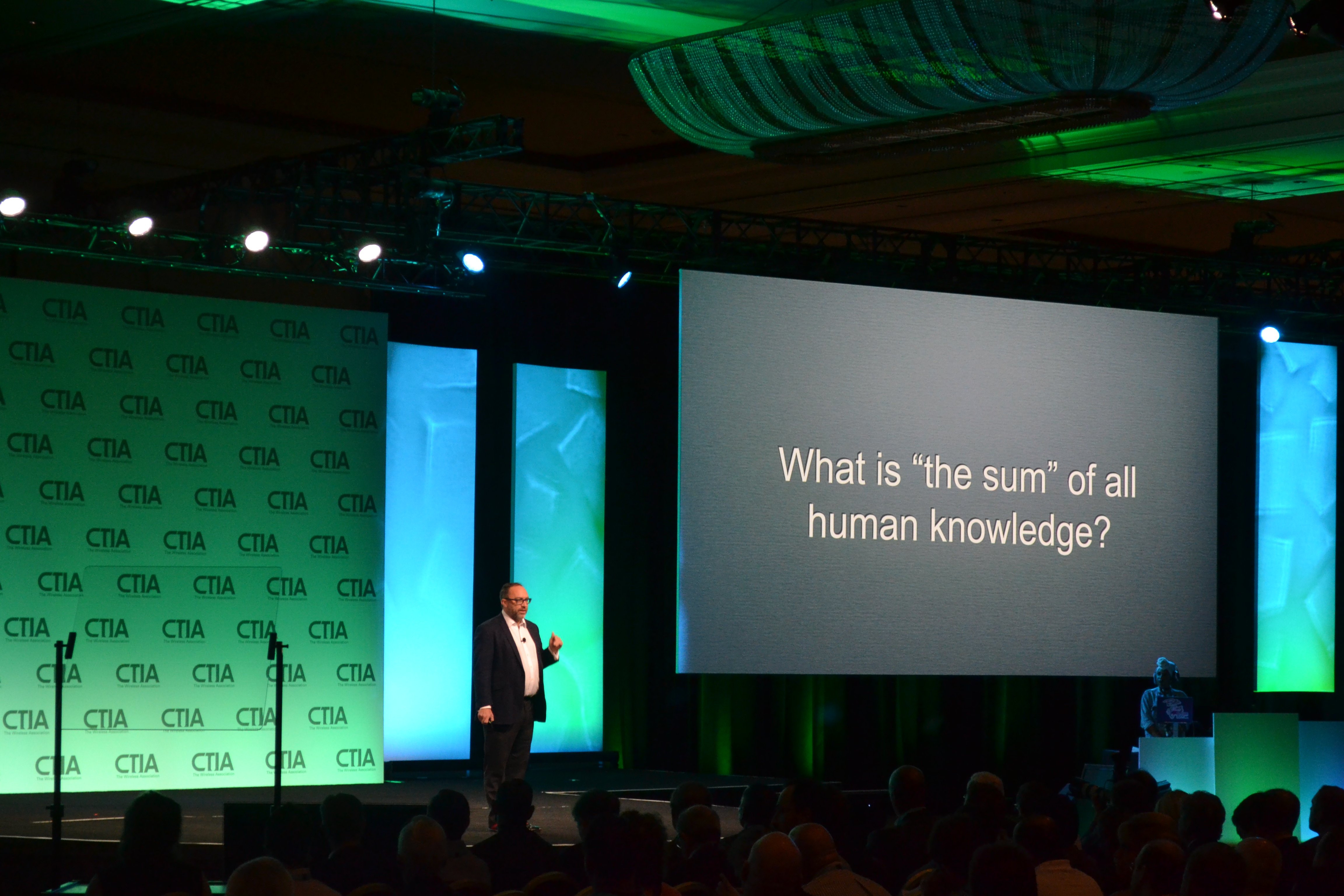
Jimmy Wales, co-founder of Wikipedia, dreamt about a world in which every single person on the planet is given free access to the sum of all human knowledge. In 2001, he founded Wikipedia, making that dream a reality. Today, Wikipedia is the seventh most visited website in the world. There are 500 million unique visitors every month visiting the site from every country in the world. Wikipedia contains nearly 5 million articles, that is being added to at the rate of 750 articles every day.
Wikipedia is a free encyclopedia that is written by thousands of volunteers, and has content in 288 languages. Key statistics for the site are: 8 languages that have over 1,000,000 entries; 46 languages have at least 100,000 entries; 120 languages have at least 10,000 entries and 223 languages have at least 1,000 entries. For Wikipedia, “free” means not just only no cost for the readers or contributors, but also freedom of speech. Everyone can copy, modify, and redistribute the content, both commercially and for private use.
In 2004 Jimmy Wales and Angela Beesley Starling announced the creation of their next project named Wikia. Wikia follows the same success model of Wikipedia. Wikia is a free web hosting service for wikis. The site is free of charge and derives its income from advertising. It publishes all user-provided text under copyleft licenses (https://copyleft.org/) . Today Wikia has more than 136 million readers every month and is written in 200 language.
Jimmy Wales dream about “the sum” of all human knowledge came true twice, due to his perseverance and his decision on sharing the vision of his dream with others.