
by Lidia Paulinska | Dec 9, 2025
Imec closed out 2025 with significant announcements that underscore its growing influence in semiconductor R&D and AI systems design. Between a high-profile debut at Super Computing 2025 and a strong showing at the International Electron Devices Meeting (IEDM), the Belgium-based research center marked the end of the year with momentum across multiple technology fronts.
In November at Super Computing 2025, one of the world’s largest gatherings for high-performance computing, imec unveiled imec.kelis, an analytical performance modeling tool aimed at reshaping how AI datacenters are planned and optimized.
Imec positioned the platform as a response to pressures facing datacenter designers, as AI workloads expand into the trillions of parameters and energy demands climb. According to the organization, imec.kelis offers a faster and more transparent alternative to conventional simulation tools, which are often slow or limited in scope.
Early adopters have already begun exploring the platform, an early sign of commercial interest.
“Imec.kelis is more than a simulator—it’s a strategic enabler for the next generation of AI infrastructure,” said Axel Nackaerts, system scaling lead.
Imec.kelis provides an end-to-end analytical framework that evaluates performance across compute, communication, and memory subsystems. The tool is optimized for large languagemodel (LLM) training and inference, offering predictions validated on widely used systems such as Nvidia’s A100 and H100 GPUs.
The platform draws heavily on imec’s longstanding expertise in hardware-software co-design, system-level modeling, and semiconductor technology road mapping. Imec said the goal is to give system architects the ability to make better-informed decisions at datacenter scale, where design choices directly impact cost, efficiency, and sustainability.
At the beginning of December 2025, imec continued to demonstrate research leadership at the 71st International Electron Devices Meeting (IEDM), presenting 21 papers spanning advanced logic, memory, quantum computing, imaging, and bioelectronics.
With a high-visibility launch in HPC computing and a deep bench of contributions at IEDM, imec concludes 2025 with strengthened leadership in both advanced semiconductor research and the rapidly expanding AI datacenter ecosystem. The organization is positioning itself as a critical contributor to the technologies that will define next-generation computing infrastructure.
2025 was a year of Acceleration for imec.

by Lidia Paulinska | Nov 5, 2025
Guillaume de Fondaumiere is the Co-CEO of the Quantic Dream Studio based in France, which developed games such as, “Fahrenheit” (2005), “Heavy Rain” (2010), and in collaboration with Sony Computer Entertainment, the PS3 exclusive title, “Beyond: Two Souls”, starring actors Ellen Page and Willem Dafoe (2013).
Today, on the 15th anniversary of “Heavy Rain,” he finds himself reminiscing: “In the mid-2000s when we started production on “Heavy Rain” I was executive producer on the project. I was also responsible for managing relationships with actors, composers, etc. In the weeks leading up to the launch, we decided with Sony, to send the game to several editorial teams. I remember very clearly sending out those codes, one after another. And a few weeks later we started receiving the first reviews. It was a huge relief to realize that the reviewers had understood what we are trying to do. When we hit after six weeks, one million copies I couldn’t help but shed a tear, telling myself “Phew!”. What I’d tell to myself fifteen years ago in the tough moments, because there are always some during a game’s development, is this: “Don’t worry. It’s going to be okay.”
Guillaume de Fondaumiere was also appointed the Chairman of the European Games Developer Federation. During his position, the French government and the European Union agreed to introduce a 20% tax credit for video games studios. He not only fought for many years to support the gaming industry, but had also lobbied for the games industry to be recognized as an art form.
“To me, all games are a form of cultural expression”, he says. “I see no reason why games should be treated differently than any type of literature or any type of movie. I think that more and more video games are becoming artful, and are becoming a form of art that should be recognized next to the others.” In his opinion, games should be placed among institutional forms of art such as, architecture, sculpture, visual arts, music, literature, theater, cinema art and media arts (television, radio and photography).
Media and internet often sell the information; games trigger the violence, players get addicted to them, and at the end, they are merely entertainment for young and immature minds. The stereotype of thinking associate games with either the shooting or the lighthearted entertainment for children. The reasons for such thinking originate from the early years of the gaming industry, which was actually targeted the children. The first games were very simple, they had boosted the simplest instinctive behavior and the release of adrenaline, which is also referred to as hormone 3F – fear, fight, flight.
But since that time has changed almost everything: games, hardware and the players themselves. Today, the old game enthusiasts had grown up and they still want to play games but they expect deeper, artistic and intellectual entertainment. Under such demanding clients there was a dynamic and multidirectional development of games, and palette of emotions has greatly increased. Today, players can incarnate in any characters, make their own choices, stand for duels with hundreds of players from all over the world. Production studios strive for authenticity and put meticulous attention to details.
Every little part is important, and approaching players to reality. There is also a 3D technology that changed the flat images into three-dimensional images. Today’s game has a story, uses the visual graphics and new, advanced forms of interaction with the player. In addition, there is also increased proliferation of the authors in the games industry, artists express themselves creatively and individually. The impact of games on mass culture is unquestionable and its value is growing at a dynamic pace.
So, is art or not?
A precise, unambiguous, and commonly held definition of art does not exist. However, it is known that art acts through aesthetic, ethical or cultural functions. It affects its audience through watching, listening, creating and reflecting. Without a doubt, the video game industry, which is the fastest growing sector of the modern entertainment industry, is a part of modern culture.
P.S. Roger Ebert, the legendary (Pulitzer Prize) film critic, who for 46 years shaped the tastes of American film audiences, remarked, “as long as there is a great movie unseen or a great book unread, I will continue to be unable to find the time to play video games”. He repeated this statement for eight years and once he hit harder “video games can never be art.”. He died in 2013, with no chance for revision of his assessment.

by Lidia Paulinska | Sep 11, 2025
Medicine—once reactive, treating disease only after symptoms appear—is rapidly evolving into something new. In 2014 American biologist and biotech pioneer Dr. Leroy Hood has offered the clearest vision of tomorrow’s healthcare. He describes the future as 4P Medicine: Predictive, Preventive, Personalized, Participatory. This vision is no longer on the horizon—it has arrived.
This shift, driven by biotechnology and digital innovation, marks one of the greatest transformations in the history of healthcare.
For generations, people have relied on forecasts to guide their daily decisions. When we want to know what the weather will be tomorrow, we open an app on our phone, turn on the radio, or watch the evening news. These predictions help us choose the right clothing, plan a trip, or prepare for a storm. Though convenient, these forecasts are not essential to survival. If we don’t know the weather, life goes on.
But the question “What will my health be like tomorrow?” is very different. Unlike the weather, the answer can determine the course of our life. Will we wake up feeling strong and healthy? Will cold symptoms appear overnight? Or will tomorrow bring a diagnosis that changes everything—a chronic condition, a genetic disorder, or a life-threatening illness? Knowing the future of our health is profoundly important, yet for most of human history, this knowledge has been out of reach.
Traditional medicine waits. It waits for pain, for symptoms, for problems that must be solved after they occur. For centuries this was the only option, because doctors lacked tools to understand what was happening inside the human body before illness appeared.
But advances in biotechnology, genetics, and data analytics are rewriting the rules. Modern medicine is beginning to resemble weather forecasting: predictive models built from enormous streams of data can now indicate our health risks long before we feel anything.
The science behind this new capability builds on several breakthroughs:
- Genomics, which maps our genetic predispositions
- Wearable sensors, which collect real-time data about physiology
- Artificial intelligence, which identifies patterns invisible to humans
- Behavioral tracking, which captures environmental and lifestyle influences
Together, these tools allow physicians to anticipate illness rather than simply react to it.
Millions of people now wear devices that continuously track: heart rate, oxygen level, activity and movement, sleep stages, blood pressure, blood glucose levels or stress signals. These sensors turn our bodies into sources of data, providing information that once required clinical visits. When combined, these data streams create a high-resolution portrait of our health.
The smartphone has quietly become the central device in digital medicine. It stores our medical data, tracks behavior, connects to wearable devices, and hosts apps that analyze symptoms, drug interactions, and lifestyle patterns. For the first time in history, billions of people carry clinical-quality sensors in their pockets.
The human body produces enormous amounts of information each second. Until recently, we lacked the tools to interpret it. AI changes everything. Machine learning models can detect: early sign of heart disease before symptoms occur, cancer signatures in bloodwork, anomalies in breathing and sleeping. AI operates like a constant medical companion, analyzing data streams and alerting us to risks long before a crisis emerges.
The discovery of DNA’s structure in the 1950s was one of the most significant moments in science. But only today—thanks to advances in sequencing—are we fully unlocking its potential. This revolution means individuals can now: understand their genetic predisposition to hundreds of conditions, tailor diet, exercise, and lifestyle to their genetic profile, detect carriers of hereditary diseases within families. Genomics is no longer a laboratory dream—it is becoming part of everyday healthcare.

by Lidia Paulinska | Apr 10, 2025
Over the past decade, data centers have served as the digital backbone of modern life—warehouses of servers designed to store information, host applications, and deliver content across the internet. But the rise of large-scale artificial intelligence has fundamentally changed what these facilities need to do. Traditional data centers are evolving into AI factories highly specialized, compute-intensive environments designed to train and run AI models at unprecedented scale. This transformation is reshaping architecture, operations, energy consumption, and economics across the tech ecosystem.
NVIDIA held its main GTC (GPU Technology Conference) in San Jose, California, from March 17-21, 2025, focusing heavily on transforming data centers into AI factories with Blackwell Ultra and Reuben architectures, plus AI-powered robotics. Yes, the data centers are no longer in fashion. The AI factories is the word that is describing the transformation what has been happening in technology world.
GTC 2025 solidified NVIDIA’s vision for an AI-driven future, emphasizing massive AI factories, a reinvented computing stack, and the practical application of AI across all industries – from healthcare, life science to manufacture robotics, autonomous vehicles, computer graphics, even video games. Jensen Huang found himself reminiscing on Video games that started Nvidia company in 1983 running the first application and the journey where Nvidia is now.
Key NVIDIA GTC 2025 Themes & Announcements:
- AI Factories & Infrastructure: Shift to full-stack accelerated computing, with Blackwell Ultra boosting reasoning workloads and Reuben architecture offering massive performance gains (900x scale-up flops).
- Software & Platforms: Introduction of Nvidia Dynamo, an OS for AI factories, and platforms for connecting millions of GPUs.
- Physical AI & Robotics: Reality of AI in robotics, logistics, and manufacturing, with demos of self-driving cars and digital humans.
- Industry Focus: Deep dives into healthcare (drug discovery), telecommunications (AI-RAN), and public sector AI.
- Geopolitics & Sovereign AI: Initiatives for nations to control their own AI infrastructure.
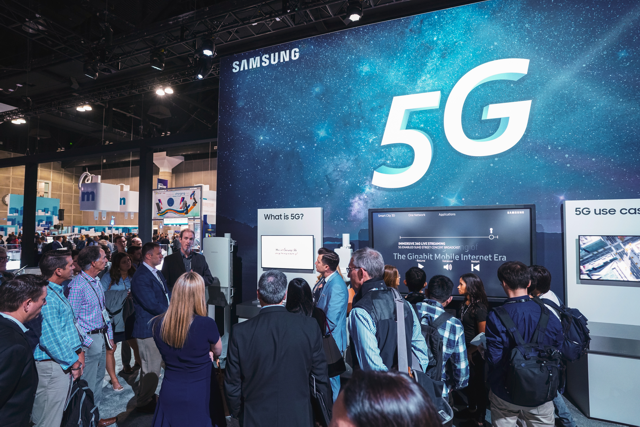
by Lidia Paulinska | Aug 1, 2019
August 2019 – The MWC LA Conference is once again bringing
the latest technology and information on 5G, connected cars and everything
wireless to the US. The MWC LA
conference is the North Amercian centered show of the industry leading cellular
MWC Barcelona conference in
February.
The Conference in LA shows off the new technologies for the
ever ongoing advanced in cell phone and the associated wireless
connectivity. While the big title may be
5G, it also means connected cars, new experiences for entertainment and gaming,
and security for all these connections..
For Entertainment, the long awaited higher performance for
mobile games is on the way. This will
allow the cell phone and table platforms to have similar gaming graphics as
console games offered just a short while back.
It also means that PC and console games can enjoy new wireless
controllers and connectivity bringing a new gaming experience.
The 5G technology is also supposed to be the last piece of
the puzzle to allow Virtual Reality to become the mainstream viewing
environment for all gaming and content.
It has been hypothesized by several VR makers that while their sales
targets have been behind for over a decade, with 5G deployment their sales will
beat all expectations and replace TVs and cell phones as the primary screens in
peoples lives. This are pretty big shoes
for 5G to fill.
The conference will also cover entertainment content which
is about streaming media in a cellular and wireless environment. These discussions pertain not only to being
able to enjoy your favorite movie and live sports with a better quality of
experience, but also for being able to
participate in high quality video conferences and intranet based video message
delivery.
The conference has keynotes from many leaders including FCC
Chairman Ajit Pai, Executives from Verizon, Intel, US Cellular, Ericsson, Nokia
and Open Table.
The 3 day event is returning to the LA Convention Center
October 22-24, 2019.

by Angel Scott | Apr 27, 2019
The first
decade of the 21st century was known for introducing smartphones to the masses,
as well as introducing the first smart TV. Ten years later starting in 2010,
the world became socially connected thanks to companies such as Facebook,
Twitter and Netflix. We are now rapidly approaching a new period of consumer
technology called the Data Age.
This “Data
Age” comes to life under the shadow of the tremendous flow of data security and
privacy concerns becoming the number one issue across the entire globe.
Different countries are dealing with these complex issues with different
solutions and with The European Union for example, implemented strict rules and
regulations, last year, called GDPR (General Data Protection Regulation).
China, on other hand, has no government organized privacy and security
regulations.
Both
companies and individuals are at risk.
“With computing processing power increasing dramatically, even passwords
that are 14 to 20 characters long will be readily crackable and largely
ineffective for protecting high-value, high-risk assets and transactions by
2020”- warns Forrester, an American market research company that provides
advice on existing and potential impact of technology to its clients and the
public.
As risky as
this as can be, the world must stay
connected because only this connectivity allows us to live in smart cities, in
intelligent houses, drive connected cars and very soon be driven by autonomous
vehicles.
This next
generation of data connectivity will require wireless technology from 5G that
can connect devices with the next generation fast speeds. Those in the race to
bring the technology to marketplace and get a foot int the door for the
business that goes with it include China Telecom, KDDI in Japan, SK telecom in
South Korea, through Verizon and AT&T in the USA, Shaw and Rogers in
Canada, to Ericsson all over Europe:
Vodafone and BT in United Kingdom, Deutsche Telecom in Germany, Orange
in France and Telefonica in Spain. As 5G becomes a crucial component of
technology development, the entire world needs to adapt to it.
In the last
few years, home security cameras, thermostats, and connected lighting equipment
have become more common in homes and sales continue to increase. Just imagine
how the IoT (Internet of Things) environment is going to explode with the
rollout of 5G.
For example,
for smart home development into existing homes, consumers usually don’t buy all
those devices from the same platforms or at the same time. This brings the
challenge of how the consumer can connect all these different products, brands
and platforms together as well as the devices that haven’t even been invented
yet. The idea of a practical smart home is like bringing together different
instruments to create a symphony orchestra that need to play in unison. Following connectivity, the Smart Home’s
Next Trend will be Interoperability and Intelligence.
It is
difficult to imagine the smart home without some type of digital assistance
activated by voice and equipped with Artificial Intelligence. Three truths
about voice/AI assistant are: 1.) Digital assistance is going into everything:
devices, appliances and cars 2.) Support for digital assistance has become
table stakes: services, brands, commerce 3.) Voice is quickly becoming the
“go-to” interface – it allows you to keep doing what you are doing as well as
have the digital assistant do something that normally requires your hands.
For example,
Amazon Alexa has nearly 60,000 skills and 20,000+ compatible devices. The way
how we interact with digital assistance shown the study done by Consumer
Technology Association (CTA) in August 2018. US online adult study shows how
people make a use of Amazon Alexa(in%): Ask questions – 63, Check the weather – 58, Listen
to music/radio/podcasts – 50, Set a timer or alarm – 45, Call someone – 32, Check
the news/sports – 30, Send a message to someone – 25, Search for
recipes/cooking information – 23, Check personal calendar – 22.
We also
beginning to understand the limits of automation. AI intelligence and
automation are really transform the way we access data, we use data. AI is
helping us to understand the data. The
first generation of voice control required people to learn “command words” and
“special phrases”. With AI in the
system, it can now understand conversation and what actions to do next. For example, without AI and data analysis you
would say “Alexa, turn up the thermostat by 2 degrees” now you can say “Alexa,
I am cold”. The system will recognize
who “I” is and the context for the word “cold” based on what location you were
talking from and the system can respond “would you like me to turn up the
thermostat by 2 degrees”.
This
direction of connectivity, interoperability, high speed data and analytics as
well as “personalized models” is what is driving the next generation of Smart
Home. The “personalized models” are the
core of the privacy concerns. It means
the computer has to both know that it is you, and more importantly know
everything about you – what you eat, where you shop, what temperature you like
the house, what shows you watch and what music you listen to, who you visit and
talk to, what your schedule is, what your interests are, To be able to be helpful, the computer has to
know how to help. By knowing how to help
you be more comfortable, it means that all of that data has to be stored
someplace, and hopefully used only for your benefit. Governments, companies, and technology are
all working together, finally, to try and insure the next decade is a
beneficial Data Age to make your life better.
Page 2 of 20«12345...1020...»Last »