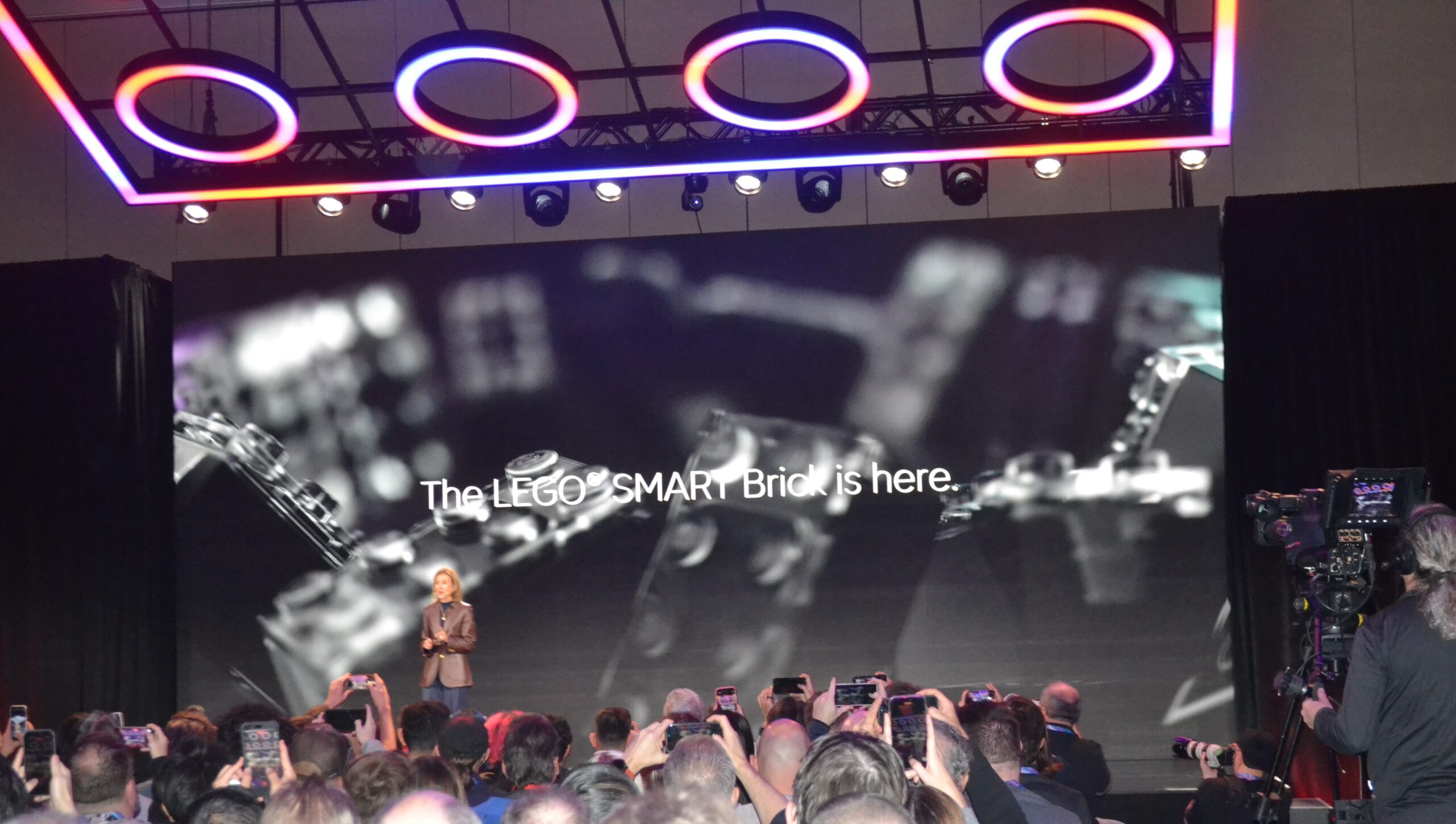
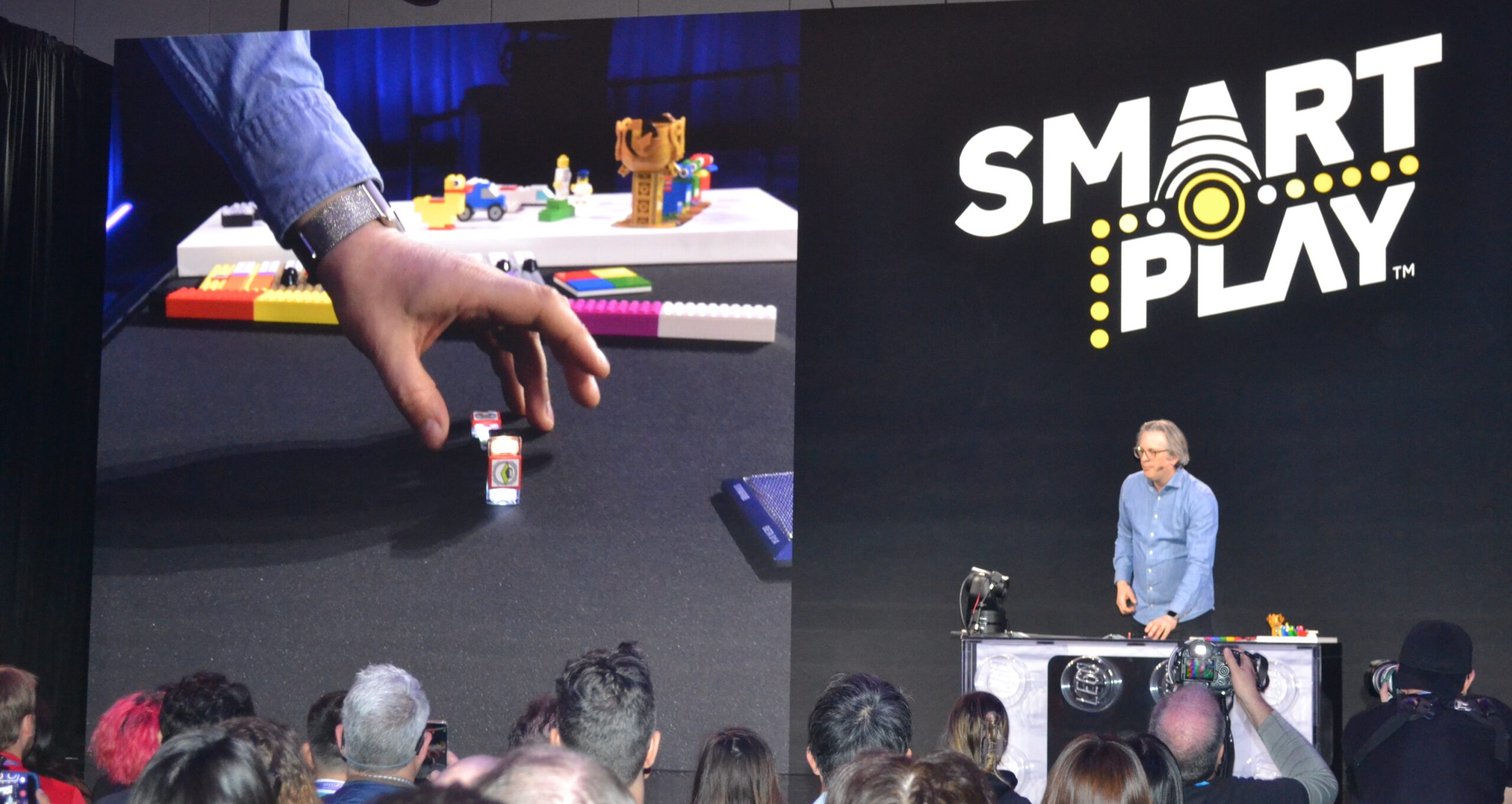
The LEGO Group introduced a major new initiative at CES with the launch of LEGO Smart Play, a platform designed to merge physical LEGO bricks with embedded digital intelligence—without screens, apps, or traditional digital interfaces.
The company described the announcement as its most significant innovation in decades, marking a new chapter in LEGO’s 70-year history of physical play. Executives positioned Smart Play as a foundational platform rather than a single product, signaling a long-term strategy to integrate technology into hands-on creativity while preserving LEGO’s core identity.
A Modern Evolution of a Classic System
LEGO leaders opened the presentation by highlighting the enduring success of the LEGO system of play, which has remained structurally compatible since the interlocking brick was introduced in 1958. With more than 20,000 different elements that fit together, LEGO has maintained a consistent design philosophy centered on creativity, imagination, and open-ended building.
At the same time, the company acknowledged a changing cultural landscape. Today’s children grow up immersed in digital environments, prompting LEGO to explore how interactive technology could be integrated into physical play without replacing it.
Executives said the challenge was to introduce digital intelligence in a way that enhances creativity rather than shifting play toward screens or software-driven experiences.
Technology Designed to Stay Invisible
LEGO Smart Play is built around three core principles: seamless integration of technology into physical play, openness across the LEGO ecosystem, and simplicity in user experience.
Rather than relying on apps or digital interfaces, the system is designed to operate through natural physical interaction. There are no screens, no visible controls, and no learning curve for children. The technology remains embedded in the bricks, responding to how they are used rather than directing how they should be played with.
Inside the Smart Brick
At the center of the platform is the LEGO Smart Brick, a standard-looking brick that contains sensors, processing capabilities, and wireless communication technology. Despite its embedded intelligence, the brick has no screen or power button and functions automatically as part of a build.
According to LEGO, the Smart Brick can detect movement, sound, light, color, distance, orientation, and direction. It can recognize specially designed Smart Tags that define behaviors, identify Smart Minifigures within a model, and communicate wirelessly with other Smart Bricks.
This allows LEGO creations to respond dynamically to physical interaction. Vehicles can detect drivers and track movement, structures can respond to proximity, and entire play environments can interact in real time through decentralized networks of connected bricks.
Modular Intelligence Across Builds
A single Smart Brick can be reused across multiple builds and play scenarios. By changing tags and minifigures, the same brick can take on different roles, functioning as an engine, character, creature, or interactive object depending on how it is configured.
During demonstrations, LEGO showed how one Smart Brick could animate cars, aircraft, animals, and games, generating light, sound, and behavioral responses based solely on physical movement and positioning.
Spatially Aware Play
One of the platform’s distinguishing features is spatial awareness. Without relying on cameras or external tracking systems, Smart Bricks are able to detect distance, orientation, and directional relationships between builds.
This enables interactive play scenarios such as tracking race outcomes, triggering responses based on proximity, and creating game mechanics that operate in three-dimensional physical space.
A Long-Term Platform for Storytelling
LEGO executives emphasized that Smart Play is designed as a scalable platform rather than a single product line. The system is intended to support long-term storytelling, re-playability, collaboration, and evolving narratives across different LEGO themes.
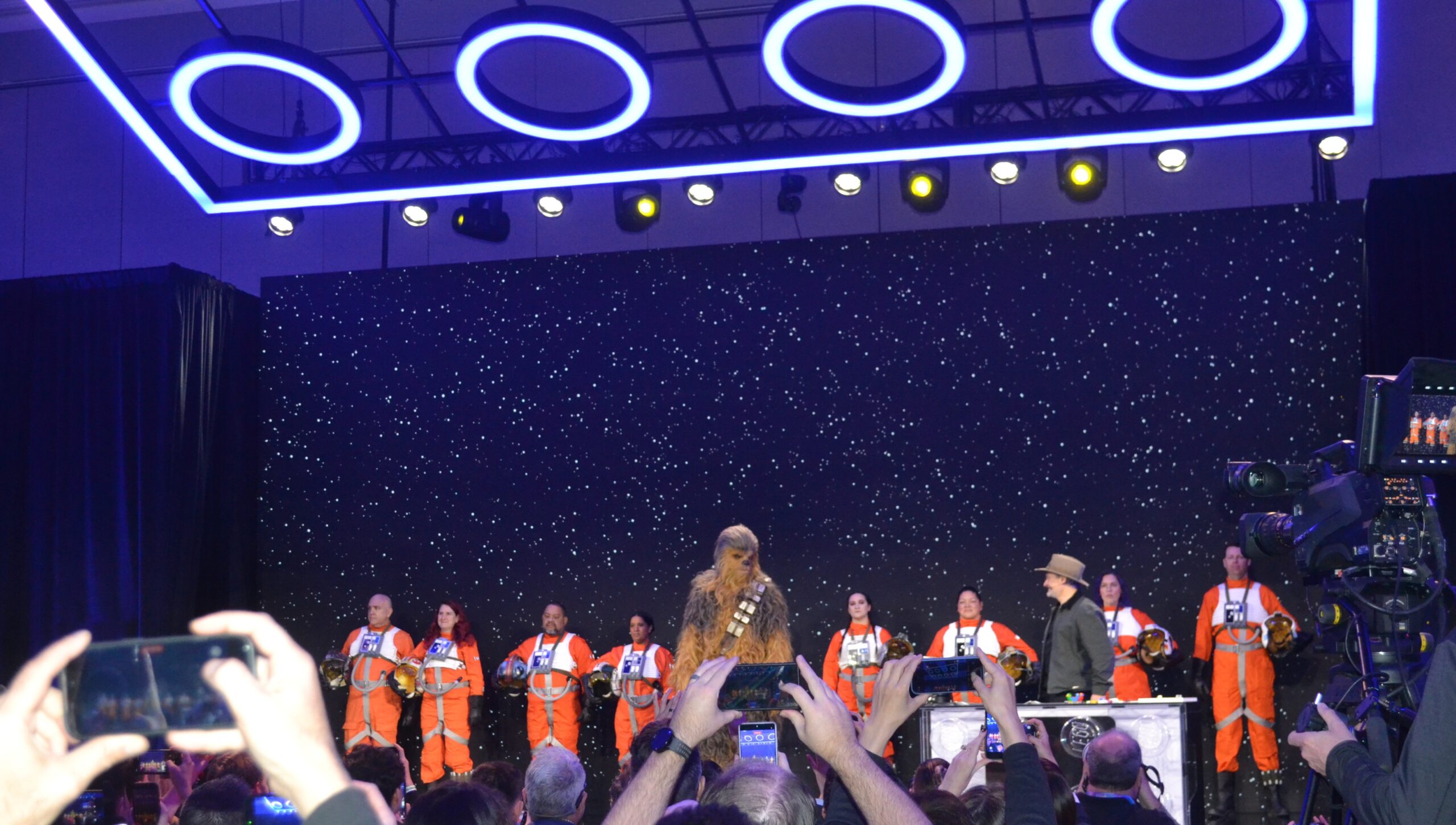
To demonstrate the platform’s potential, LEGO announced its first Smart Play partnership with LEGO Star Wars.
LEGO Star Wars Becomes Interactive
In collaboration with Disney and Lucasfilm, LEGO revealed that Smart Play will be integrated into upcoming LEGO Star Wars sets. After more than 25 years of partnership, the franchise will move beyond static builds to interactive physical play environments.
Characters, vehicles, and locations will respond to movement, proximity, and interaction, allowing children to create dynamic Star Wars experiences without screens or digital displays.
The first LEGO Star Wars Smart Play sets are scheduled to launch in March.
Redefining Physical Play
LEGO Smart Play represents a shift in how physical toys can incorporate advanced technology. Rather than directing behavior through software, the system is designed to respond to play itself, keeping creative control in the hands of children.
Company leaders described the platform as a foundation for future development, positioning Smart Play as the beginning of a broader transformation in physical play design.
At CES, LEGO framed the initiative not as a move toward digital toys, but as a reimagining of physical creativity—one where technology remains invisible, and imagination remains central.
Hyundai Motor Group, Boston Dynamics, and Google DeepMind used this year’s Consumer Electronics Show to present a long-term vision for artificial intelligence and robotics focused on collaboration between humans and machines, rather than automation for its own sake.
The companies framed their message around what they described as human-centered AI robotics—systems designed to support human work, improve safety, and expand productivity, rather than replace human labor. Executives emphasized that robotics is moving beyond spectacle and demonstration toward real-world deployment and practical impact.
From humanoid robots in factories to AI systems that learn through experience, speakers stressed that the next phase of robotics development is about purpose-driven technology.
From Demonstration to Deployment
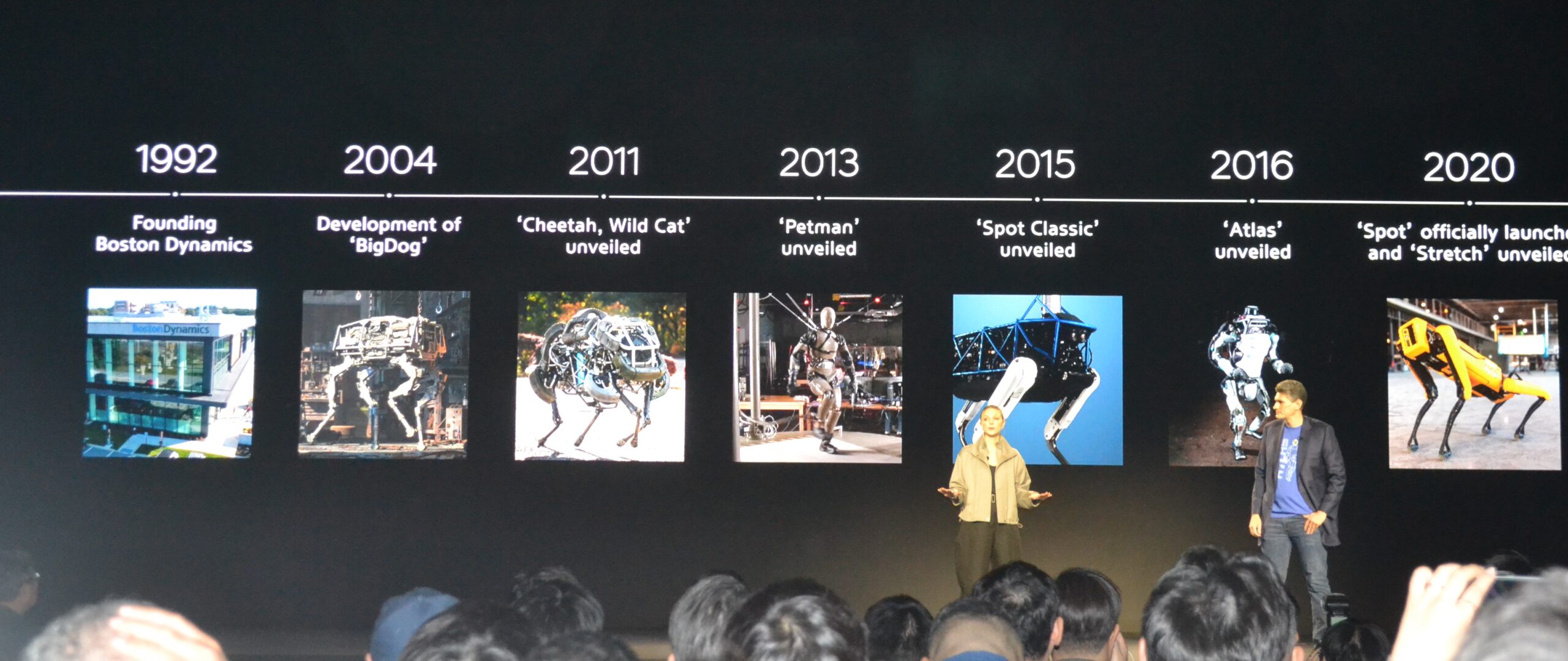
Boston Dynamics, long known for its high-profile demonstrations of robots that run, jump, and perform complex movements, positioned its work as increasingly focused on industrial and commercial applications.
Aya Durbin, Humanoid Application Product Lead and Zachary Jackowski, Vice President, General Manager of Atlas highlighted the shift toward robots designed for hazardous environments, repetitive labor, and physically demanding tasks. The stated goal is to reduce workplace injuries, increase safety, and improve operational efficiency across industries.
Rather than replacing human workers, executives said the company’s strategy is centered on extending human capability and removing people from dangerous or exhausting roles.
Atlas: A General-Purpose Humanoid Platform
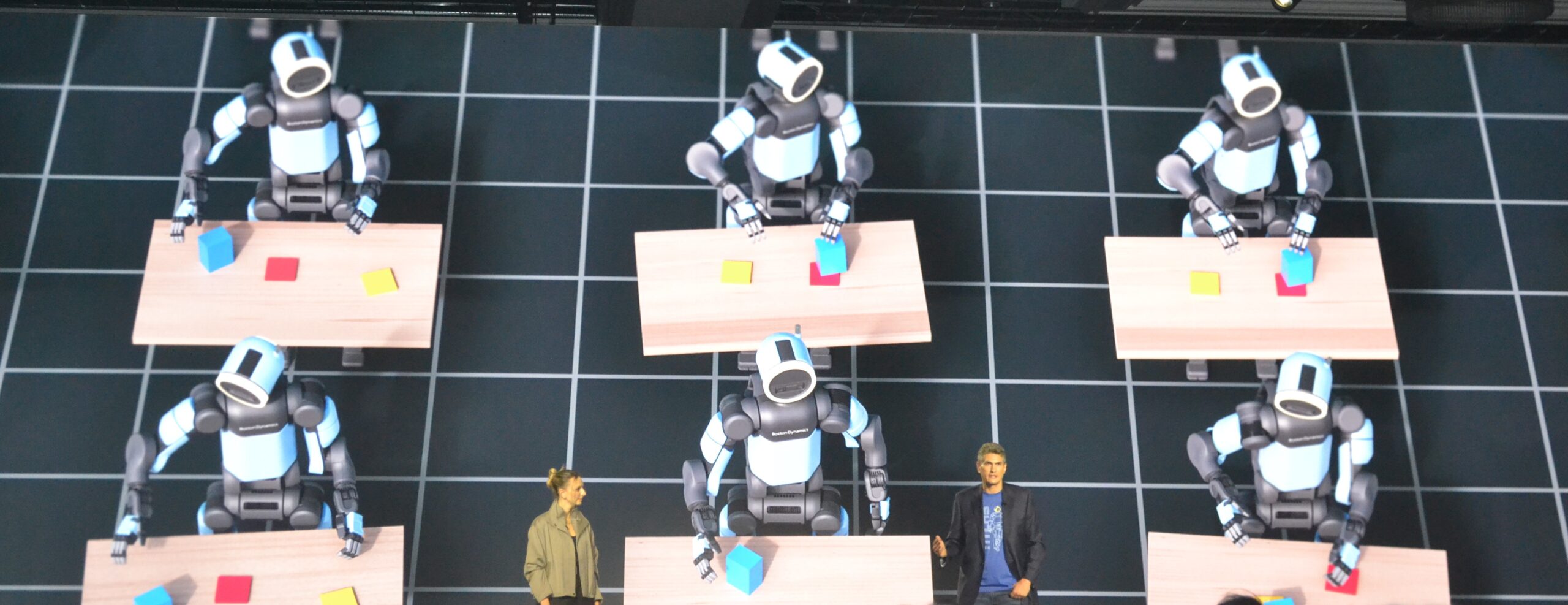
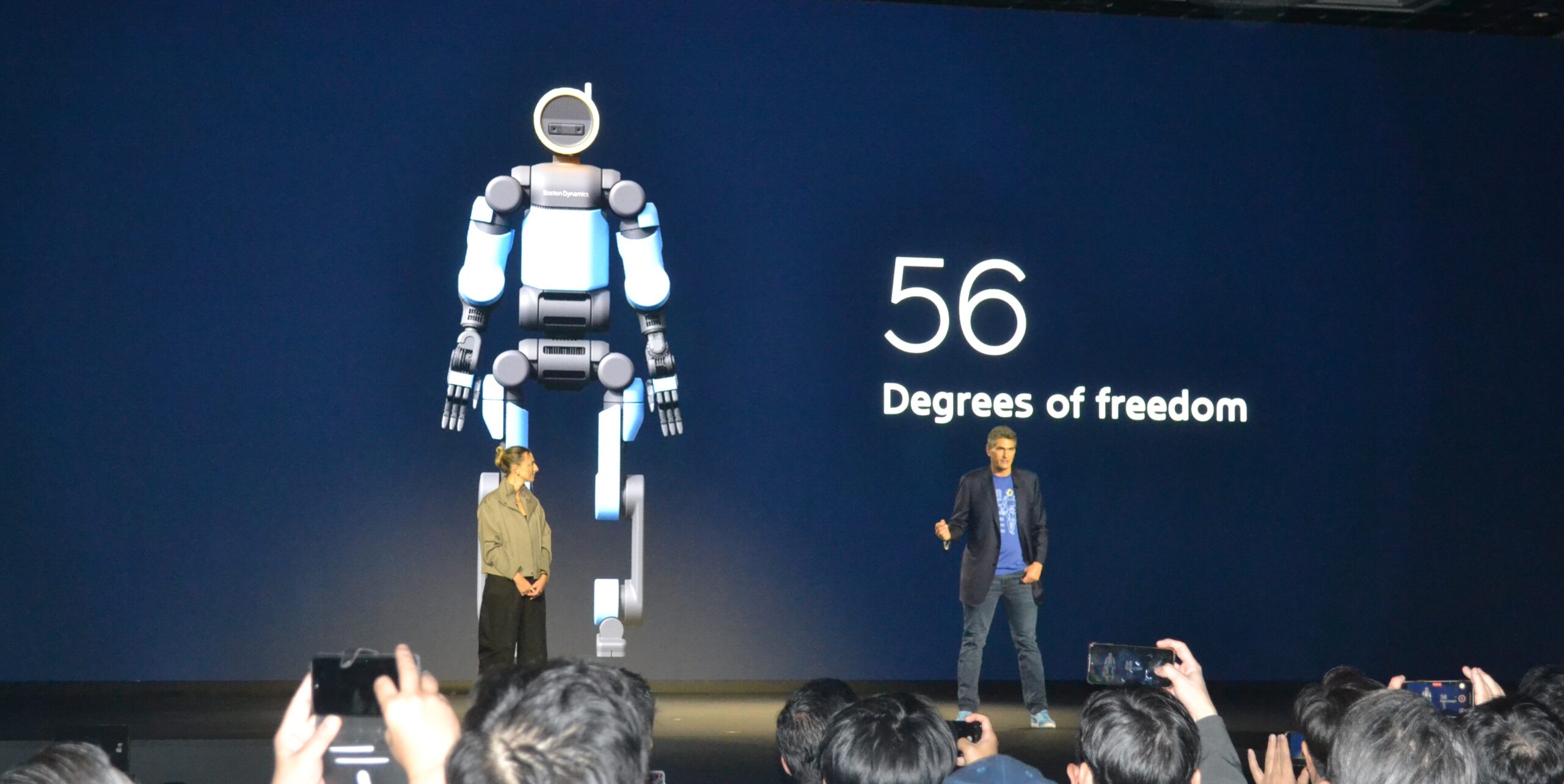
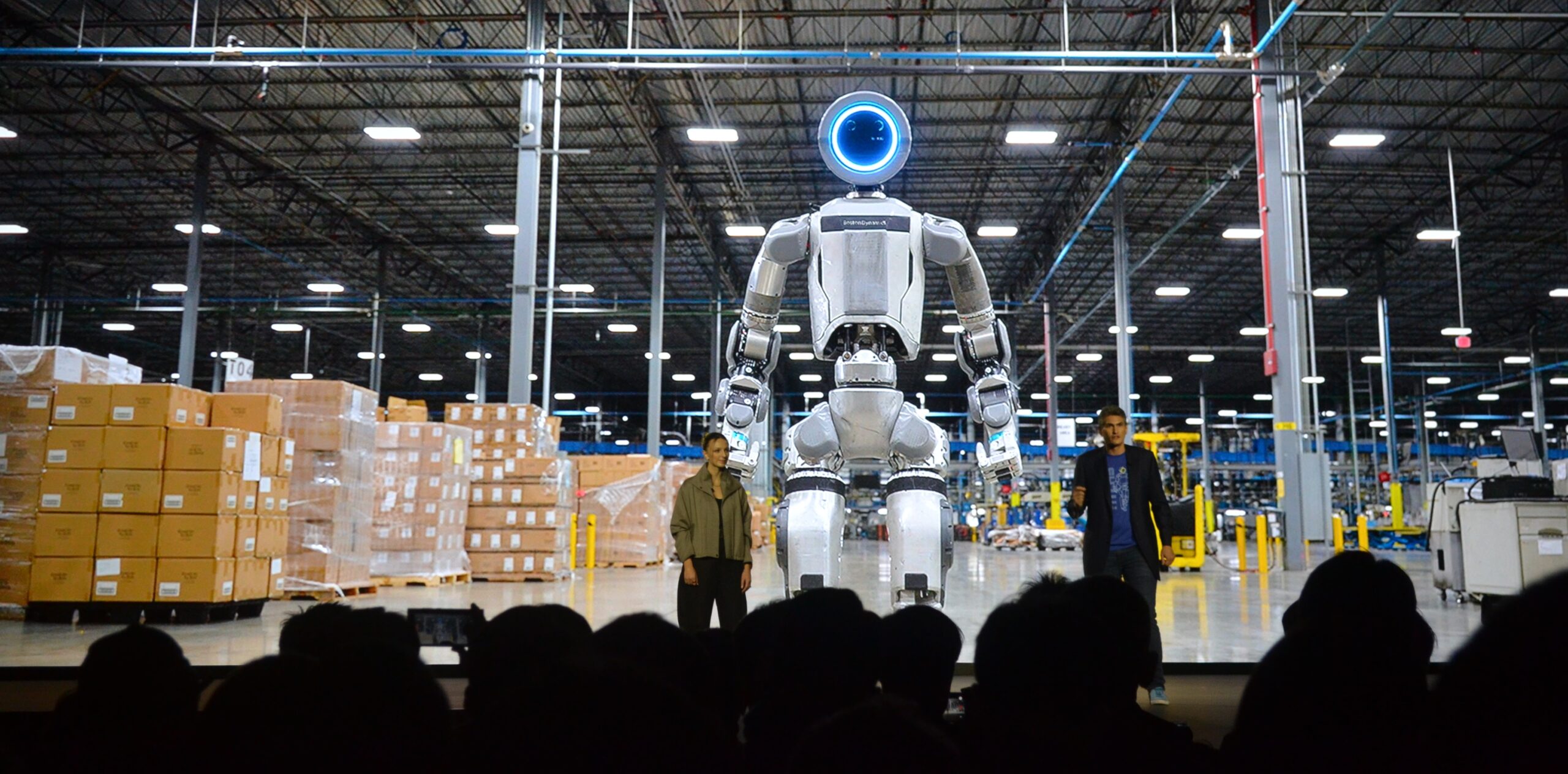
The centerpiece of the presentation was the public unveiling of Atlas, Boston Dynamics’ next-generation humanoid robot.
Unlike traditional industrial robots built for single-task automation, Atlas is being developed as a general-purpose humanoid platform. According to company representatives, the robot is designed to navigate complex environments, manipulate objects with human-like dexterity, and adapt to different tasks as operational needs change.
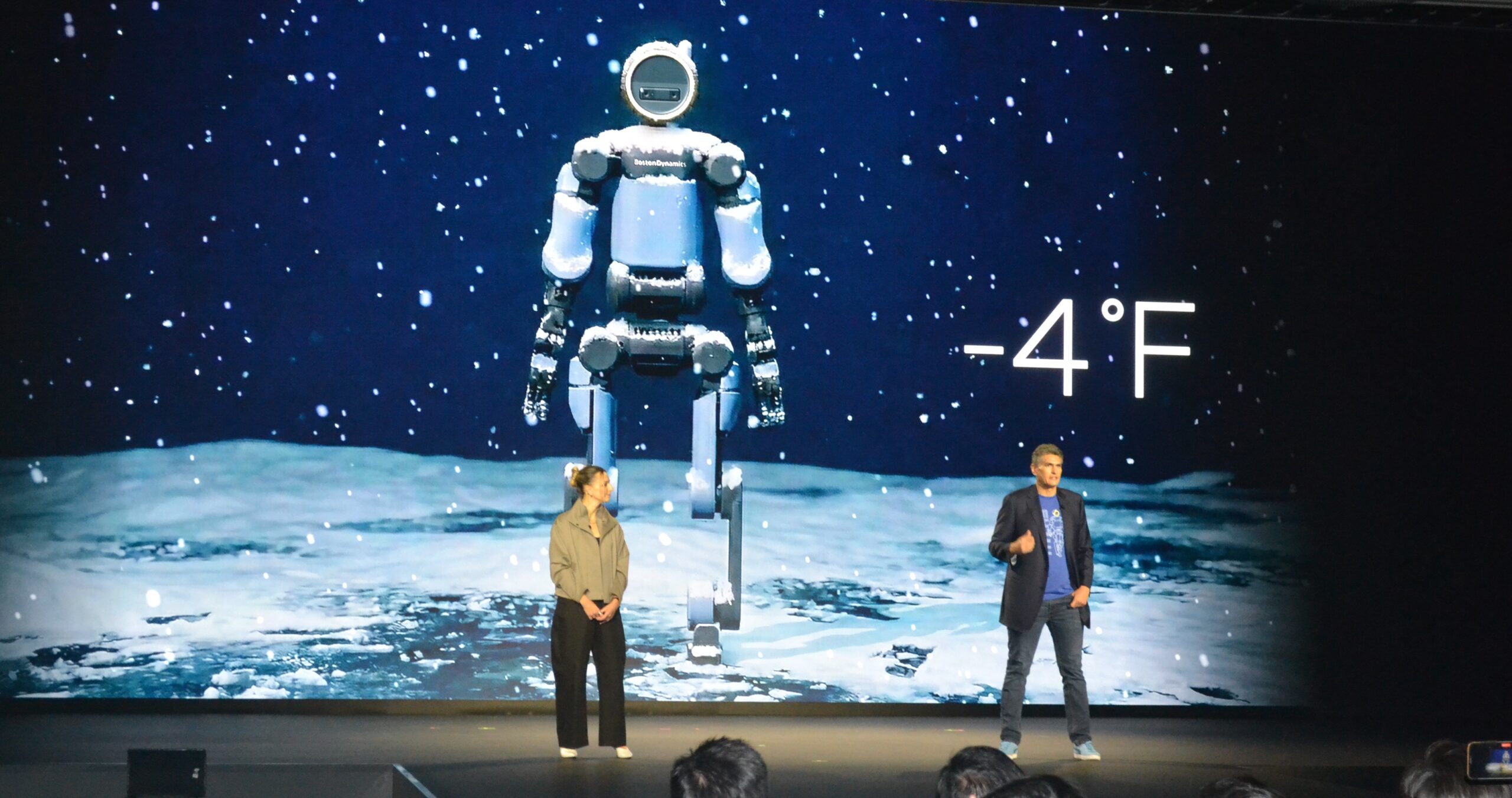
Atlas is engineered for industrial settings and includes capabilities such as heavy lifting, extended reach, autonomous operation, operation in extreme temperatures, and self-managed battery systems. It is also designed to share learned tasks across multiple units through cloud-based intelligence systems, creating what the company described as a networked learning model.
Commercial Robotics in Operation
Boston Dynamics pointed to its existing commercial robots as evidence that this approach is already being deployed at scale.
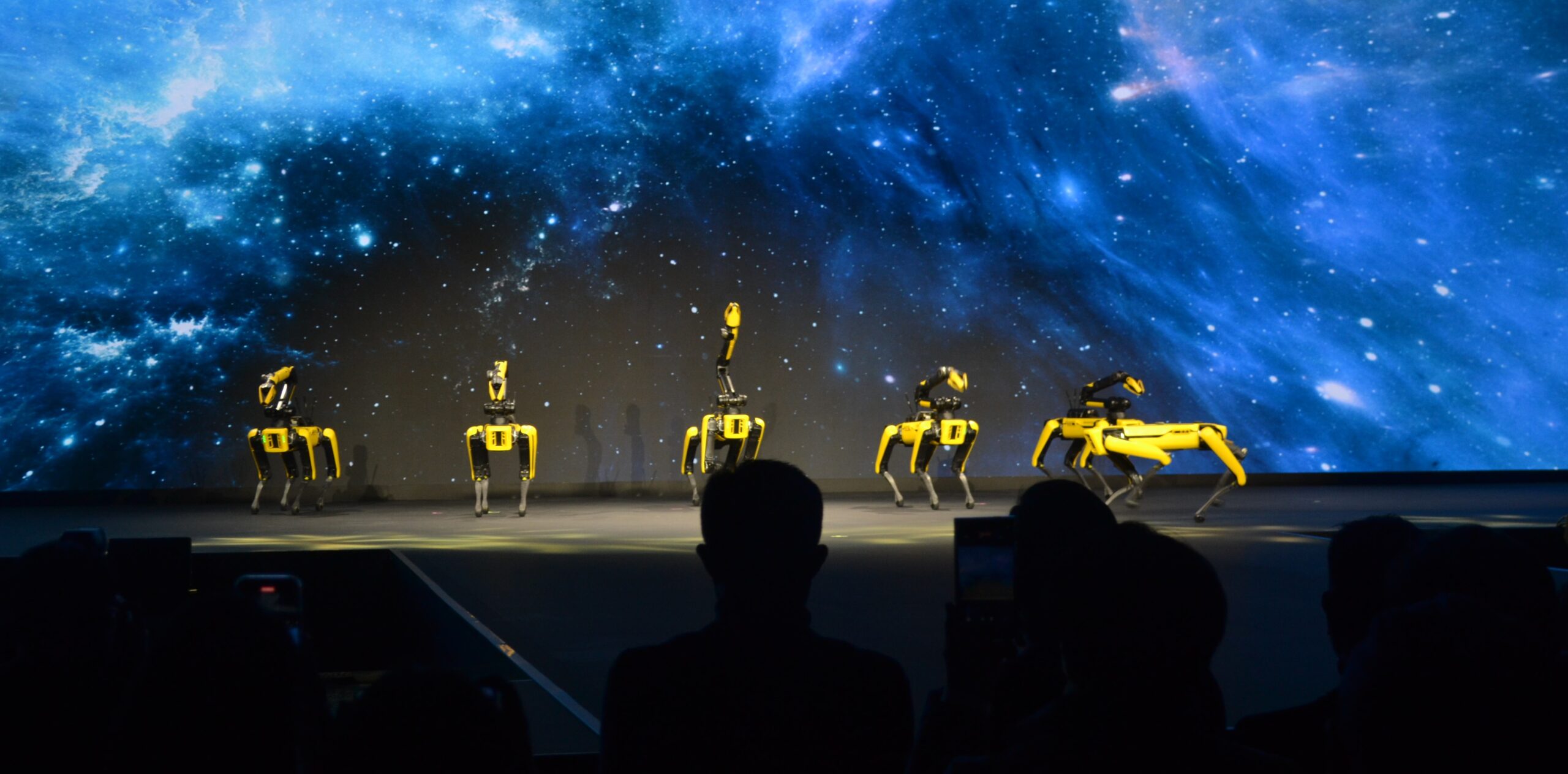
The quadruped robot Spot is currently used in thousands of facilities across more than 40 countries, where it performs industrial inspection, data collection, and safety monitoring tasks. The warehouse robot Stretch has been deployed in logistics environments to automate truck unloading and material handling, with more than 20 million boxes reportedly processed through customer operations.
Company officials emphasized that these systems are already in commercial use and producing measurable operational outcomes.
Hyundai’s Global Robotics Strategy
Hyundai Motor Group outlined plans to build large-scale infrastructure to support global robotics deployment. The company is developing manufacturing facilities capable of producing tens of thousands of humanoid robots annually, alongside data-driven production systems and AI-enabled factory environments.
Executives described a long-term strategy that extends beyond manufacturing into logistics, construction, energy, infrastructure, and smart city development, with eventual plans for integration into consumer and home environments.
Hyundai’s approach includes service-based robotics models, integrated deployment networks, and AI-powered industrial ecosystems designed to scale robotics adoption across multiple sectors.
Partnership with Google DeepMind
A major announcement at the event was the partnership between Boston Dynamics and Google DeepMind Robotics, bringing together advanced physical robotics and large-scale AI foundation models.
The collaboration aims to develop general-purpose humanoid intelligence systems that combine physical capability with advanced reasoning, language understanding, and adaptive learning.
Rather than relying on pre-programmed task execution, the companies said future robots will be able to learn through observation and experience, generalize skills across environments, and continuously improve performance over time.
Redefining Human–Robot Collaboration
Speakers emphasized that the vision presented at CES is based on collaboration rather than replacement.
Under this model, humans remain responsible for supervision, decision-making, judgment, and ethics, while robots take on physically demanding, repetitive, and hazardous tasks. The goal, according to company leaders, is to improve workplace safety, increase productivity, and allow people to focus on higher-value activities such as problem-solving, leadership, and creative work.
A Broader Shift in Robotics
The companies framed the developments as part of a broader transformation in how robotics is designed and deployed. Rather than isolated automation systems, they described the emergence of integrated human–robot ecosystems built around shared intelligence, learning systems, and scalable infrastructure.
Executives summarized the vision as a model of technological development centered on partnership between humans and machines, rather than competition between them.
Looking Ahead
As AI systems, robotics platforms, and industrial infrastructure continue to converge, industry leaders said the line between digital intelligence and physical systems will continue to blur.
What is emerging, they argued, is a new model of robotics—one where machines are designed not simply to operate autonomously, but to function as collaborators within human systems.
At CES 2026, that future was presented not as a distant concept, but as a roadmap already moving into real-world deployment.
As I was shifting through the RSA Conference 2024 program guide, with it’s impressive comprehensive five day agenda, there was an enormous amount of activities going on to easily fill anyone’s calendar as an attendee for the week. 33 keynote presentations given on two stages in the West and South Stages at the Moscone Center, 650 speakers across 425 sessions, the Expo floors in the South and North Halls had over 600 exhibitors.
As I glanced into the program’s “keynote” section, I noticed one that immediately caught my eye entitled “A Conversation with Actor, Comedian, and Writer, Jason Sudeikis, hosted by RSAC Chairman, Hugh Thompson. It read…
BELIEVE. The Ted Lasso Way has put smiles on the faces of millions worldwide, and maybe made us all a little kinder. A little more focused on teamwork and collaboration. A little more aware of the power of community, and the importance of mental health needs. And a lot more aware of the impact of an inspiring leader. Join this keynote as Jason Sudeikis shares insights, laughs, and inspiration.
As a huge fan of the show, I was curious to know how much knowledge the four-time Emmy Award Winner Jason Sudeikis had in the Cybersecurity field. As I entered Moscone West Hall and tried to find a seat, I discovered that most of the capacity crowd also probably wanted to know, as well.
The Executive chair of RSAC and host Hugh Thompson introduced Sudeikis to the much appreciative crowd at Moscone West, and immediately asked Sudeikis what inspired him to be an actor and performer.
“I saw Beverly Hills Cop when I was nine years old… it was very motivational to me and I knew that’s what I wanted … to be a black cop from Detroit.”, Sudeikis replied.
From that moment on, you knew it was going to be a fun-filled afternoon with plenty of laughs with the always very playful Thompson, as host.
BE CURIOUS – NOT JUDGEMENTAL
In a few minutes after the introduction, the lights were further darkened to show a clip from the episode, “Diamond Dogs”, from Season One/Episode 8 of Ted Lasso. They played the infamous darts scene that contained the famous Lasso quote “Be curious, not judgmental”, which perhaps may be one of the most representative quotes based on Ted Lasso’s character reportoire, that easily can be applied practically everywhere in so many different situations. Thompson asked Sudeikis what he wanted people to take away from that scene.
“I just wanted to be cheering for the good guys…like the fact that people have taken and used that in commencement speeches… and I think even some political speeches”, Sudeikis explained...“I’m not sure what politics exactly…that monologue spilled out of me in 1/2 hour… I’m sure everybody has versions of this I know people speak about it a lot in the arts…”
Hopefully, to many of the conference attendees, they can bring this idea of “be curious, not judgemental”, when dealing with others. They should never “judge” whether someone has the means to effect change by contribution, but rather be “curious” having the power to apply and transform change for the better. With the advent of A.I. already now being a major force in Cybersecurity technology, it helps to not be judgemental.
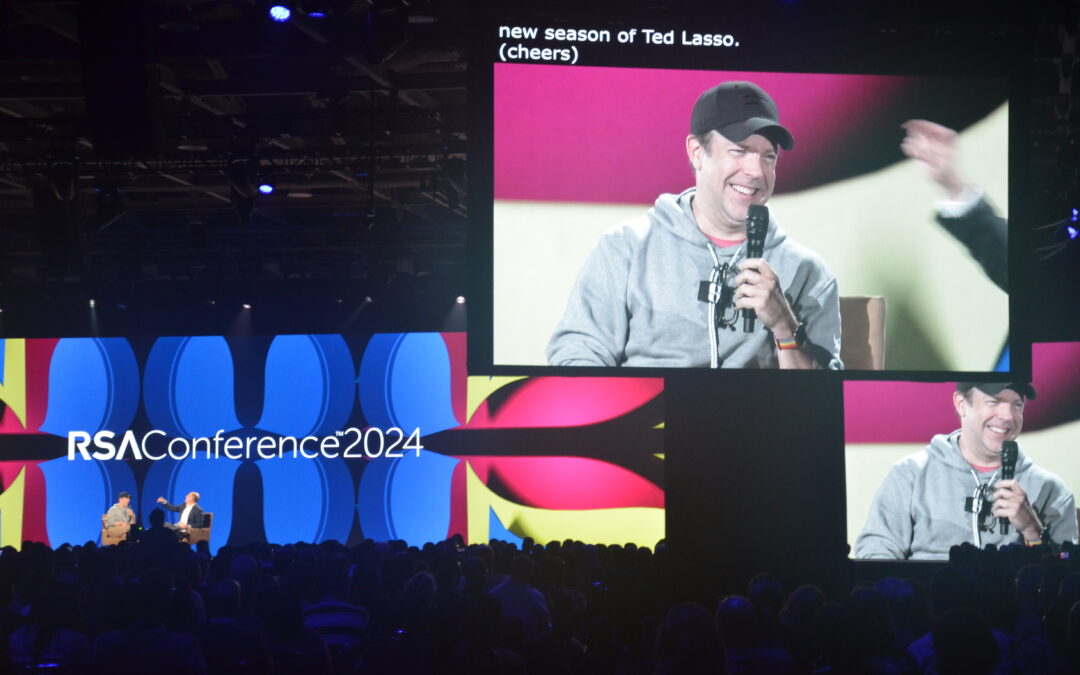
A conversation with Actor, Comedian and Writer, Jason Sudeikis hosted by Hugh Thompson at the RSAConference2024. Photo by Marcus Siu
ALL ABOUT NETWORKING:
At the very beginning of the RSA conference, Thompson encouraged all attendees in the audience to go out an meet new people in the giant RSAC community where people could learn and feed off each other. He presented a hypothetical scenario in the “mean streets” of San Francisco during lunchtime to Sudeikis to the audience: If he was in line at a taco truck stand and would want to connect with a person right next to him, what would be his top five “icebreakers”?
Though Sudeikis didn’t come up with five all together, he and the audience certainly did have alot fun listening to his brainstorming answers.
“Well, I think I’d go “rub bellies” and ask what taco you getting?” “Have you been to this taco truck before?” “You know where the hot spots are?” Or if they are wearing a badge maybe ask them something about that…the big laminates…I don’t know what information is on there but” Sudeikis continued, “I don’t speak “curious”, to know… I mean this is “Playground 101″, I’d ask them their name OK?”
In the middle of Sudeikis’ rant, Thompson asked if tapping a person was okay…
“I think tapping someone might feel a little aggressive. (audience laughs) It depends on the line…if it’s proper like the way like Germans line up, like right behind each other and very rigid (audience laughs) …but if it’s a little “loosey-goosey” and I don’t know, you know, then maybe, yeah”.
Sudeikis then playfully voice acts out two characters in line.
“I apologize for my own hunger because of my tummy.”
“Sorry to hear that…oh, I didn’t hear your stomach.”
“Oh, OK, well it was actually my butt.”
The audience roared with laughter.
“So much of this stuff though is really just about hitting the playing TV Upbeat like your kids… you hit the balloon over to them and you see if they hit it back.“
“Number five would be, “have you seen anything on television that you’ve enjoyed recently?” as Sudeikis glances into the crowd and says “They are all looking for recommendations, and they can always go on “Rotten Tomatoes” but let me ask you perfect strangers.”, Sudeikis explained.
“This is great…which would be great if the answer was “Perfect Strangers”?”
THE ADMINISTER OF LAUGHTER
When Thompson asked Sudeikis, what role humor plays when battling, stress, depression, or burnout, Sudeikis credits his ten year experience on Saturday Night Live, which he was a both a writer and featured performer, as well as various TV projects, shows, and movies.
He highly credited his grandmother during his upbringing, Loretta Wendt, (also mother of Actor George Wendt) who was a volunteer at the Little Company of Mary Hospital in the Southside of Chicago, for teaching him how important humor was to healing.
“It’s always really moving and compelling to me what good medicine laughter is and being an administer of such things or at least a vessel, these projects has always really knocked my socks off and it was something about my grandmother, Loretta Wendt, she worked it, did a lot of work “, Sudeikis continued, “A big part of it was all about how important humor was to healing and I do believe that in between laughter, sleeping and crying are the three best medicines that you’re not going to give any money to a pharmaceutical company. There’s a fourth one too, the love and appreciation and execution of the arts…”
Of course, Thompson couldn’t resist pitching his own “brilliant” idea to Sudeikis for kicking the Emyy Award show into the next level by introducing a new character into the series and possibly leading up to the season finale for Ted Lasso. The concept of a mildly bald, suave, (but not to suave) cybersecurity character from some exotic background like Jamaica or the Carribean, who stalks down a hacker somehow didn’t quite make a very convincing pitch, even with Thompson’s impressive background in the Cybersecurity field.
“Would anyone believe that a character like that really existed…as a person?”, Sudeikis questioned.
So it became pretty obvious after the interview was over that the very delightful Jason Sudeikis didn’t have much to say about the very latest in cybersecurity trends at the RSA Conference, but to give him some due credit, his alter ego Ted Lasso certainly didn’t know much about European soccer (futbal) in his first season, either…and look what can happen. In any case, it couldn’t have been a more fun-filled entertaining afternoon for the RSA conference attendees.
At the RSA 2024 event in San Francisco this year one of the key areas addressing the fintech marketplace both for banking and for institutional investors was security operating on a container basis.
Historically a lot of the applications for fintech were run on large servers and then they ended up running on distributed platforms but ending up operating through base web operations now with the advent of smartphones as the primary input device self-contained apps are the key data transfer mechanisms
These apps on the smartphones not only contain the data but also contain the programs that will be run and the reporting mechanisms to the government the banks and the user.
As Fintech moves to larger applications the security aspects and privacy aspects move to the forefront.
At the RSA 2024 event many companies were now showing that they could provide tracking and security solutions 4 containers and apps distributed across devices to be able to ensure the fintech community could operate in relative safety.
One of the leaders in this space is Aqua IT solutions which has a full product solution space for tracking use and the distribution of containers and their associated data from financial institution to user and back.
This is an important step as more companies move to add line account management handling their own credits and gift cards and the financing behind coupon systems
Also supported the solution is companies like Arista that has security built into there’s Software Controlled Networking Equipment, MasterCard which was showing their data intelligence group that helps interpret transaction verification, next DLP which is monitoring the data along the way to make sure that it is not interrupted or corrupted, and member companies from the Thoma Bravo group which has long supported the fintech community.
The ability to bring security to the container deployment marketplace is a key stop as embedded video, training and customer support is moving to more AI and less people base solutions.
It’s been nearly a year since Will Smith infamously slapped Oscar host Chris Rock live onstage at last year’s Academy Awards telecast after cracking a “G.I. Jane” joke aimed at Smith’s wife, Jada Pinkett Smith. It was indeed a surreal moment as the audience watched Smith laugh initially then turn to his wife who was fuming from the inside, got up from his chair to approach the stage and strike Rock.
Most of the audience thought that it was just “part of the act”, but when Smith returned to his seat and shouted expletives at Rock, they realized it was not.
Though the “teary eyed” and emotional Smith was allowed to return onstage to accept his Best Actor Oscar for “King Richard” after the incident, the Academy of Motion Pictures Sciences (AMPAS) decided a few weeks later that Smith would be barred from attending any Oscar ceremonies for the next ten years.
Months later, Apple TV announced a new movie called “Emancipation” to be released in late Fall starring Will Smith. At first, I thought it was about his documentary regarding his “freedom” from the Academy not having to attend the Oscars for the next ten years. Last weekend, Chris Rock premiered his Netflix special called “Selective Outrage”. “I rooted for Will Smith my whole life,” he said. “The other day, I watched “Emancipation” just so I could watch him getting whipped.”
All kidding aside, it’s a shame that had happened. It was one step forward for diversity, but two steps back. Or is it?
Sure, you can make a case there should have been at least more than two African-American nominees list this year for the acting categories. Viola Davis in “The Woman King” and Danielle Deadwyler in “Till” come to mind. You can also make a case that their directors from those films, Gina Prince Bythewood or even Chinonye Chukwu should have made the list in their category, even in a very competitive field.
Regardless of these omissions, the Academy is seems to be doing a formidable job of accomplishing its goals of diversifying the Academy since the #OscarsSoWhite movement eight years ago. They are clearly doing its best to continue its efforts in representing all groups, not just African-American filmmakers. If you look at this years nominations, it’s clearly diverse.
With four nominations, more Asian performers were recognized by the Academy in 2023 than in any single year in its history. In addition, Malaysian “Everything Everywhere All At Once” star Michelle Yeoh is only the second Asian best actress nominee in 95 years of Oscars history, with a strong chance of becoming the first winner.
After the embarrassing “Slap Heard Around The World” Oscars telecast like last year, we need a bit of comic relief. You can certainly bet our host for this year’s Oscars, Tonight Show’s own Jimmy Kimmel will prepare a lot of material that should keep us comfortably and uncomfortably laughing during the telecast. I can’t imagine a better host to open up the show and look forward to his monologue.
OSCAR PREDICTIONS
This may be the most difficult year in predicting the Oscars ever, but here are my predictions for the 95th Annual Academy Awards.
BEST PICTURE:
Exactly a year ago, when this “mind bending” independent film “Everything Everywhere All at Once” had it’s World Premiere at the South by Southwest Film Festival on March 11th, 2022. Since that time, the film went on to become A24’s highest grossing film ever. It was re-released three times due to it’s popularity, including a one-night only at IMAX, and its re-release on January 27th thanks to a resurgence of interest for its leading eleven Academy Award nominations. It has won the top prizes from the Director’s Guild, Producer’s Guild, the Writer’s Guild, and won a record-breaking four awards at the Screen Actor’s Guild Awards. Though it lost at the BAFTA’s to “All Quiet on the Western Front”, the British Academy Awards, there is too much momentum for this film to lose at this year’s Oscars.
Everything Everywhere All at Once with Oscar nominees, Stephanie Hsu, Michelle Yeoh and Ke Huy Quan.
Photo Credit: Courtesy of A24.
BEST ACTOR:
After watching Brendan Fraser in his heart-wrenching performance in “The Whale” as a 600 pound recluse, I was certain that was getting the Oscar. Fraser just recently won at the SAG awards, so we know at least a majority of actors loved his performance. However, the Academy didn’t embrace “The Whale” as much as they did “Elvis” with its eight nominations. “The Whale” was nominated for three awards, but wasn’t nominated as Best Picture or even screenplay.
I still keep changing my tune on my prediction for Best Actor even as I write, as picking Elvis starts to make more sense. The Academy loves bio-pics, and it’s rare to have an actor be able to portray someone as iconic as Elvis. Jamie Foxx played Ray Charles, Rami Malek played Freddie Mercury, and Renée Zellweger played Judy Garland and they all won the Oscar.
The extreme dedication of Butler for three years of his life is exemplary. As a method actor, he not only acted as Elvis, but embodied himself in his role as “The King”. He looked, sang and danced like him by watching tapes and films of him when production was down during COVID. He needed to be able to discern how Elvis talked and walked during certain periods of his career since they needed to shoot scenes out of sequence. He put posters and photos all over his wall during the shutdown when his co-star Tom Hanks, who played the Colonel caught COVID-19.
Even after the movie was done, he could not let go of Elvis, even as he went about promoting his film. He was Elvis 24/7 and still could not leave the King. He didn’t even see his family for three years because he was so focused on his role. What a hound dog!
This will be a tight race, but I think the “King” will live on.
AUSTIN BUTLER as Elvis in Warner Bros. Pictures’ drama “ELVIS,” a Warner Bros. Pictures release.
Photo Credit: Courtesy of Warner Bros. Pictures
BEST ACTRESS:
Another difficult category to predict is Best Actress, which is really a race between the two-time Oscar winner, Cate Blanchett and Michelle Yeoh. Even on a fair playing field, I probably would have leaned for Cate Blanchett for her performance as Lydia Tár, one of the most extraordinary performances that she has ever done, if not the best.
She has proven she can play just about anything, including Spazzatura, the monkey in “Guillermo Del Toro’s Pinocchio”. If there is a sequel to “Everything Everywhere All at Once”, the Daniels may want her to play a googly eyed rock, and she may get another nomination.
However, Michelle Yeoh, who gets her second Oscar nomination for “Everything Everywhere All at Once” since “Crouching Tiger, Hidden Dragon”, even with her hot dog fingers, can still just beat anyone up against her…and not just the music exit prompters at the Golden Globes. She is well loved not just in Hollywood, but globally, and the Academy would probably want to honor her the award, rather than give Blanchett a third.
She would also be a fitting tribute to honor the first Asian Best Actress Oscar winner as she has made a tremendous contribution to World Cinema during her lifetime. It would be fitting and iconic.
Maybe the U.S. mint she will issue her own coin one day.
Evelyn Wang (Michelle Yeoh) is an average Chinese mother who reluctantly becomes a superhero, jumping alternate worlds and absorbing powers to fight an evil villain. A24
BEST SUPPORTING ACTOR:
When Ke Huy Quan stopped getting roles after being a formidable child star working in movies such as Indiana Jones and the Temple of Doom alongside with Harrison Ford with Steven Spielberg directing, and a cult timeless movie classic called “The Goonies”, Quan believed the best was over. He stopped getting roles and decided to stop acting and work behind the scenes, notably with Wong Kar Wai as an assistant director. Nearly broke, he told his agent that he needed to work and found a role that he really wanted. The real life story of Quan is inspirational to any actor who was once in the spotlight and wants to return to it.
If there is any category that is the “sure thing”, this is it. He has won nearly every “Best Supporting Actor” award, with the exception of the BAFTA, in which Barry Keoghan won for his role in “The Banshees of the Inisherin”. I highly doubt Keoghan will repeat on American turf.
Hollywood loves a comeback story. Ke Huy Quan is the real deal.
Ke Huy Quan in EVERYTHING EVERYWHERE ALL AT ONCE. ALLYSON RIGGS / A24 / COURTESY EVERETT COLLECTION
BEST SUPPORTING ACTRESS:
This could be the category that will be most difficult to predict. Early in the Awards season, Angela Bassett was the frontrunner for “Black Panther – Wakanda Forever”. She won the Golden Globe and Critics Choice Award. However, the momentum shifted. Just recently, Jamie Lee Curtis won the SAG award and Kerry Condon won the BAFTA. I have a feeling that the Academy will split votes between Curtis and Bassett more in recognition for their life work as veteran actors and the Academy would still like to honor “The Banshees of the Inisherin” as an Oscar winner. This is the only possible category that it could potentially win. Condon most likely will take the award, and deservedly so.
One real mystery remains, however. Now that Will Smith is barred from the Oscars, who will present the Best Actress award to this years recipient?
MLS Entertainment’s Oscar Predictions:
Best Picture: “Everything Everywhere All at Once” Best Actor: Austin Butler, “Elvis” Best Actress: Michelle Yeoh, “Everything Everywhere All at Once” Best Supporting Actor: Ke Huy Quan “Everything Everywhere All at Once” Best Supporting Actress: Kerry Condon “The Banshees of Inisherin” Best Director: Daniel Kwan and Daniel Scheinert, “Everything Everywhere All at Once” Best Adapted Screenplay: Sarah Polley “Women Talking ” Best Original Screenplay: Daniel Kwan and Daniel Scheinert, “Everything Everywhere All at Once” Best Cinematography: “All Quiet on the Western Front” Best Costume Design: “Elvis” Best Film Editing: “Everything Everywhere All at Once” Best Makeup and Hairstyling: “The Whale” Best Music (Original Score): “All Quiet on the Western Front” Best Music (Original Song): “Naatu Naatu” Best Production Design: “All Quiet on the Western Front” Best Sound: “Top Gun Maverick” Best Visual Effects: “Avatar: The Way of Water” Best Animated Feature Film: “Guillermo Del Toro’s Pinocchio” Best Foreign Language Film: “All Quiet on the Western Front” Best Documentary (Feature): “Navalny” Best Documentary (Short Subject): “Elephant Whisperers” Best Short Film (Animated): “The Boy, the Mole, the Fox and the Horse” Best Short Film (Live Action): “An Irish Goodbye”
originally published on https://wordpress.com/post/mlsentertainment.wordpress.com/8262
On Cyber Monday, one of the oldest grocery retailers in America, Albertsons, started selling and delivering tangible items in the metaverse. Metaverse, a platform for augmented reality, enables users to build interactive experience that combine the virtual and real worlds.
Metaverse is very popular in online video games, like Fortnite by Epic Games, and offers immersive digital gaming and social space that is an example of a real-life metaverse-like environment.
As the other retailers, fashion brands and restaurants have been experimenting with connecting the metaverse to real life shopping, Albertsons is the first in the grocery space.
Its pilot program, called the “Meta Mega Deal”, was launched on Decentraland, a 3D virtual browser-based platform. Albertsons offered Signature Select pretzels, peanut butter cups and a six-pack of mini coke as a bundle, all for $1 with free delivery. Users of Decentraland simply scan a QR code, pay by credit card and get items delivered in 45 minutes.
Albertsons, who oversees more than a dozen grocery store brands including Safeway, Vons, Jewel-Osco and Acme will closely analyze the Meta Mega Deal pilot program to understand the on-line interactive behaviors of its younger customers.
Metaverse was announced to be the next big thing at CES 2023. According to McKinsey & Company it is predicted that by 2030, the metaverse may generate up to $5 trillion in sales as an alternative to physical brick-and-mortar store shopping.
One of the big differences in the Metaverse shopping vs traditional on-line shopping is the buyer is not simply looking at an on-line catalog of static photos of items. It is an interactive experience that presents a real-life view of actually being in a location and uses either the actions of the on-screen avatar or a simple QR code to enable the e-commerce activity.