
by Lidia Paulinska | Jun 25, 2015
At E3 2015 we had a chance to sit down for a 1:1 with Loot Interactive co-founder David Sterling at their first “press and partner” evening event held at the show. In a very well attended event at a local Mexican restaurant we talked to David about the Indie game marketplace and how Loot Interactive was trying to stand-out from the crowd.
Unlike most indie publishers, they are not targeting just F2P games on the mobile phone & tablet platforms. Instead they are going for the console market because the environment is more immersive, a directed action (you are choosing to play a game not killing time until a bus or train) with a bigger screens. While the games they are currently publishing are based on the Unity flow and not epic graphics crazy, the ability to build challenging stories for the game allows them to present a new spin on the discovery game genre.
The console, due to its closed operating system, known hardware configuration and now integrated connectivity allows the games to streaming based so there are options for more engaging action than a single download mobile game. As an indie publisher, they can search for games from innovative developers from different genres and bring the games together. The purpose was to help expose these interesting games and unique stories that otherwise would not be told to a large audience. It also allows them to developmentally, try different content approaches to AR and VR with products like the Sony Morpheus platform. This can bring new experiences to the user, and as an indie publisher, bring a variety of titles to the product rather than relying on just continuation of a single franchise title.
At this time, David is focusing on finding new titles, and new developers to bring into their publishing fold. Down the road, the group will be looking into implementation of the transmedia angles on the titles they produce. Being able to support other types of media – books, table games, TV, movies, etc is always important for a creative story – but for now, Loot Interactive is focusing on the console game aspects. David indicated they need to full establish themselves and get a foot hold in the market, before branching off into to many other things – that is how companies get lost in the growth cycle.
by Lidia Paulinska | Jun 24, 2015
When asking the question of what the weather will be tomorrow, we can easily find the answer paging through the morning newspaper, turning the dials on the radio or TV stations, or just by surfing on the Internet. The weather forecast is an essential piece of information which allows us to make an immediate decision, such as what kind of clothing to wear, depending on the temperature climate, in order to not get too warm or too cold. It can also let us know if our flight to San Francisco was cancelled due to extreme weather conditions. Such dependable information gives us the comfort of awareness, but our lives will not be endangered if we do not have any knowledge about it.
The situation seems completely different when inquiring about one’s health for the next day, week or month. There are three possible scenarios: we will wake up in great shape, we will wake up being sick, perhaps with a cold or flu, or we will find out our future will never be the same because we will get diagnosed with a terminal illness.
So, how can we predict one’s well-being as accurately as we can predict the weather?
The answer for this question is crucial for our human existence, so why don’t we know the answer? Presently, we do not have the answers yet, but it looks like this is going to change very soon. Temporary medicine is going in the direction of predictive and preventive.
Biotechnology is driving these changes. The widespread availability of sensors and transmitters, massive use of mobile devices, increase in sophistication of the Internet and data analytics, make them happen rapidly.
These tremendous hopes come from a discovery of human genome, that give us an unprecedented opportunity for contemplate our own biological and psychological make-ups. Thanks to rapid progress in the technology arena, the cost of genome sequencing came to the consumer world. The full genome analysis is still for many of us out of financial reach but for an affordable price it is possible to get a sample of personal characteristics and evaluation of risk to certain illnesses and their ancestries. That opens the door for personalized medicine where drugs are prescribed specifically for the patient’s biochemistry instead of blind errors.
American biologist, expert in biotechnology field, Leroy Hood, described the future of medicine as 4P: Predictive, Preventive, Personalized and Participatory. Predictive and Preventive use the genome characteristics and environmental conditions to forecast what is necessary to maintain wellness and prevent future illnesses. Personalized and Participatory because it is target certain individual who is involved in collecting and interpreting the data about his/hers health condition.
Often or non-stop monitoring the body functions and transferring this data to medical personnel can be very helpful in preventive and personalized medicine. Not that long ago, the medical patients were going through routine, basic medical tests and their data information were stored in the medical clinics until their next visit. Today digital health goes mainstream. Smartphones, our personalized computers, stores our medical data and give us the opportunities like never before. Due to many applications on its screen we can monitor our sleep pattern, measure blood pressure, evaluate the stress level or monitor taking prescribed drugs and storage all those information for easy access for a patient and medical personnel.
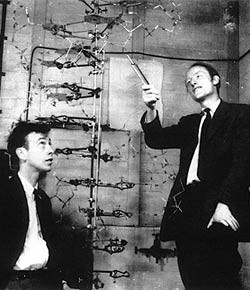
Today medicine changed our approach to diagnosis and cure the illnesses as well as our thinking about longevity. It hard to imagine that DNA sequencing was discover only 60 years ago.
by Lidia Paulinska | Apr 20, 2015
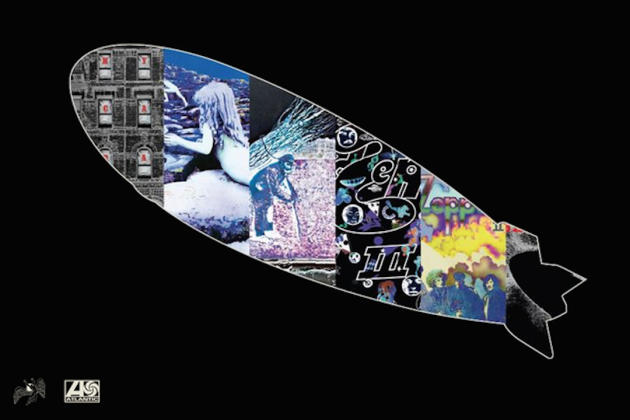
Occasionally in life we have a rare opportunity to re-live some of the more exciting and memorable cultural experience of our past. And so it was this week when we had the unique opportunity to enjoy an extraordinary big-screen showing of selected historic performances by the incomparable Led Zeppelin, one of the most creative and influential rock bands of all time. This one-night-only cinematic extravaganza spanned the band’s incredible career from 1970 to 1979. The film that featured several classic live performances was cleaned up, converted to digital and had the sound track remastered under the oversight of Fathom Events.
Viewers were treated to a larger-than-life concert experience featuring the band’s legendary performance from London’s Royal Albert Hall in January 1970, their historic dates at New York’s Madison Square garden in July 1973, their triumphant five-night run at London’s Earl’s Court in May 1975, and their record-breaking shows at England’s Knebworth Festival in August 1975.
The genius of singer-lyricist Robert Plant, the shrieking guitar brilliance of Jimmy page, the unrelenting power-drive of drummer John Bonham all combine in a synergistic amalgam to create what is probably the greatest rock and roll band has ever known…a seamlessly unified whole that was the sum of its genius parts. And although Led Zeppelin is known as one of the progenitors of heavy metal, the influences that shaped them are varied as their music: acoustic folk ballads, pop guitar, James Brown, country, Motown, traditional riffs, and what’s been called the trance-inducing element of blues repetition, all resulting in such varied works as “Whole Lotta Love” (’69), “Kashmir” (’75), “Rock & Roll” (’71), “All My Love” (’79), and “Stairway to Heaven” (’71).
But their time of personal glory was not to last. In September 1980, drummer John Bonham died suddenly of asphyxiation as a result of alcoholism and the tragedy of that loss marked the end of the magical synergy that was Led Zeppelin. A press release at the time read, “We wish it to be known that the loss of our dear friend, and the deepest sense of undivided harmony by ourselves … have led us to decide that we could not continue as we were. “ Signed simply “Led Zeppelin”. The “undivided harmony” was shattered forever and the music fell silent; the combined effect of all their creative geniuses was essential to sustain the whole and suddenly that unity was lost, but their extraordinary legacy was alive for us this week on the big screen, four decades and a lifetime after its inception, and for that we are very grateful indeed.
by Lidia Paulinska | Apr 19, 2015
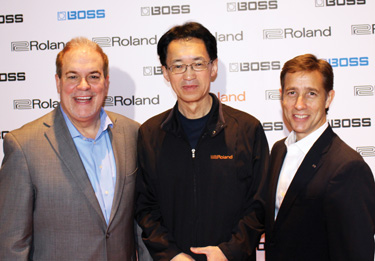
While at NAB 2015, we had a chance to have a 1;1 talk with new Global President of Professional AV for Roland Corp Kim Nunney. Kim steps into this role from his recent position of North American President for Roland Corp. Kim and his team were credited with the turnaround on the North American marketplace for both the consumer and professional products.
To kick off the discussion, as there is so much encroachment of consumer level up into the professional market place with features and motivation to produce more price aggressive and lower entry points of the professional market what is “pro AV for Roland”? Kim defined this space under two themes – the Professional AV space is a B2B marketplace, it deals with performers, studios and stages. The core technologies for these markets are live sound and broadcast audio & video. The Roland path is to develop hardware to simplify the live performance and broadcast control with new UIs for the equipment.
Kim went on to discuss that device they are making are focused on high level content – 4:4:4 for broadcast, 4:2:2 for live events for the video side, 24bit/96K for the audio both in the digital domain. These ae important as the use of the devices for streaming applications should be treated the same as for “live” as they are both temporal delivery without the option to miss capture or mess up on playout. The professional line is for reliability, repeatability and configurability so they can not only be setup as needed, but are always available when call on.
For these applications, the Roland Pro AV products deal with the front end of the signal flow – DRM, wrappers, metadata, security & encryption are done after the hardware in post or before the equipment on ingest. The newest generation of the product are all network integrated and aware, which makes for connectivity on an in-house or hybrid (in-house and cloud) workflow are supported in native mode for the devices.
Kim indicated that the trend is to continue this same high reliability both mechanically and electrically on the products to be able to produce the best live performance & broadcast experience and simplify the control & interface with software.
The company has a strong history in the Pro AV space and the newly re-vitalized Roland is aggressively moving towards delivering new modular products to the market that have the capability to address emerging audio and video standards, without having to make the customers develop new workflows. Kim hopes to be able to duplicate the North American business units success on a global basis with the professional products.
by Lidia Paulinska | Mar 11, 2015
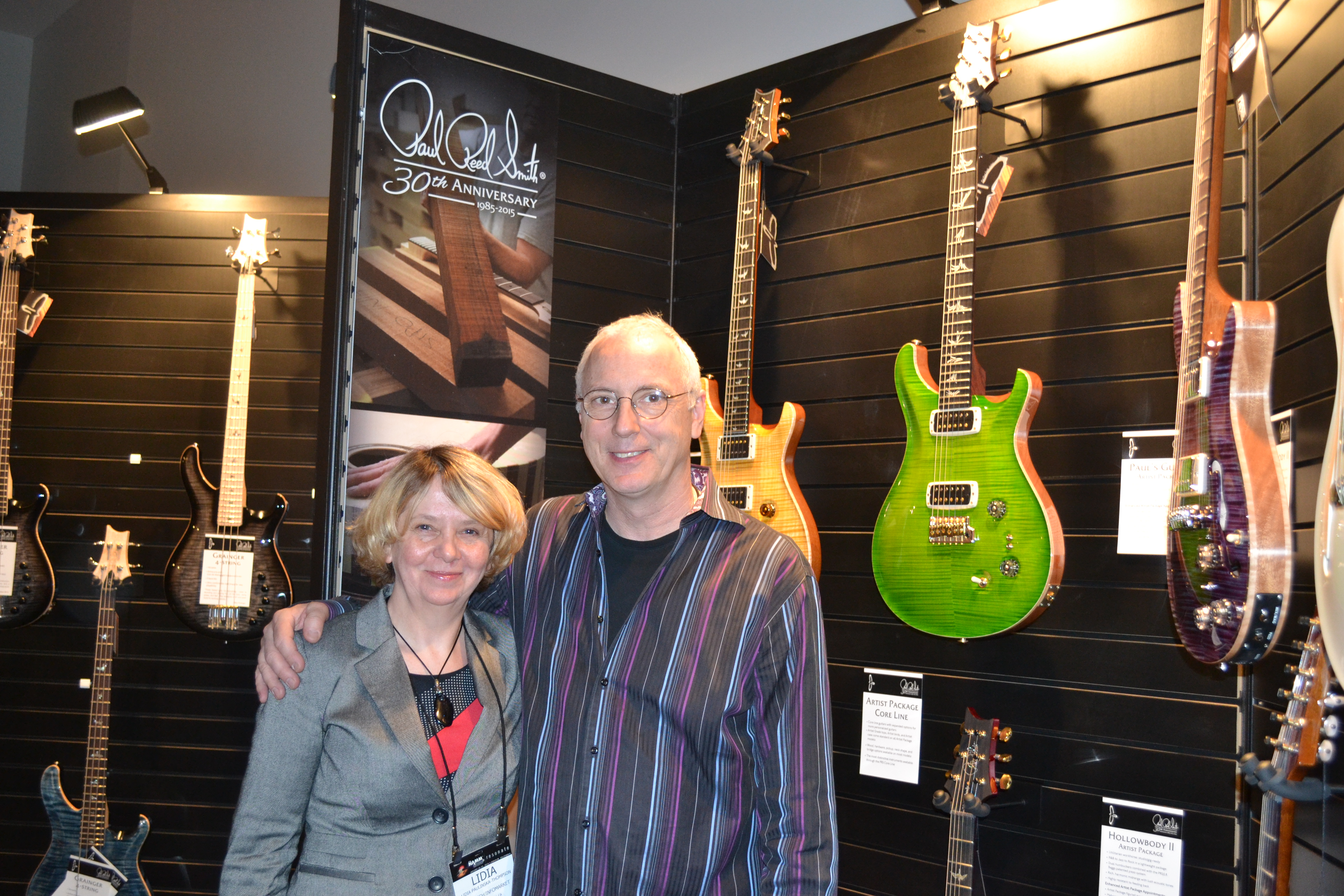
Paul Reed Smith is a master luthier and the founder and owner of PRS Guitars which is considered one of the top makers of high quality guitars in the United States. Carlos Santana, Orianthi, Jimmy Buffett all claim their PRS guitars are their favorite instruments. Ted Nugent has owned a PRS guitar for decades. Mike Oldfield, Larry LaLonde, Al Di Meola have also used PRS guitars in public performances.
It was a strong passion to make it?
There was a strong passion to be at the band. I wanted this piece of gear but I did not have money so I needed to make it. So if I wanted to base I made it if I wanted a guitar I made it. Because I wanted the staff people at the band have but I can’t get money from my family so I made it.
Apparently that was easy for me to do it, I can measure something and make it. That was fun I enjoy it and then I started to make living by making the instruments for professional musicians and I finally got Carlos Santana and Al Di Meola and Howard Leese. From that point he started his own company as he said: there was enough power in guitar business to be endorsed so people will pay attention when he goes to market”. Santana, Leese, Di Meola there were people they took me under their wings. He decided to do it.
If I could play in the band in high caliber as Carlos’s band or Deep Purple or whatever I would done it but I wasn’t good enough musician. My decision was financially driven. If I want my kids to go to good college I needed to make living. Otherwise I wouldn’t be able to rise the family.
How did you settle on what the product line was?
It is all like baby steps. If you making the instruments for somebody you are making modifications like baby steps. There were some big steps modifications – they wanted me to change a body shape that we are using now (big step), to put the burden laze (?) major step, when we switch to get more sound from the guitar (major step). But if I met somebody like Peter Frampton and I said I wonna make a guitar I would go to the rodeo and ask to play his guitars and get an idea what he liked and I would put in the middle between his instruments. You can learned about what musicians like by using what gears they use. If I walk to the studio and I see what gears a guy is using I get general feel for it, what he likes to use. Smith – you are making a judgement where to point the gun.
Do you feel like you good at the judgments?
Sometimes perfect shot is the first shot. Sometimes it takes 30 years. With Carlos Santana the first guitar I made for him he did not like it, the second one he really, really liked. From there that was fine. John McLauglin on other hand, I was waiting for him to order a guitar from me for 30 years. One day, son, you will be good enough, one day. Now we are working on giving a shot very, very good guitar players. We see. It depends, sometimes you know from day one, sometimes you have to wait.
What wakes you up at night?
The guitar business never wakes me up at night, but struggle with people does. Never when I struggle with gears. Things between people yes, but never things between me and physics.
What is more challenging finding a the right gears or finding the people?
It is all the same bucket, I can’t separate it. I can tell you that not finding the solution can be very painful. You have so many famous people out there, if you would find the right solution for them they will give you an order. If you have an employee you have disagreement with, it can even more painful than not getting an order. The people are the both the challenge and the prize.
What do you do to manage the challenges?
I used to have a cat that sat on my lap and calmed me down. But that cat died. Right now, I focus on my 5 children – 3 blood, 2 step. They are the calming influence.
Would like them to be your successors?
No, that not fun. Why? I want them to do what they want, you can’t forcing something on somebody. My dad wanted me to be a mathematician, but I thought that did not happen. But it turns out making guitars is pure math, it took me 30 years to figure that out. He was really good in one kind of math, I am good at visualizing geometrics. If you are guitar maker you need to be able rotate the design in your head in 3-4 dimensions before you make it.
by Lidia Paulinska | Feb 17, 2015
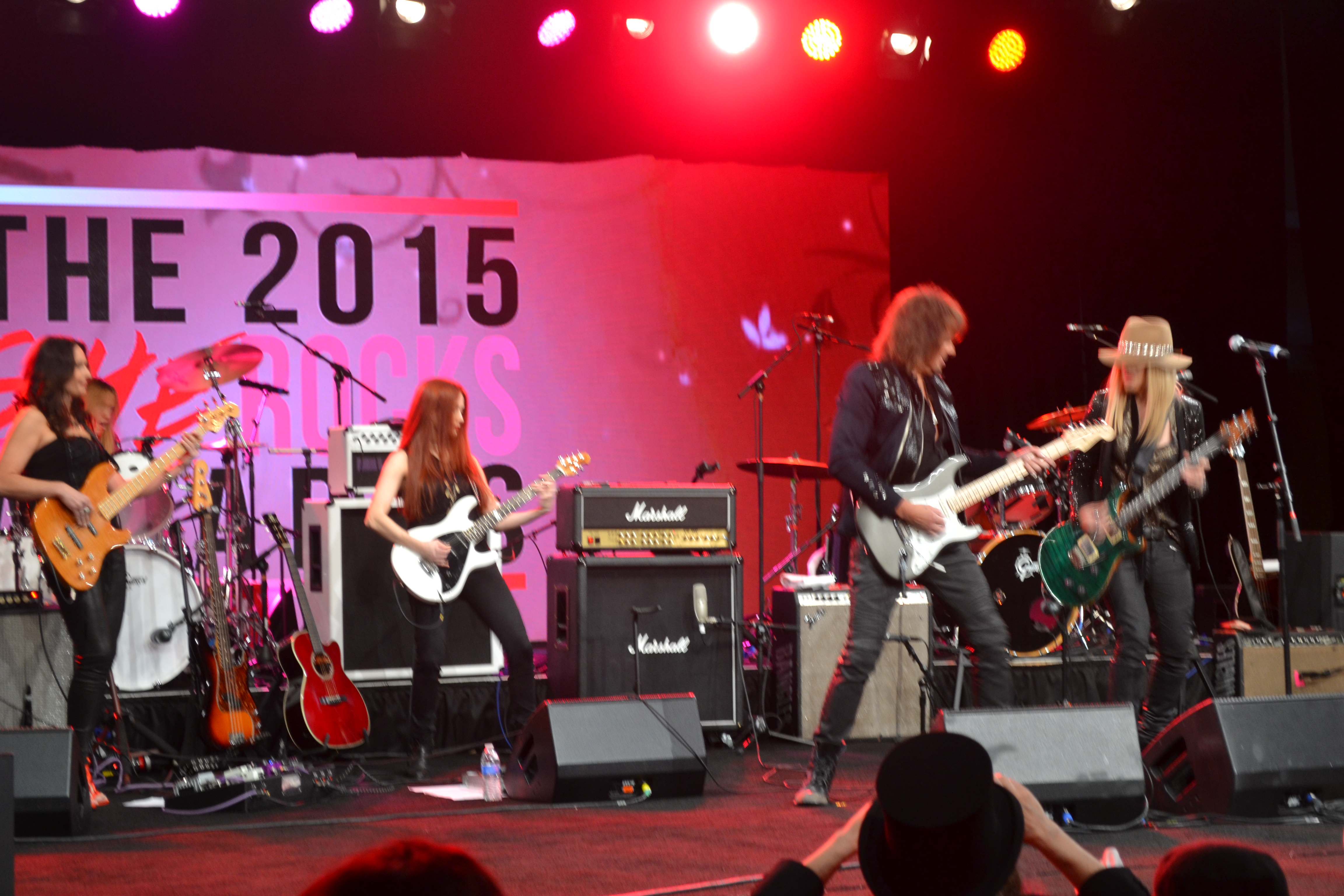
At the NAMM Winter Conference, the She Rocks Awards moved from their daytime subdued event to a full nighttime gala event with red carpet. The 2015 She Rocks Awards were hosted by the founder of WiMN Laura B. Whitmore and performer Orianthi.

The show opened with an opening performance by the fast rising group SHEL. The four sisters who make up the group are touring the US and Europe between recording new albums and music for television, film and commercials. Continuing the theme of celebrating Women in Music the award ceremony featured an all female house band. The house band was led by guitarist Gretchen Menn and included Zepparella members Angeline Saris on bass, Clementine on drums and guest keyboardist Jenna Paone.

The show had one non-female winner – Rob Christie was recognized for the Champion Award.

The highlight was the “ICON” award winner as major contirbutors to the field of Women in Music. This year’s award was given to The Bangles – Vicki Peterson, Debbie Peterson and Susanna Hoffs who also performed that evening with the host and house band.

Spanning all varieties of music, the “Mad Skills” award was given to Mindi Abair. Berklee College of Music graduate Mindi is receiving multiple recognitions in addition to the She Rocks Award with several Grammy nominations and increasing demand for her unique saxophone style and sound. Mindi addressed the crowd with the fact that in her music career a lot of her success is due to the support from her family and teachers who encouraged her to follow her own style and sound, and that she did not have to conform to “sound like someone else” she “can create and define her own sound”.

The “Legend” award was given to Capitol studios manager Paula Salvatore who in her 24 years at Capitol has been an integral part of recordings for some of the industry’s most iconic artists.

The “Inspire” award was given to Debbie Cavalier. Debbie is currently the Vice President for Online Learning and Continuing Education/CEO for Berklee’s award-winning online continuing education program, Berklee Online, and is also the leader of the award-winning kids/family band Debbie and Friends. She has also been the recipient of the 50 on Fire Award, the 2013 Education award, and also composed and recorded a song featured on the 2011 GRAMMY Award-winning CD for Best Children’s Album through her work with Debbie and Friends.

The “Excellence” award was given to Craigie Zildjian the first female CEO of the 400+ year old Avedis Zildjian Company. She has also sponsored the Zildjian Family Opportunity as well as the Zildjian Percussion Facility at Berklee College. Additionally, Craigie developed the American Drummers Achievement Awards, an event that honors drumming legends. She also is an active member in the musical community with past service on the Board of Directors for the International Music Products Association (NAMM), the Board of Advisers of the International Association of Jazz Educators and the Board of Overseers at New England Conservatory. Currently, she Chairs the Zildjian Board of Directors and is a Trustee Emeritus of the Berklee College of Music.

The “Video of the Year” award was given to performer Colbie Caillat. Colbie is a two time Grammy Award winning singer-songwriter who has sold over six million albums and ten million singles worldwide. Caillat released her fourth studio album Gypsy Heart, which features her hit single “Try” which was co-written by legendary producer and singer-songwriter, Babyface. The companion video for the song has become an online phenomenon, quickly amassing 30 million views. As was the video recognized with this award.

The “Next Generation” award was given to Katie Kailus. Katie Kailus is the editor of Music Inc. and UpBeat Daily magazines. She started at Music Inc. as an intern and was soon appointed associate editor. In January of 2014 she was named editor. She is one of the first women to ever be named editor of a musical instrument trade publication.

Also being recognized were Gayle Beacock and Amani Duncan. Gayle is co-owner of Beacock Music Company in Vancouver, Washington. Their Education Center is widely regarded as one of the top in the country. Amani is the Vice President of Brand Marketing for C.F. Martin & Co. A 17 year music industry veteran, Duncan’s experience runs the gamut from artist relations to visual marketing, digital and social media, campaign creation and strategic partnership negotiations.
by Lidia Paulinska | Feb 2, 2015
The current trend is to eliminate wires from all the computer peripherals and also allow the same access to mobile devices as you would have with a full computer. While the direction has been successful for most products, this success has come with the cost of speed, productivity, limited battery operating life, and reduced features to add the power and the extra parts to bring wireless capability. The wireless devices that dominate the market are also an added burden and SMB and SOHO locations that have limited, consumer oriented networks.
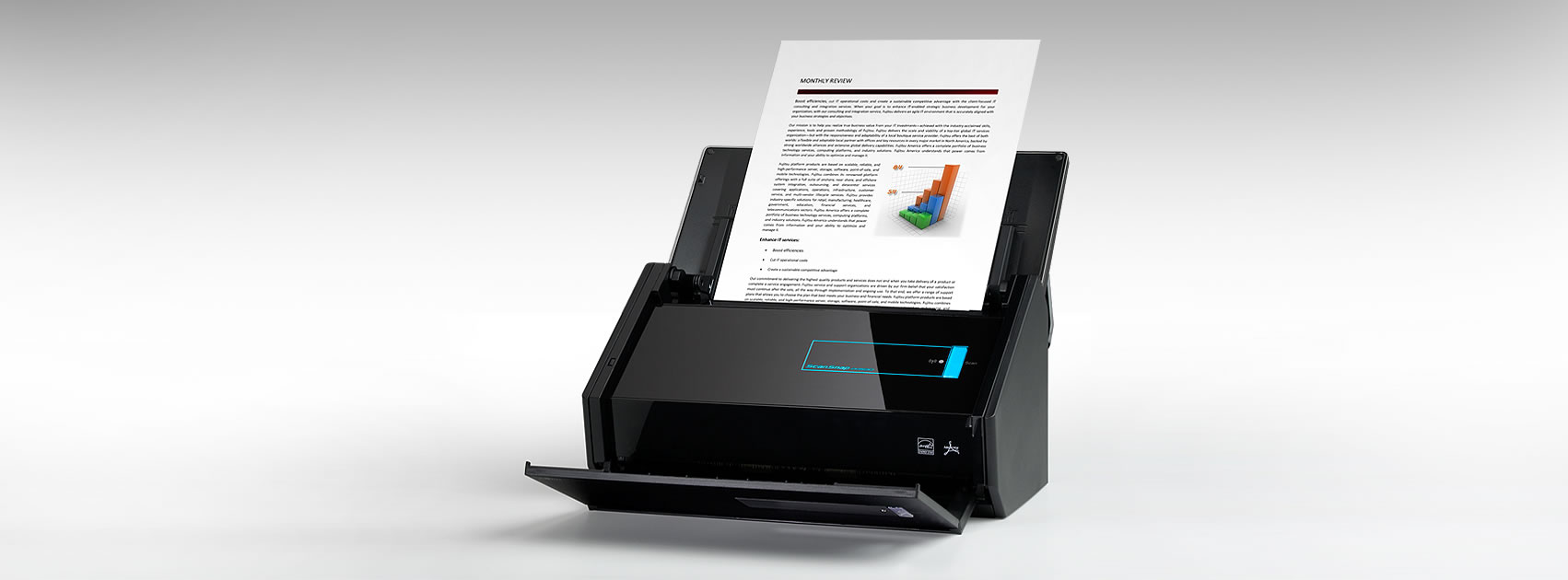
Addressing this trend is a new product in the marketplace that took a different approach. The Fujitsu ScanSnap ix500 is a business class, high productivity scanner that added wireless capability, rather than throw out features to bring in wireless. The 25 page per minute full duplex (simultaneous both side scanning) color scanning feature has simultaneous multiple feed paths that are set for full standard pages (8.5” x 11” and A size sheets), a receipt width path and a business card path. To supplement the scanning and simplify the results in the output, they added a hardware chip that incorporates a licensed Adobe PDF generation engine, that takes the raw scan and creates fully annotated and OCR compatible PDF files in the time most system provide a JPEG. The interpretation engine is smart enough to re-orient documents in case pages are upside down or sideways, so all the results are usable and readable. The business card section is also smart enough to “bind” the front and back of a double side card as one set of information for use in importing the cards to your contacts manager.
This high speed and built in PDF engine now allow professional and business level scanning of documents to connect to a mobile device. When the output is directed to a mobile phone or tablet, the result is a single file with a fully functioning PDF document on the mobile device with no delay for processing and using the limited computing power of the phone/tablet – the document is just usable. This allows for the ability to take full reports that you may receive on paper, scan it, and have a readable document directly on the phone/tablet in seconds with no other programs needed – just the existing Adobe reader on your phone/tablet.
The scanner is plugged in the wall for power, so it is a 24/7 available device – not limited by battery time. Since it is plugged into the wall, it can be placed in a central location to be shared by many people, so it is not a 1:1 accessory to person device. To enhance sharing among people, the device works as a full wireless client device in a network. It has a simple setup for joining an existing wireless network, and can be addressed by any device on the network. Each of the devices that talks to it needs to have software to “request” getting a scan from the device, and one can be designated as the “default” device. In default mode, any pages that are placed in the scanner, and the scan button pressed on the unit, will send the results to that computer.
A big difference in this scanner versus other wireless devices, is the ability to switch to “wireless direct” mode. The unit has WiFi host adapter electronics that let the scanner directly connect to just one device – a laptop, phone or tablet – if you are in an area where that device is not part of the main wifi network. This is especially useful when someone is visiting the office, and you do not want to give them access to your business network. You just select the option on the menu for the scanner for direct connection, open the app on the mobile device and select the scanner as the wifi network, put in the password for the scanner and all the results from the scanner are sent to that device wirelessly and securely up to 25ft away.
The devices comes with Adobe Acrobat Standard software for the PC & Mac that allows you to manage and manipulate the output of the scanner. This saves the cost of purchasing an additional software product to be able to merge multiple scans into one document of break up a big scan into several files. As the unit is a full color scanner, it also allows you to pull out a high resolution scanned picture from a scanned page that may have text or other photos on it, without and additional programs.
The scanner is currently available from Fujitsu and its retailers.
by Lidia Paulinska | Nov 7, 2014
At the 2014 NAB Show in Las Vegas, we were lucky enough to get rare, extended, and quiet interview time with film industry icon and controversial technology developer/evangelist Dr Barry Sandrew.
Unlike a lot of folks in the film industry – the “Dr” is not honorary, how did you get over to the film industry?
BS – The film and effects industry is my second career. I actually went to school and got my doctorate in neurosciences, and then ended up transitioning from studies to being on the faculty at Harvard. While there, I established three different labs in the area of neuroscience. One of those was the first neuroscience imaging lab, a part of the Department of Radiology, that focused on MRI, CAT and PET scanning and imaging of the brain. I also served as a staff member at Massachusetts General Hospital and at the Columbia University, College of Physicians and Surgeons.
Way back in the late 80’s, an entrepreneur came to me and asked if I could develop or invent a process for colorizing black and white movies. I knew that it already had been done in analog form and it was terrible. Everybody knew that. What they wanted was a digital version of the colorization process. The reason for doing that was, if you take public domain black and white movie and you colorized it, you owned the copyright of that colorized version for 95 years. This opportunity caused me to leave academia and form American Film Technology where we invented the new colorization process.
I was involved in the colorization business through the early 2000’s. In 2006, an associate came to talk to me about 3-D, and showed me that Mitsubishi already had a 65” 3-D ready TV., unfortunately, the store owners did not even know how to hook it up to display 3-D images. My partner and I saw an opportunity and looked into the business and technology of 2-D to 3-D conversion. There was an old patent from almost 40 years ago that described a methodology, but it was very crude and, of course, not digital. Interestingly, almost 65 percent of the flow that was needed was already part of my colorization flow, so I moved by efforts to the 3D conversion business.
As you are now in the 3D business, what did you see at the start?
BS – First of all 3-D is not dead. The technology is strong and can bring new options to story telling, but I think the industry did a horrible job in trying to educate the consumers. Additionally, the media did not understand the process or the product, the retailers obviously did not understand any of it, and they did not even know how to sell the product to the audience.
When I first got involved with 3-D, I was amazed at the opportunity and I realized that all I had to do was to develop the last part of the flow. I did some research, and I knew what was happening with Cameron on Avatar. I knew that some money was being spent on it and more would follow. I knew a lot of people were working on it. It was very very clear to me, that it is either going to be a game-changer or the biggest disaster that ever happened in Hollywood. I wanted this conversion technology to be ready by the time of the Avatar release. We completed development and were able to start doing demos for the studios in 2009.
One of the challenges is that media says the product (3-D) did not take off this time, as it has in the past. Part of this is due to the fact that initially some 3-D content was not that good, I can honestly admit. There was a rush to market by the studios. Everything we did at Legend3D was perfect, but some of the new stuff like “Clash of the Titans” was horrible. But keep in mind it was not the fault of conversation process. This was the first movie conversion for the company that did the the work.. When the decision was made to go 3-D, they had only 5 weeks and almost no budget. The only mistake was to say yes to the project. This gave 3-D a bad name as the major follow-up to the game changing film “Avatar”.
What do you believe it will be the future of 3-D?
BS – The directors are getting better and more sophisticated about 3-D, not just using it as a gimmick, but are including it in the story. We worked with Zack Snyder on “Man of Steel”. At first, he was not sure what could be done. Then, after seeing some conversions, he learned how to incorporate the VFX into the story line and enhance the plot or feeling of a scene. It is key to include this technology aspect as part of the story, not just an add-on. It affects the shot, to know what needs to be filmed and framed, so it can be converted and keep the audience involved with the film.
One of the big futures will be 3-D TV. There is currently a lack of content, but that is being addressed. Then you have the confusion of active glasses versus passive glasses, it is a real mess. Right now, the technology in TVs is that most of them are 3-D capable for almost no extra cost, and people are buying them that way – but not using them as 3D sets, because they don’t need to. But once it is in the home and “Little Johnny” comes from next door and says that he just saw Shrek in 3-D and asks “Why we do not have a 3-D TV?”, they probably will realize they do. Once that happens, then they are going to use it.
But I think that there is going to be something more important. That is second screen. The second screen is going to be ubiquitous. It will appear both in the home and virtually everywhere. It is the anytime, anywhere, any device. I believe that 3-D is going to happen, but it is going to happen via Internet rather than though broadcast, cable, or satellite. The mobile devices will be connected to it first. On the second screen, the issues of glasses-free 3-D viewing (auto-stereo) are solvable with today’s technology at approximately the same price point as a 2-D second screen. This is because it is a single viewer environment.
Most of the current auto-stereo technology is some sort of lens based solution, that ends up having multiple sweet spots for the 3D effects. Once the devices incorporate eye tracking, which is already appearing in some products, you are going be getting people looking at it and saying it is amazing, rather than getting sick from it.
It seems in your career you have chosen to run the company instead of work for a company. But when you talk about the companies you are saying “we” rather than “you”.
BS – Yes and no. I have started several companies. I never worked for a company. I developed the colorization and 3-D flows and tools. About 2 years ago, I was president CEO, CTO, COO and Chief Creative Officer (CCO) at Legend3D. When I started all those companies, I held of all those titles. And then as I hire the people I think can do better than I can, I turn over those roles to them. Instead of what happened, 18 months ago, we got a new group of investors and I turned the CEO role over to my general manager. I took the more creative role, and I maintained my CTO role. I became some sort of luminary for 3-D and I have been giving talks all over the world. No, I do not run the company any more, but I do represent the company and enjoy being the creative force in getting them going.
What is ahead for Dr Sandrew in the future? Are there any other personal goals you are trying to achieve?
BS – I love creating and working with creative people. I have a number of new things in mind and visible on the horizon, but I can’t talk about those right now. I think the real thing is that I enjoy the controversy about “can this be done?”. I have been in the right place at the right time, so the controversy has actually helped promote the businesses on a financial basis. It helps bring out the early adopters and risk takers. I am not done yet – there are always things coming up as new opportunities.
by Lidia Paulinska | Nov 2, 2014
Michael Ironside is best known for his long career as an actor, producer, film director, and screenwriter in many movies and TV series. He is best known for his acting credentials where he perennially playing tough guys or psychopaths like his memorable role in David Cronenberg early film “Scanners”. Some of us remembered him from the silver screen hits “The Machinist”, “Total Recall”, “Top Gun”, and “X-Men. First Class”. Others enjoyed his performances in TV series like SeaQuest 2032.
Known to the gaming community as the voice of Splinter Cell’s Sam Fisher, now he is reprising his activity in the gaming space with a new game and character by lending his deep commanding voice and ability to build a relatable character with only his voice to Colonel John Killgore for Tank Domination. Even though he confessed that he is not a gamer (his daughters are) he sees the power of communication in the gaming business and finds the opportunity.
Michael sat down for a spirited discussion covering a variety of topics – all of which he was exuberantly open and opinionated about.
On why he likes the gaming industry
MI – Over the years, I traveled all around the world, and I found out that corporations have so much control now. They control communication, they control media, and they control everything, so they can pretty much put forward what they want without being chastised for it. In comparison, the gamers communicate online together.
I remember I was talking to one kid, who was in Johannesburg, South Africa, and I said oh my god, there is something going on in this area in the world. “I don’t want to talk about it” he answered, but I said, “It’s got me frightened because I got family there”. He went on to his gaming console and was talking to some people from that place, and asked what is going on? They said, “oh no, there was a food riot. When the people get to their food stamps, they just went over. There is no big riot”.
But the press had pumped it up. So gamers get to communicate with each other and tell the truth to each other from all over the world, it is kind of a back door into the corporations and politicians. The corporations can’t control that. There is an honesty and there is kind of neutrality in the way they communicate. You can go online at any time, you are playing with someone from South Africa, from Moscow, from Johannesburg, from NY, from LA, from Sydney. They will tell each other the truth. There is integrity in that and I like that. Anything that encourages communication, even if it is under the auspices under so called violent gamers or social gaming is a good thing.
On the storytelling in games
MI – We have been telling stories to each other since mankind climbed out of the primeval ooze, put a loin cloth on, covered up their breasts, sat around the campfire, and told stories to educate their children. Games are not storytelling. Games are being part of the story. It is a interactive storytelling. This is play. This is taking the place of “tag”, this is taking place of baseball or hockey. It is a community and a group thing. Film is also a community and group thing, but it is observational not interactive. That is storytelling, that is tutoring, that is teaching. Games are different, as you get to be part of the story, interact, change it direct it new ways, and develop a personal experience that other people don’t have, it is a 1:1 real time memory that is being created – not just a replay with the same story and outcome every time. That is why we are all in trouble, guys, because so many major corporations are holding that media and directing what experience and what memory we should have. That is a problem. I’m kind of opinionated to talk about it.
On the Colonel Killgore character
MI – Scripts for gaming are generally not very good and for me it is kind of a challenge. There was some expectation of the character based on the prior work done on the Sam Fisher character, which is why, based on the scripts, I chose not to continue that character. The Tank Domination opportunity was different. It was brought to me by a friend, and did not have a finalized script. Some parts of Kilgore character are linear, and had the result that the Kilgore character is not very deep. Specifically, 70 per cent of that character’s function is to create action to manipulate a person and give them information on where they go and stuff to do. The other part of the character and script is also extremely stereotypical. The character is the hard ass kind of no-bullshit military guy. The project was fun in a couple of places to try and make him kind of human. There are a few places in the game where I am allowed in the game to say “hmmm, alright you did okay” and that is the part that I had fun.
I enjoy the ability to participate in and help tell or be part of a story. For me, the exciting part of my work in TV, Films, Commercials and gaming is – “How do you show something that is almost impossible to make human with just a voice, a look, a stance and a movement?” That is what I spend making my career doing.
by Lidia Paulinska | Nov 2, 2014
Harris Broadcast has undergone a number of big changes lately. First by being spun out from the parent company, Harris Corp, in 2012, and then this past March, splitting the iconic company into two pieces – the over-the-air broadcast portion – which is now called Gates Air (www.gatesair.com) and the connected software-based broadcast portion – which is now called Imagine Communications (www.imaginecommunications.com).
Charlie Vogt is now the head of these interdependent, yet independent companies, both of which are driving down separate paths to provide technologies for entertainment, sports, VOD content, advertising, and metrics. These tools monitor the whole environment for content delivery to a global audience and customer base
How did you get into the broadcasting industry?
CV – I got to the industry though the KORONOS, Gorsch Group, which is a private equity firm, based in LA. Senior leadership tried to recruit me for years to run one of their portfolio companies. Life is all about timing. This happened to be an opportunity that arose at a time that matched the comfort window I had about being able to leave Genband. I took that company from zero to 800 million dollars in 8 years, and finally got it to a place that I felt was sustainable.
I saw this as an amazing opportunity for me. It gave me the chance to use a lot what I have done in the IT and Telecom spaces over the last decade, and use that knowledge along with my management skills to migrate the company from antiquated technology to become the leading supplier of next generation IT technology. The broadcast industry is a very hardware- and proprietary-centric business, with a multi-generational (over 30 years active use) installed and lifecycle base.
The migration that is upon us is to an industry that is open and excited about leveraging common computing platforms and software to introduce new products and services on a customer demand basis, rather than its former glacial pace. That is something that I feel I will be able to do, and help add a lot of value to our company and the industry. Our employees are responding to the new ideas very well. I also think the industry and customers are receptive and responding very well, because they recognize that this is a path that everyone has to take.
Are you a good fit for the broadcasting industry?
CV – I believe I am a good fit because this is an industry that has to go through some pretty significant transformations. It needs leadership that is willing to make a bold decisions and bold moves. Because of the legacy and lifecycle issues, it is very easy to just be a follower, but it not easy to be a leader. Taking the position to lead the industry, especially though emerging technology phases, brings with it a lot of risk.
When you are an equipment supplier, you can’t afford to make wrong bets, because you have such a heavy investment in developing the technology. So, I think I am a good fit, because I have a long history of matching technology trends and the industry needs with companies that are capable of delivering technology solutions. I believe we are in right place at the right time. We have a well established customer base of over 3400 customers in 185 countries. These customers need help to transition the network to the next generation of software-based IP networks while maintaining their current over-the-air technology for both television (video) and radio.
I have been a CEO for 12 years. I have been running companies for some time. People ask me all the time what I do for living and I tease them and I tell them that “I am in the HR business.”
What do you mean by HR business?
CV– By being in the HR business, I mean that I slave myself to good people. It is so true, because I have been both lucky and fortunate to have fostered a great culture and great chemistry with my management teams and the other teams in the companies I have run. The employees as a whole are where I relate, and that is what I want to be part of. I tease them all the time that we could be “just boiling water” and having fun, if we do it the right way. So for my companies and our teams, we have the opportunity to develop some of the neatest and most advanced technology that will end up transforming the entire industry.
In retrospect, I do not remember a time in my professional life that I actually went to work. When you doing what you love, it become an extracurricular life, the time for fun. Mondays are the same days, 10 o’clock AM & 5 o’clock PM are the same time. That is the kind of the culture I helped create, and my team is helping bring that concept to our new company. I believe I am visionary, and that I am unique. I am been able to bring the right ingredients together to get employees to do the things that they never thought they could do. Challenging employees to do things and achieve things that they never thought they could – that is the fun.
You have fun doing the things that you doing for business, but what would you be doing if you weren’t doing this? In prior interviews, people were saying they would be a rock musician or they would work on cars, etc. What would Charlie Vogt be doing? Do you have artist hidden in, there or a novelist?
CV – I played division 1 baseball, I love paintball, I love boating, but mostly I love running companies. There is nothing else in life where you can get the most rewarding feeling than building a business with the support of employees. It is hard to explain it if you do not run a business with a large number of employees. I would tell you that there is nothing that I would do that could replace the feeling I get by being a CEO and running a company. I have an opportunity every single day to touch the lives and families of people that who otherwise I wouldn’t have been able to influence. Doing an individual sport does not give me the same rewards and pleasure that I get every day by knowing that I touch 1500 employees and their families. It is something very rewarding.

by Lidia Paulinska | Sep 30, 2014
September 18, 2014, Uplinq 2014, San Francisco, CA – At the session “Shared Responsibility in the Mobile Security Ecosystem”, five industry experts including Paul Kocher, Chief Scientist of Cryptography Research Division of Rambus; Coby Sella, CEO of Discretix; Rajiv Dholakia, VP Product Management of Nok Nok Lab; Dror Nadler, SVP, Sales and Strategic Alliances of Cellrox and Steve Singer, VP, WW Field Applications Engineering of the Mobile and Networking Security Division, INSIDE Secure, were discussing the current trends in security for mobile products. The panel was moderated by Asaf Ashkenazi, director of product management for Qualcomm Technologies.
The state of security today is pretty bad and the trends are scary – said Paul Kocher. He stated that fundamentally we do not know how to make complex software secured. We are going to see dynamic growth of different devices; growth in the value of the information and the network as well, which means more and more complexity. More devices equal more things to attack, more value equal more rewards for attackers if they are successful and more complexity means more bugs and opportunities to attack.
Kocher made these statements from a position of being in the industry for over 15 years and starting in software security. He started in software cryptology and found the software was messing it up, then the training was messing it up, and he decided that this route for cryptology was not going to save the day. He then moved over to hardware based security that can be optimized for the key use cases. That is the solution he has been providing for the semiconductor industry and mobile devices for several years.
He continued – threats that we see right now will not match the threats that we are going to see next year. Right now we are only 2-3 bugs away from a compromised software solution space. We are going to see more reasons and abilities to break into the system. Kocher does not believe that software program will find the solution for it. Based on his extended experience, he recommended giving up on the software solution, as it is a moving target; and build hardware that can be robust for these key use cases: main application, communication, and identity. He is optimistic that the prices for transistors continue to falling. As we add more cores and more area, we can devote a larger portion of that to security which will enable us to deal with some of the problems that not required the perfection in software programming.
Dholakia, who represented the software company perspective, mentioned that even though the trends are pessimistic, it is good to look at the consequences from two dimensions. One is the security dimension and the other is the business dimension where security eventually cost a friction. There are ways to shape software. We have a once in a lifetime opportunity to reshape the devices that we carry with us or slap around our wrist, to allow them to have the security characteristics that are more robust than anything that we dream of carrying with us. That makes him optimistic.
Singer noted that the mobile VPN is one of the areas of expertise for INSIDE since the mid nineties. They have taken security component and add layers above it; some of them are specifically around authentication. Our mobile devices are the gateways into a larger access, so the use of VPN authentication of who the end point is, is instrumental. One solution space area that his company does is to run all these functions within their protected silo/trusted execution environment. Singer pointed out that the audience could see the demo specifically highlighting that capability, which was showcased at the expo hall of Hilton hotel where the Uplinq conference took place.
He stated that gives them two silos approach: one thing is authentication components; the other is data encryption. Their solution for authentication is, it is something that typically happens once, but if the data is constantly and dynamically being processed we need another “envelope” to provide another level of security and validate that the algorithms are running properly. In that case the area of focus is around certified libraries. The next area of security is a device by itself that can be stolen, and the contents of the flash can become valuable for someone else. Finally the other points of challenge in security are the applications by themselves. Gartner did the report that shown that 75% of current apps do not effectively and properly address the security.
Nadler talked about the need to virtualize a device to gives it the ability to have multiple operating systems on the device. Just as the virtualization in servers was the way to be cost effective, while in mobile devices is all about usage.
Sella mentioned that when we talk about breaches, lots of them are user oriented, such as problems like poor passwords. Qualcomm built a very good solid platform with a lot of security capabilities. The challenge is to create a streamlined users experiences and also to harness the right type of financial incentives for security. Discretix was one of the first companies pointing out the importance of security of the mobile end point devices.
Page 25 of 26« First«...10...2223242526»